A whistle-stop tour of the Pyrenees
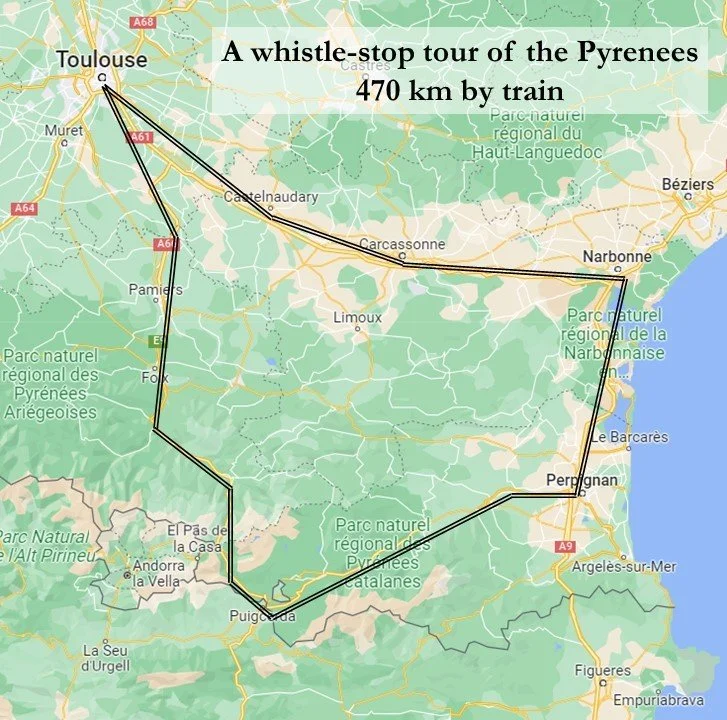
Having recently made this train trip for the second time – first in summer, more recently in winter – and having had so many people tell me they would like to make the same journey, here is an overview and some practical information.
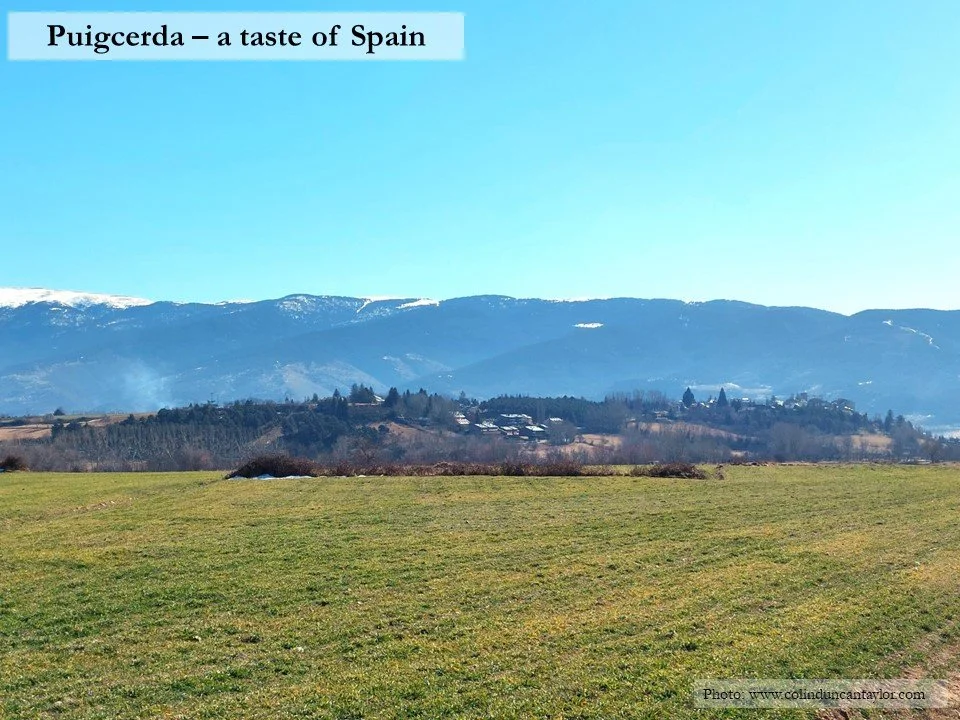
This is a circular journey in four stages, entirely by train, which you can start and finish at many stations along the way. If, like me, you choose to walk 5.6 kilometres in the high Pyrenees, the journey becomes an international voyage and includes a short visit to the Spanish town of Puigcerda.
Both times, my wife and I have completed the trip in two days, but there are numerous places along the route that justify extending it by a few nights should you wish.
The route – an overview
STAGE 1: Toulouse to Enveitg by train (2hrs50) via Pamiers, Foix, Ax-les-Thermes etc).
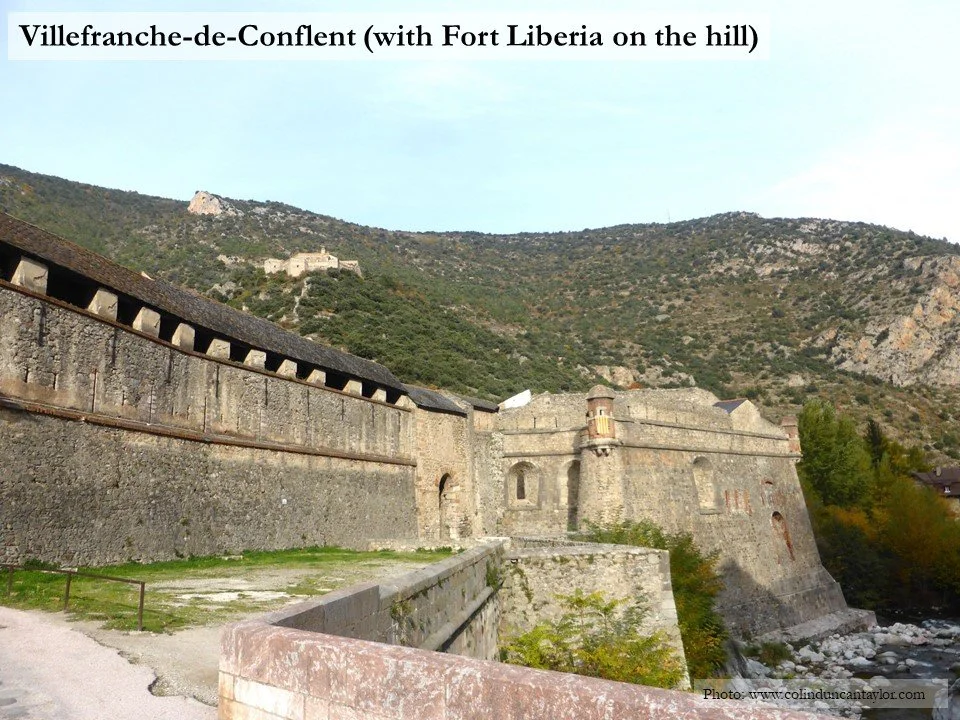
STAGE 2: Enveitg to Villefranche-Vernet-les-Bains by train (2hrs45) OR Enveitg to Bourg-Madame by foot (1hr30 via Puigcerda) AND Bourg-Madame to Villefranche-Vernet-les-Bains by train (2hrs30).
STAGE 3: Villefranche-Vernet-les-Bains to Perpignan by train (50 mins).
STAGE 4: Perpignan to Toulouse by train (2hrs15-2hrs30: you may need to change at Narbonne, and other major stops include Carcassonne and Castelnaudary).

Practicalities
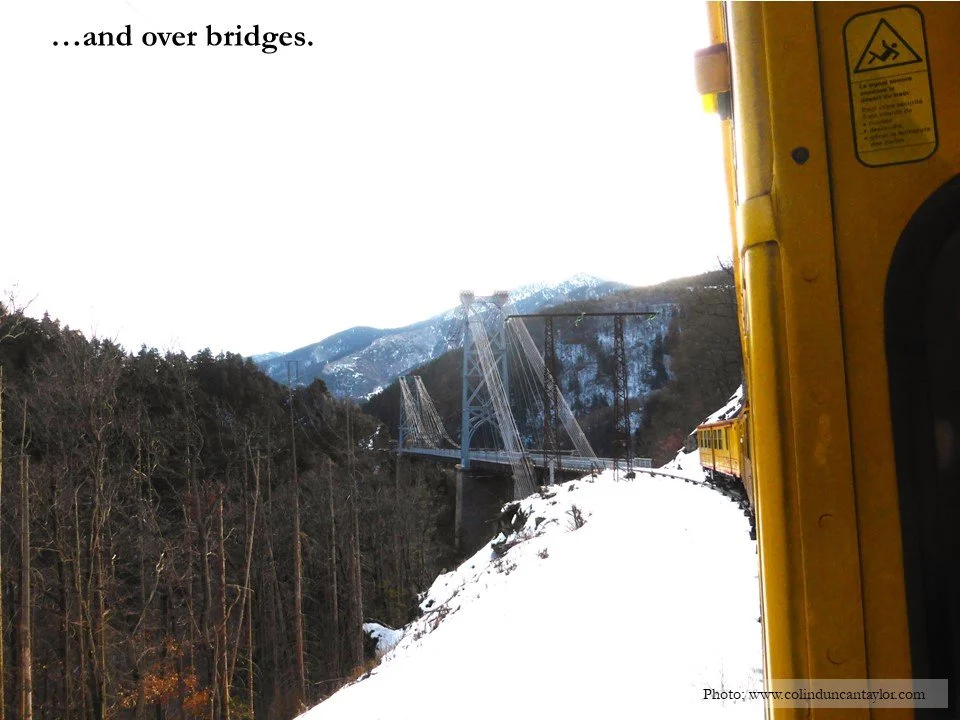
IMPORTANT!!! Stage 2 uses the narrow-gauge Le Train Jaune. This line will be closed for maintenance between 27 February and 28 April 2023. Otherwise, two trains a day run throughout the year. In summer, at least half the carriages are open, great for views and photos.
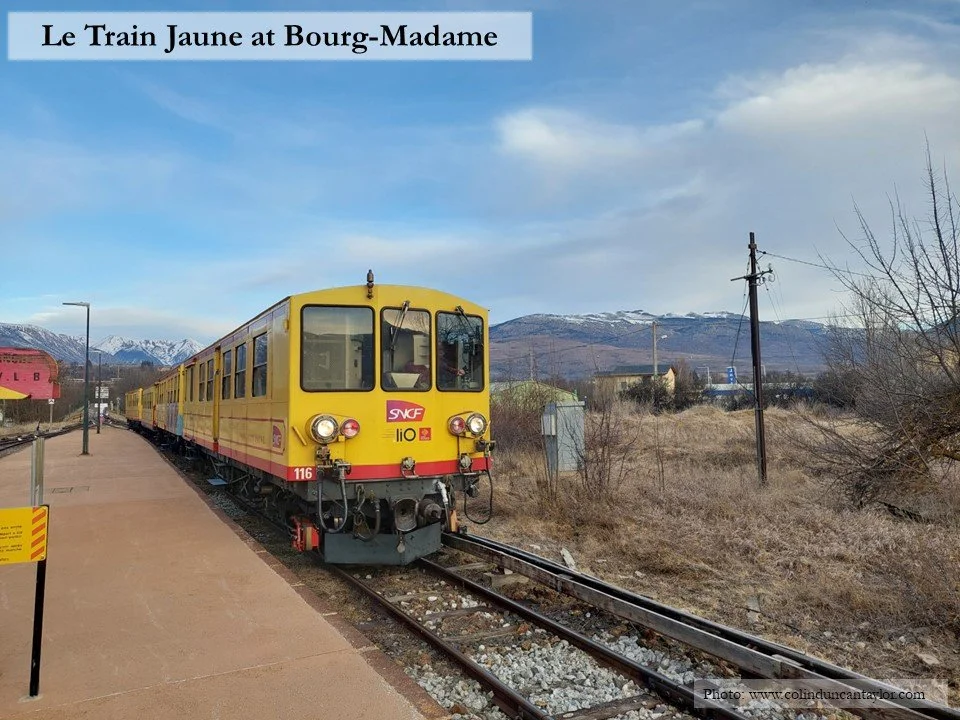
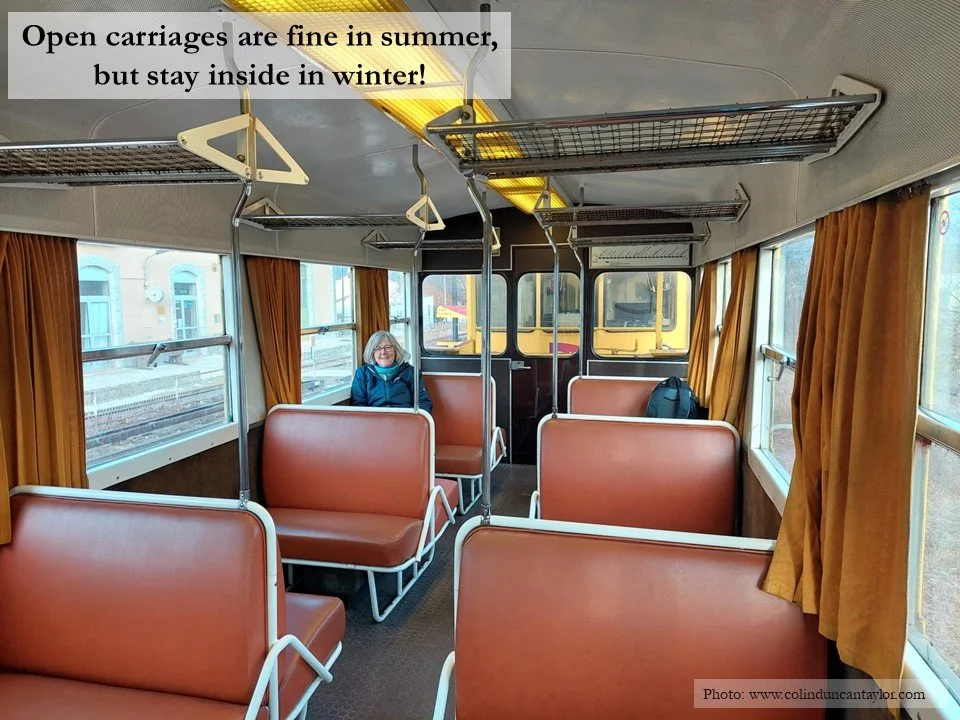
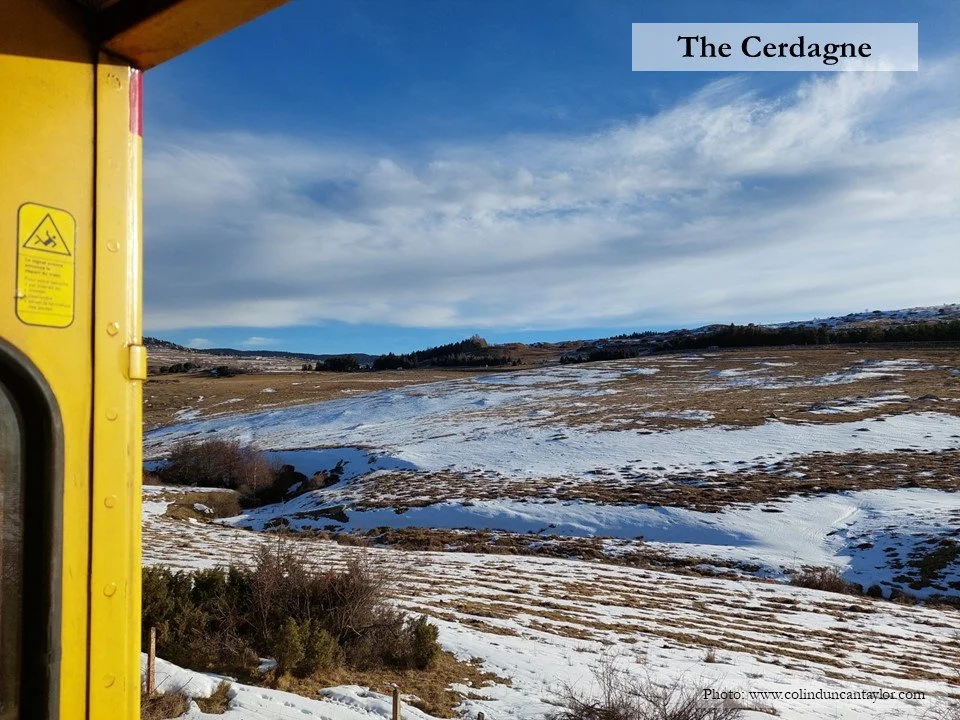
TICKETS: For our most recent voyage (14 & 15 February 2023), we bought our tickets as we went along using the SNCF mobile app, and the total price was €50 per person, a real bargain for a journey of around 470 kilometres.
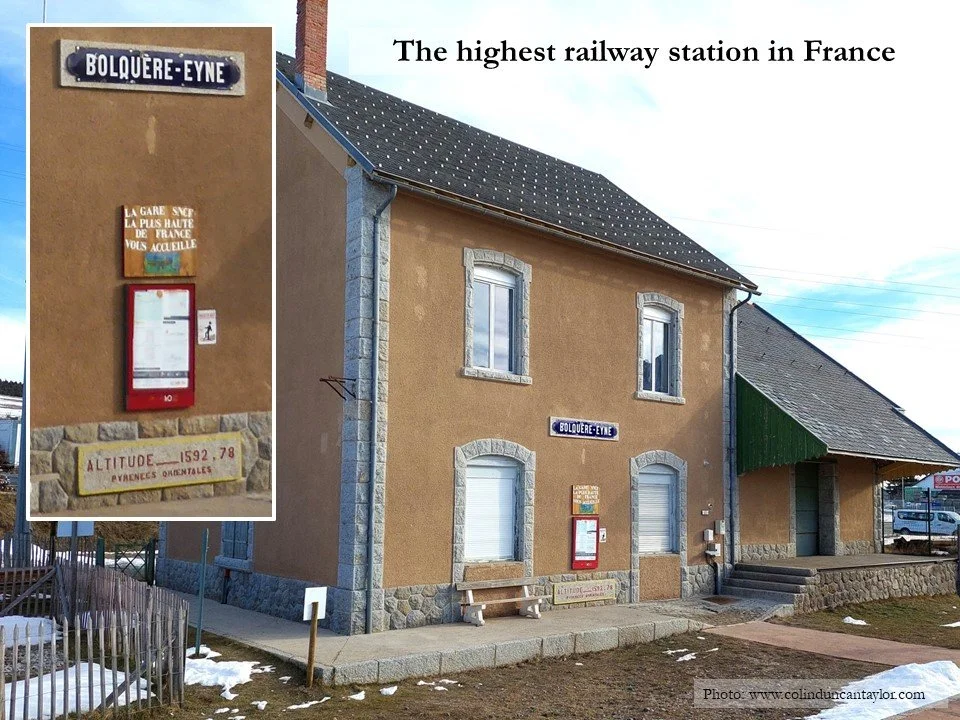

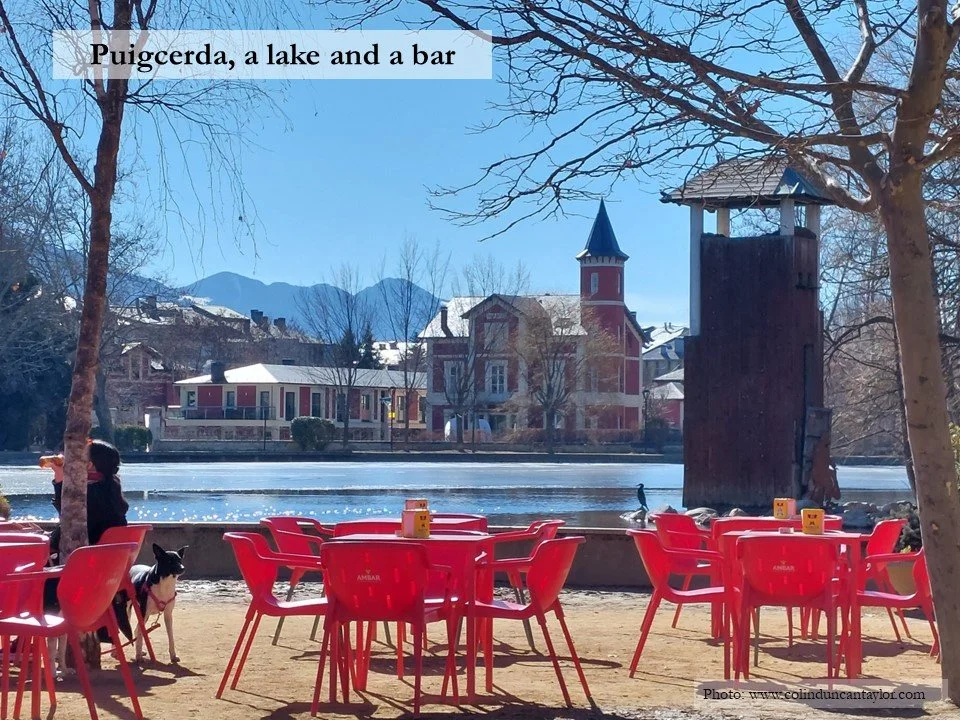
EATING AND SLEEPING: Enveitg has an international railway station: as well as the SNCF line to Toulouse and Le Train Jaune to Villefranche-de-Conflent, there is a RENFE line to Barcelona. But because it has a population of only 637, Enveitg offers few places to stay and even fewer places to eat. This is why we walk 4 kilometres along a pleasant track to cross the border to Puigcerda where there are numerous bars, restaurants and hotels. From Puigcerda, it is another 1.6 kilometres to cross the border back into France at Bourg-Madame where you can pick up Le Train Jaune. Both times, we have eaten in Puigcerda but slept in Bourg-Madame in a simple but clean hotel called the Cedisol Cerdagne that is a two-minute walk from the train station. This naturally involves multiple border crossings, and right next to the old border post between Bourg-Madame and Puigcerda is a bar called La Confianza, not much to look at from the outside, but the interior opens out into a succession of quirky lounges, dining areas, outdoor courtyard and terrace, cosy corners and a winter fireplace where we enjoyed a Saint Valentine’s dinner. For a more upmarket stay, the Hotel del Prado, where we enjoyed a fine dinner on our first trip, is a 15-minute walk from Bourg-Madame railway station.