Fired up about ice: restoring an icehouse at Pradelles-Cabardès
Thank you, Daniel and Marie-Christine Bertherat, for sharing your enthusiasm for ice houses and showing me your unusual restoration project.
A century ago, ‘les glacières inépuisables de la Montagne Noire’ seemed truly inexhaustible, and the tiny village of Pradelles-Cabardès supplied ice to towns as far afield as Bordeaux, Perpignan and Toulouse.
More recently, the Bertherats discovered that the rubbish dump in one corner of their garden was in fact one of the ice houses where snow was stored until it compressed under its own weight into a massive block of ice. In the spring this was cut up into 50kg blocks for delivery to the city folk who had developed a taste for ice cream and chilled drinks.
Having excavated around 500 tonnes of debris, they are now busily renovating their ice house. They want to keep the original style but make a few modifications, such as introducing more light and putting in a floor to create two levels, to make it fit for contemporary uses such as providing shelter for tired trekkers on the GR route over the Pic de Nore.
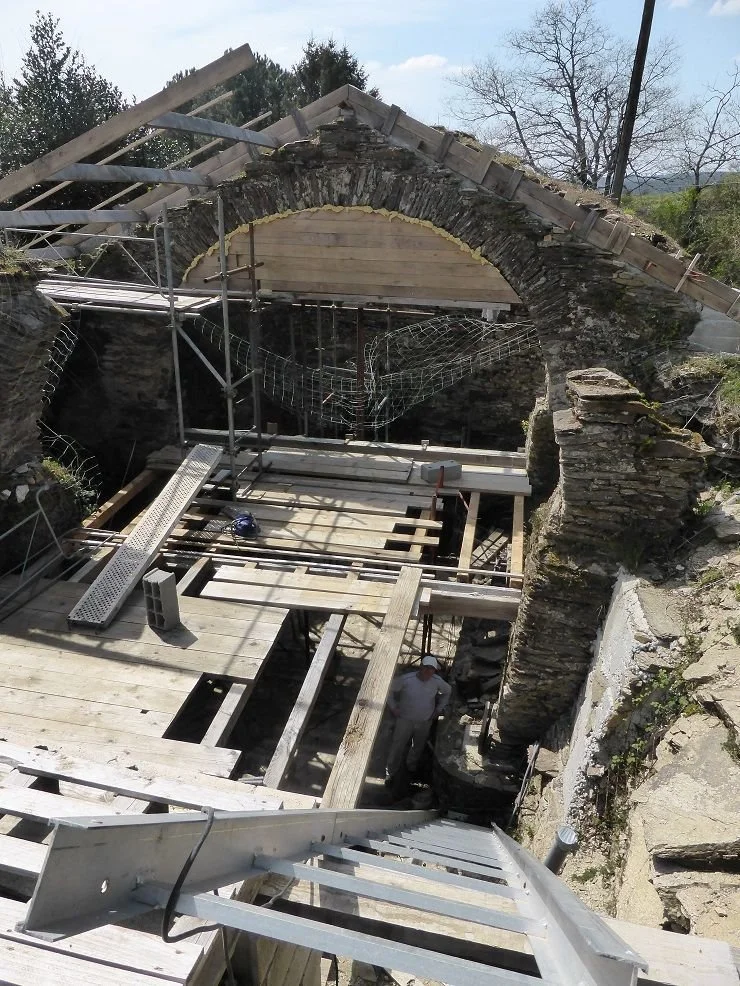
Looking down into the ice house during restoration works.
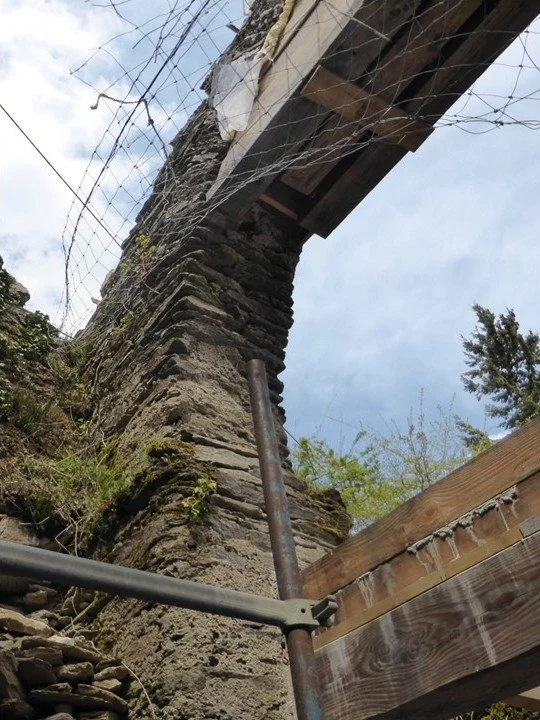
Rebuilding and reinforcing the ancient arches.
In the centre of this final picture you can see a large black hole in the wall. This was one of the most important features of any ice house: the drain. Without it, meltwater would gather at the bottom of the pit and cause the ice to melt more quickly. Obviously you had to build your ice house in the right place for the drain to work (the hole is about eight metres deep!) Today, this drain still works and stops the Bertherat’s hole filling up with rainwater.
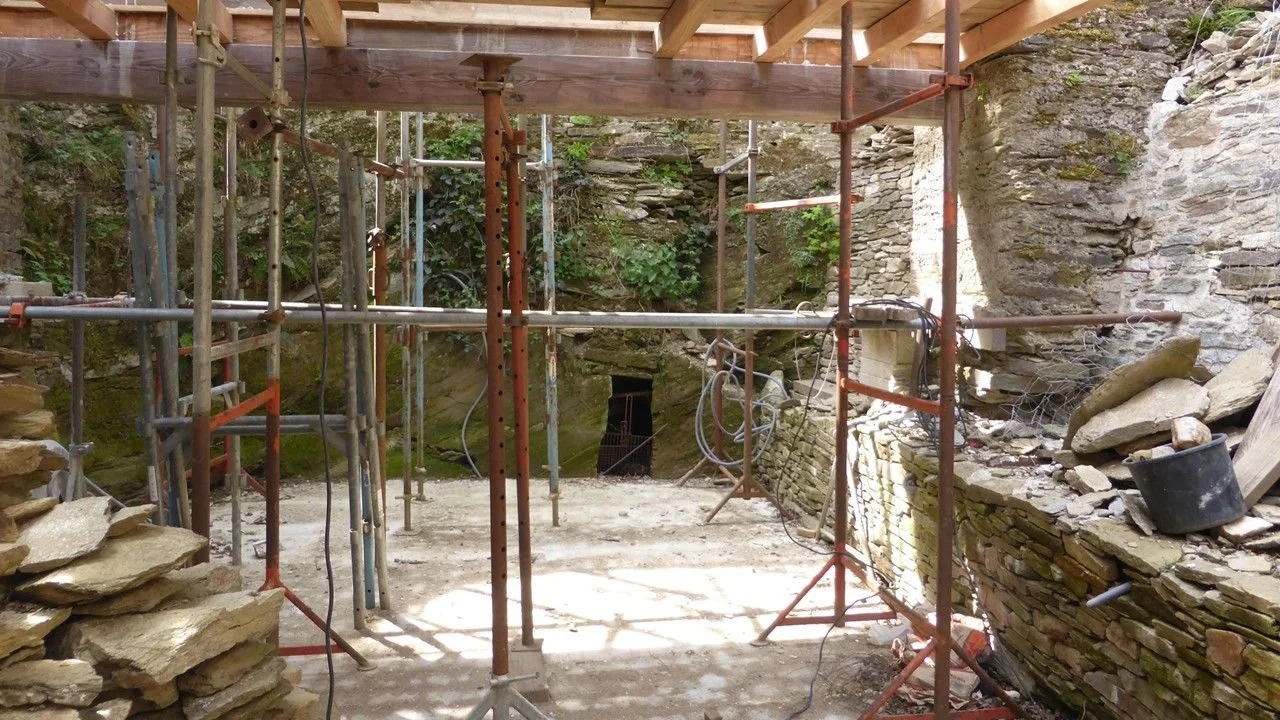
The dark rectangular hole in the back wall was to drain meltwater.
To learn more about the history of ice houses, READ THIS ARTICLE. It includes details of a walk around Pradelles-Cabardes where you can see several other ice houses slowly crumbling away in the forest.
