
|
South of France & Pyrenees blog |
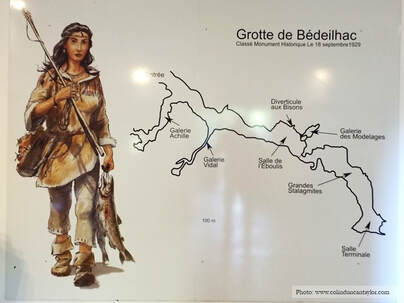
 Occitanie has played a central role in our understanding of prehistory, and Ariège boasts more prehistoric caves than any other department in France. Over a period of several months last year, I visited several of the ones that are open to the public. The prehistorians who were involved in the discovery or interpretation of these grottes were in many cases the same internationally renowned experts who explored even more famous caves which lie just outside my region (Lascaux, Les Eyzies and the Grotte de Chauvet, for example). They included people like Émile Cartailhac who, in 1882, took up a post at the faculty of science in Toulouse and became the first academic in France to teach prehistoric archaeology. And a young priest called Henri Breuil who, over the next 60 years, would become even more influential than Cartailhac. And more recently, Jean Clottes, the man who was called upon to assess the Grotte de Chauvet when it was rediscovered in 1994. Grotte de Bédeilhac The Grotte de Bédeilhac is a few kilometres north-west of Tarascon-sur-Ariège. At first sight, it does little to evoke thoughts of prehistory. A wide concrete floor leads through the cavernous entrance and melts away into darkness. In the half-light, a small aircraft offers a misleading clue to the origins of this unusual surface. 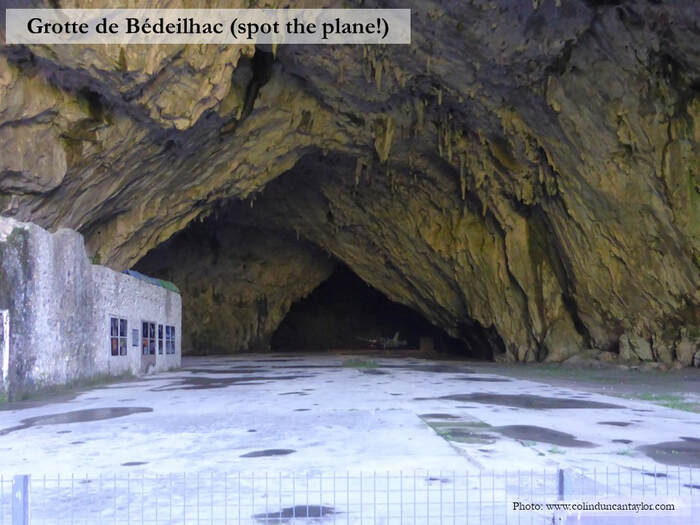 In 1939, Emile Dewoitine planned to shift production of his D520 fighter plane from Toulouse to the Grotte de Bédeilhac where he would be safe from aerial bombardment. He even began some preparatory works, but France surrendered before his plans came to fruition. Then, soon after they took over Vichy France in November 1942, the Germans dug out the first few hundred metres of cave floor, levelled it with concrete and set up an underground workshop where they repaired Junkers 88s. The presence of the light aircraft inside the entrance has helped created the myth that German bombers flew in and out of the cave. The true reason for its presence? In 1972, a test pilot called Georges Bonnet became the first pilot in the world to land in and take off from a cave. Two years later, Bonnet repeated his feat for a film, this time with his aircraft painted in the colours of the Luftwaffe. The plane on display today is the same model, but it was assembled on site using spare parts in 2010.
For me, the highlight of the visit was the presence of two positive handprints. They are called ‘positive’ because they were made by coating the hand with pigment before placing it on a surface, in this case a stalagmite. Examples of positive handprints are rare. Around 90 percent are negative, meaning that the person making them placed his or her hand against a wall and blew dried powder or pigment mixed with water through a hollow bone or reed, or even directly from the mouth, to create a stencilled outline. If you want to see negative handprints, the best place in the world is the Grotte de Gargas. FOLLOW THESE LINKS TO READ OTHER SECTIONS OF THIS POST:
Prehistoric caves of Occitanie 1: Grotte d’Aurignac Prehistoric caves of Occitanie 2: Grotte de Niaux Prehistoric caves of Occitanie 4: Grotte de Gargas Prehistoric caves of Occitanie 5: Grotte de Mas d’Azil Prehistoric caves of Occitanie 6: Caune de l’Arago and the Tautavel museum of prehistory
0 Comments
 Occitanie has played a central role in our understanding of prehistory, and Ariège boasts more prehistoric caves than any other department in France. Over a period of several months last year, I visited several of the ones that are open to the public. The prehistorians who were involved in the discovery or interpretation of these grottes were in many cases the same internationally renowned experts who explored even more famous caves which lie just outside my region (Lascaux, Les Eyzies and the Grotte de Chauvet, for example). They included people like Émile Cartailhac who, in 1882, took up a post at the faculty of science in Toulouse and became the first academic in France to teach prehistoric archaeology. And a young priest called Henri Breuil who, over the next 60 years, would become even more influential than Cartailhac. And more recently, Jean Clottes, the man who was called upon to assess the Grotte de Chauvet when it was rediscovered in 1994. Grotte de Niaux The Grotte de Niaux on the outskirts of Tarascon-sur-Ariège is famous for its prehistoric paintings of bison, deer, ibex, horses and even a fish. The best-known and most-visited part of the complex is a spacious chamber called Le Salon Noir. It lies deep inside the mountain, 800 metres from the main entrance. At the time of my first visit ten years ago, I was struck by the quantity of graffiti left by more recent visitors. Most of them had been cleaned off by the time I made my second visit, but one specimen has been retained as a historical relic in its own right, a signature left in Le Salon Noir by Ruben de la Vialle in 1660. 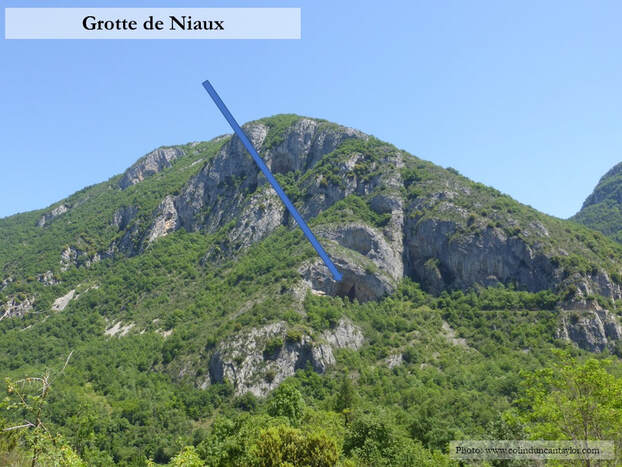 A veteran tourist guide from Niaux claims to have identified 16 other examples of Ruben de la Vialle’s signature in different parts of the cave. Why he came so often is a mystery. In the summer of 1660, he was waiting for his exam results, having studied for a doctorate in both civil and canonical law. Despite his education, Ruben had no way of knowing or even suspecting the age or significance of the paintings at Niaux. In fact, the religious side of his education made it inconceivable. A few years earlier, an Irish archbishop called James Ussher had, after long and careful study of the Old Testament, calculated with extraordinary precision that the world had been created on 23 October 4004 BCE. It would have been both heretical and illogical for Ruben to imagine that the paintings at Niaux were at least 10,000 years older than the world itself. Their importance only became recognised in 1906 when an infantry officer called Jules Molard and his two sons visited Le Salon Noir and decided to tell Émile Cartailhac about their ‘discovery’. Cartailhac and Breuil explored the cave in the autumn of the same year. Directly opposite Niaux on the left bank of the Vicdessos river lies a smaller prehistoric cave. If the Grotte de Niaux was something of an artist’s studio, the Grotte de la Vache was more of a residential property, and the paintings in the former may have been produced by the people who lived in the latter. The Grotte de la Vache is privately owned and it was closed when I was there in 2022 as it had been for several years before that. However, the area outside the cave entrance was fenced off and building works were in progress. Reports in the local press suggest that a reopening is planned, but the date has yet to be confirmed. FOLLOW THESE LINKS TO READ OTHER SECTIONS OF THIS POST:
Prehistoric caves of Occitanie 1: Grotte d’Aurignac Prehistoric caves of Occitanie 3: Grotte de Bédeilhac Prehistoric caves of Occitanie 4: Grotte de Gargas Prehistoric caves of Occitanie 5: Grotte de Mas d’Azil Prehistoric caves of Occitanie 6: Caune de l’Arago and the Tautavel museum of prehistory  Occitanie has played a central role in our understanding of prehistory, and Ariège boasts more prehistoric caves than any other department in France. Over a period of several months last year, I visited several of the ones that are open to the public. The prehistorians who were involved in the discovery or interpretation of these grottes were in many cases the same internationally renowned experts who explored even more famous caves which lie just outside my region (Lascaux, Les Eyzies and the Grotte de Chauvet, for example). People like Émile Cartailhac who, in 1882, took up a post at the faculty of science in Toulouse and became the first academic in France to teach prehistoric archaeology. Or a young priest called Henri Breuil who, over the next 60 years, would become even more influential than Cartailhac. And more recently, Jean Clottes, the man who was called upon to assess the Grotte de Chauvet when it was rediscovered in 1994. Grotte d’Aurignac The village of Aurignac lies 60 kilometres south-west of Toulouse and the eponymous cave is 500 metres to the west of town beside he main road. In Aurignac itself, there is a large and modern interpretation centre which provides an excellent overview of prehistory in general. The cave and the centre are connected by a footpath. 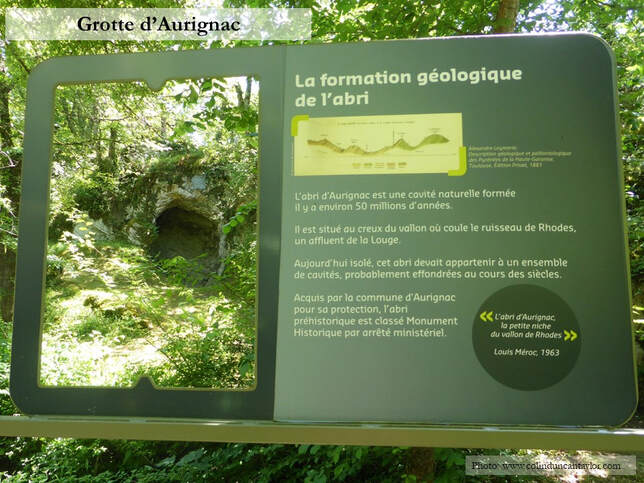 Aurignac is an unpretentious cave barely the size of my garage, but it has played an outsized role in the development of prehistory as a scientific discipline. In 1860, an amateur scientist called Edouard Lartet found human remains and tools inside this cave along with the bones of various extinct animals such as the cave bear and woolly rhinoceros. These discoveries, combined with others he made in the Dordogne, led Lartet to conclude that modern humans must have been living in Europe long before anyone had suspected. It took a few more years for his ideas to be accepted, but eventually his discoveries at Aurignac were recognised as examples of the oldest modern human culture in Europe, subsequently named Aurignacian, and covering the period between 43,000 and 26,000 years ago (these dates vary slightly in different parts of Europe). 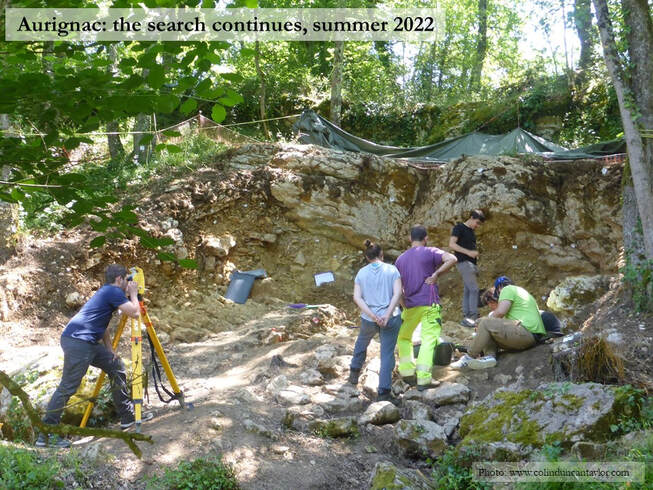 There is little to see at the cave itself, but if you go there after the interpretation centre, you will find it a pleasant place to reflect on what you have learned about our distant ancestors. At the time of my visit (June 2022), I was lucky enough to meet a team of young archaeologists who were busy excavating the bank a few metres to the left of the cave in search of more prehistoric evidence. FOLLOW THESE LINKS TO READ OTHER SECTIONS OF THIS POST:
Prehistoric caves of Occitanie 2: Grotte de Niaux Prehistoric caves of Occitanie 3: Grotte de Bédeilhac Prehistoric caves of Occitanie 4: Grotte de Gargas Prehistoric caves of Occitanie 5: Grotte de Mas d’Azil Prehistoric caves of Occitanie 6: Caune de l’Arago and the Tautavel museum of prehistory
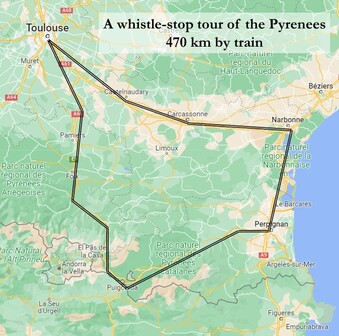
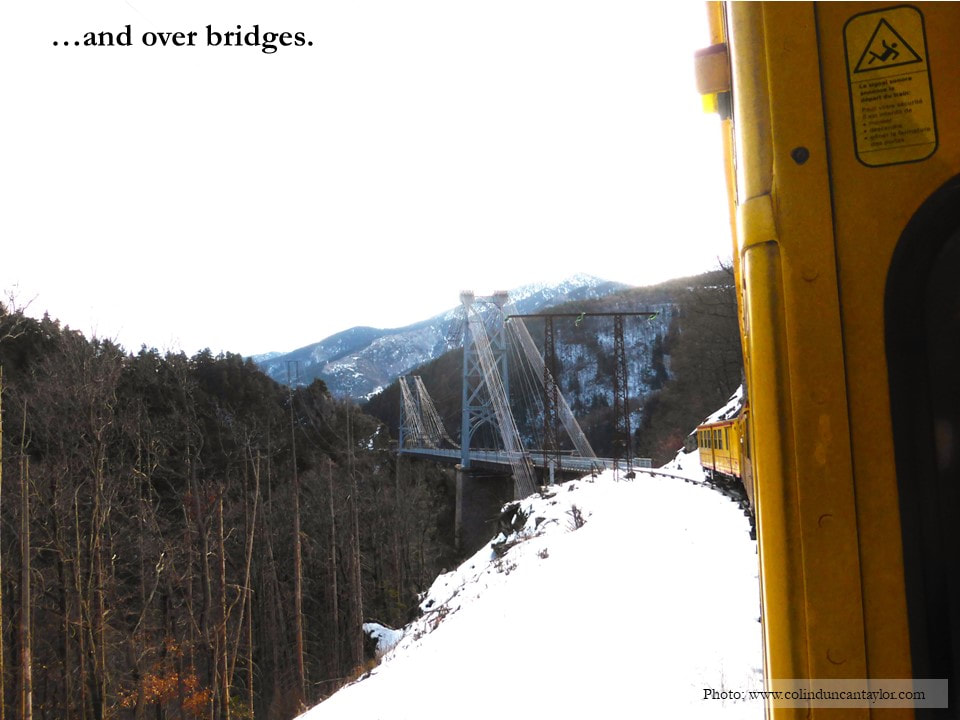
The route – an overview STAGE 1: Toulouse to Enveitg by train (2hrs50) via Pamiers, Foix, Ax-les-Thermes etc). STAGE 2: Enveitg to Villefranche-Vernet-les-Bains by train (2hrs45) OR Enveitg to Bourg-Madame by foot (1hr30 via Puigcerda) AND Bourg-Madame to Villefranche-Vernet-les-Bains by train (2hrs30). STAGE 3: Villefranche-Vernet-les-Bains to Perpignan by train (50 mins). STAGE 4: Perpignan to Toulouse by train (2hrs15-2hrs30: you may need to change at Narbonne, and other major stops include Carcassonne and Castelnaudary).
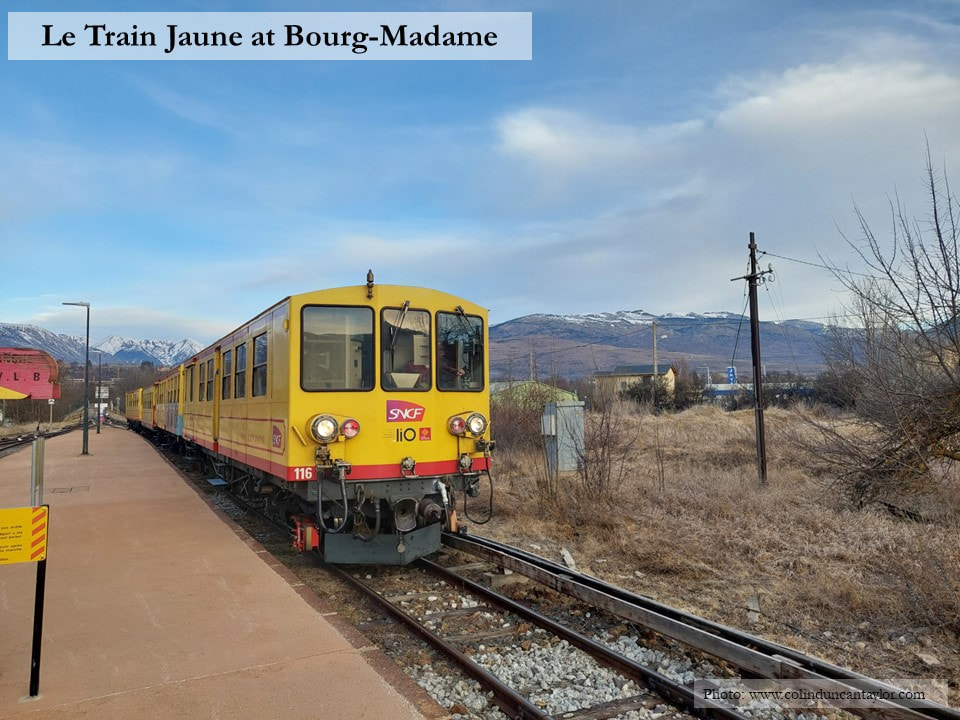
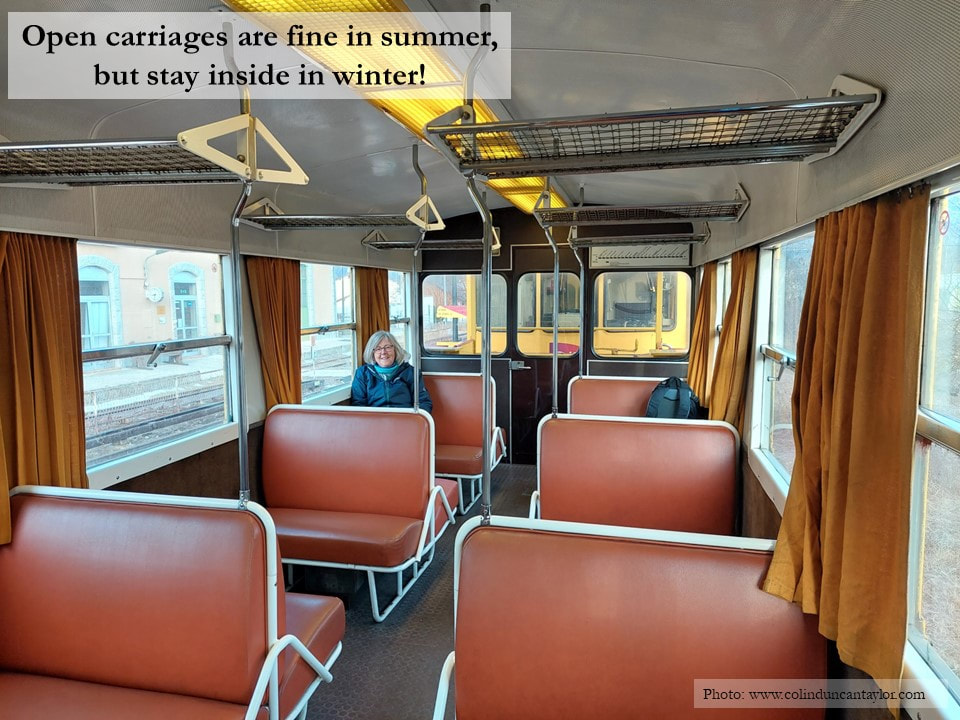
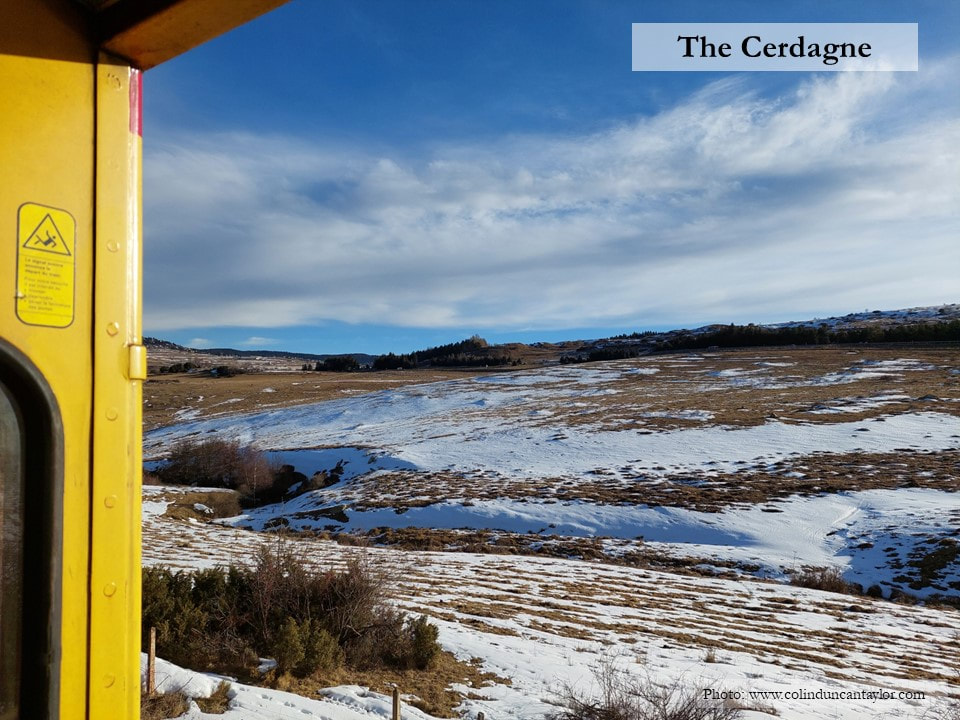
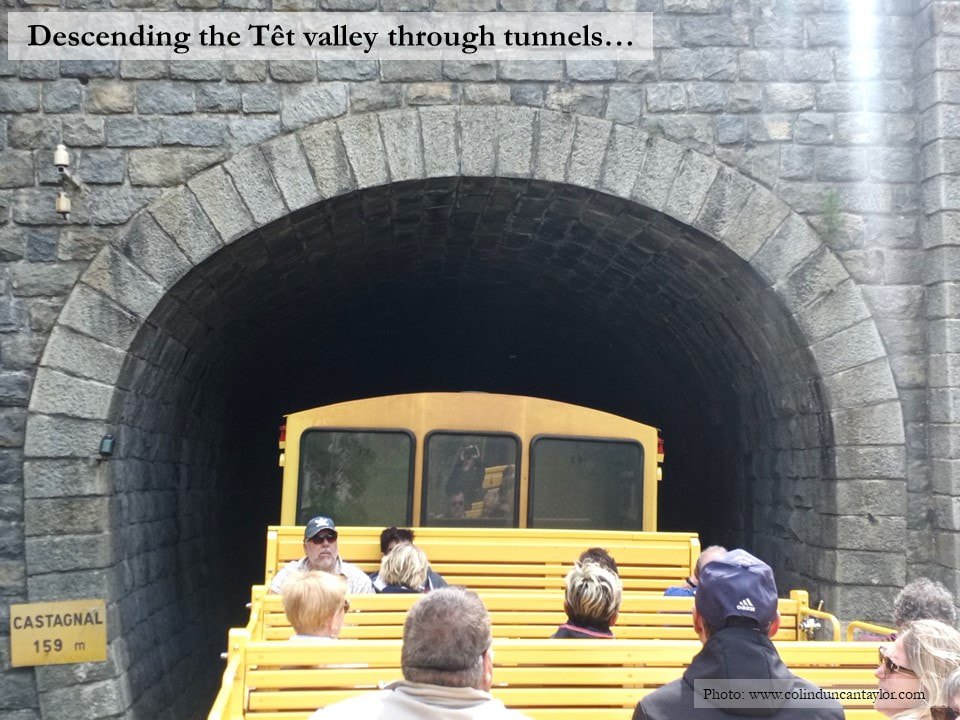
Practicalities IMPORTANT!!! Stage 2 uses the narrow-gauge Le Train Jaune. This line will be closed for maintenance between 27 February and 28 April 2023. Otherwise, two trains a day run throughout the year. In summer, at least half the carriages are open, great for views and photos. TICKETS: For our most recent voyage (14 & 15 February 2023), we bought our tickets as we went along using the SNCF mobile app, and the total price was , a real bargain for a journey of around 470 kilometres.TICKETS: For our most recent voyage (14 & 15 February 2023), we bought our tickets as we went along using the SNCF mobile app, and the total price was €50 per person, a real bargain for a journey of around 470 kilometres.
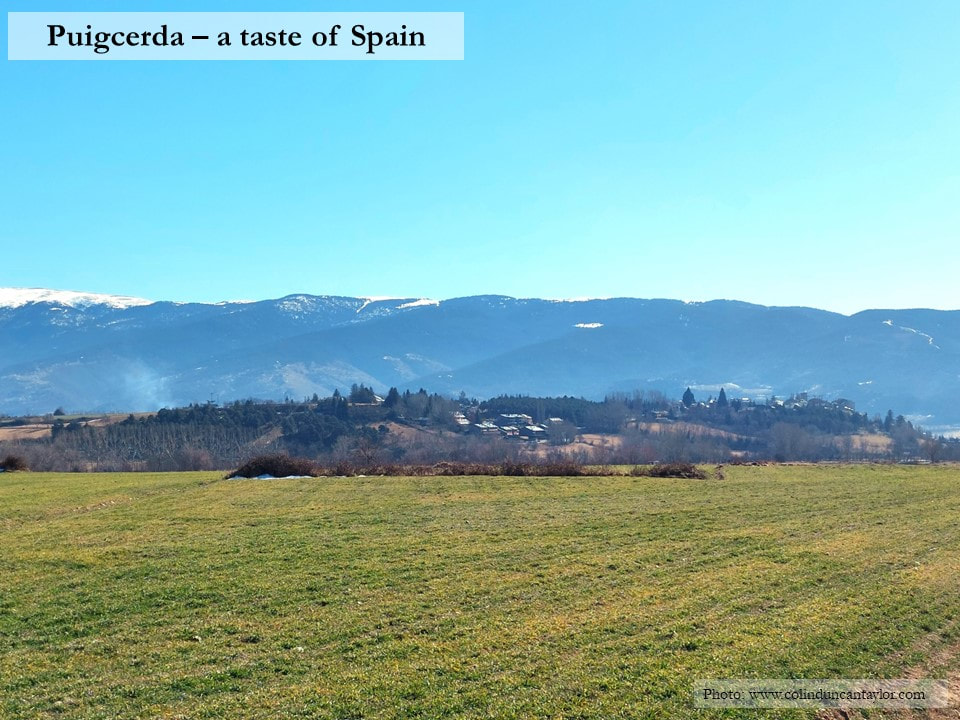
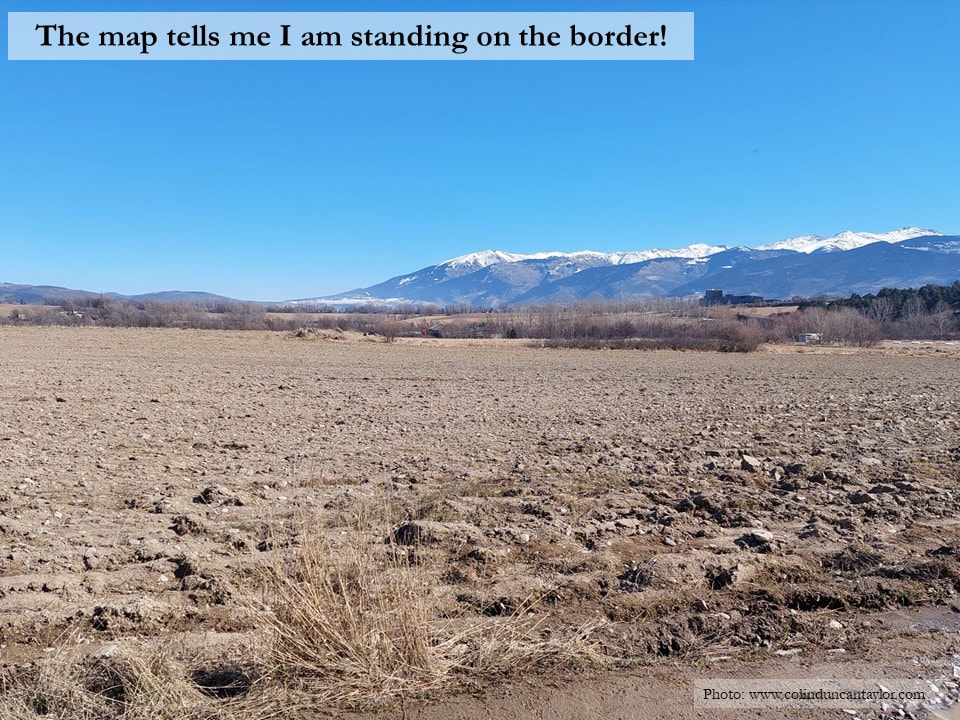
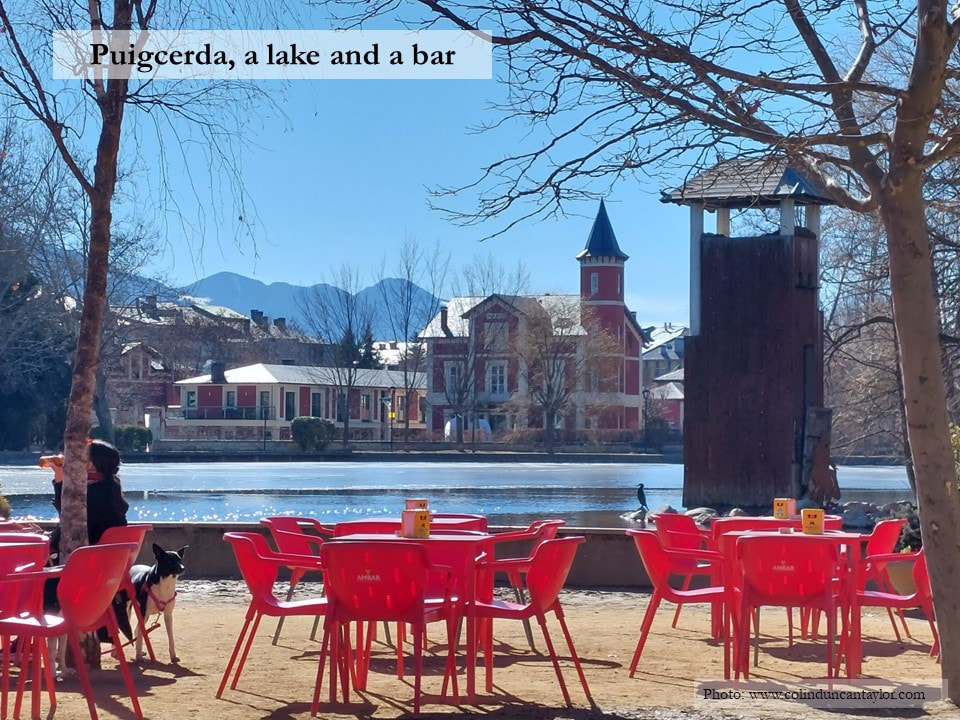
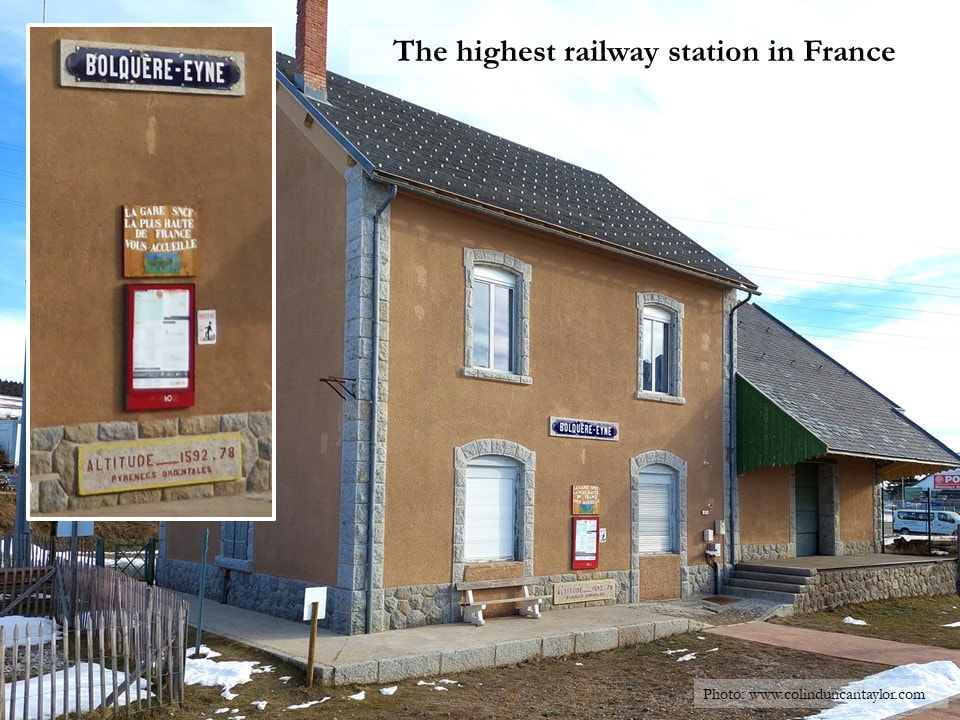
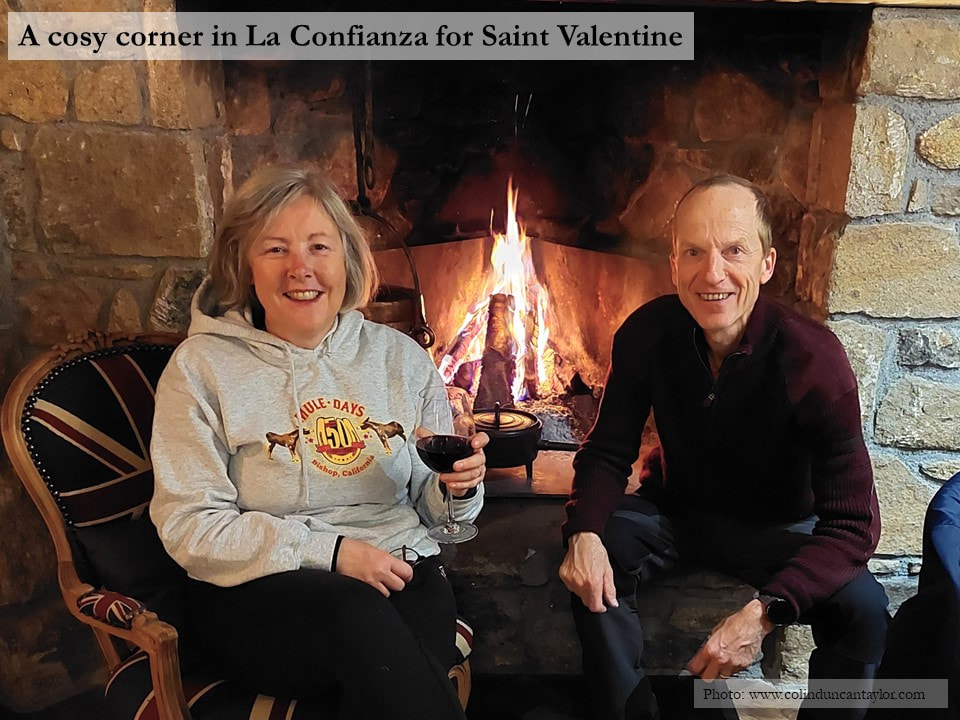
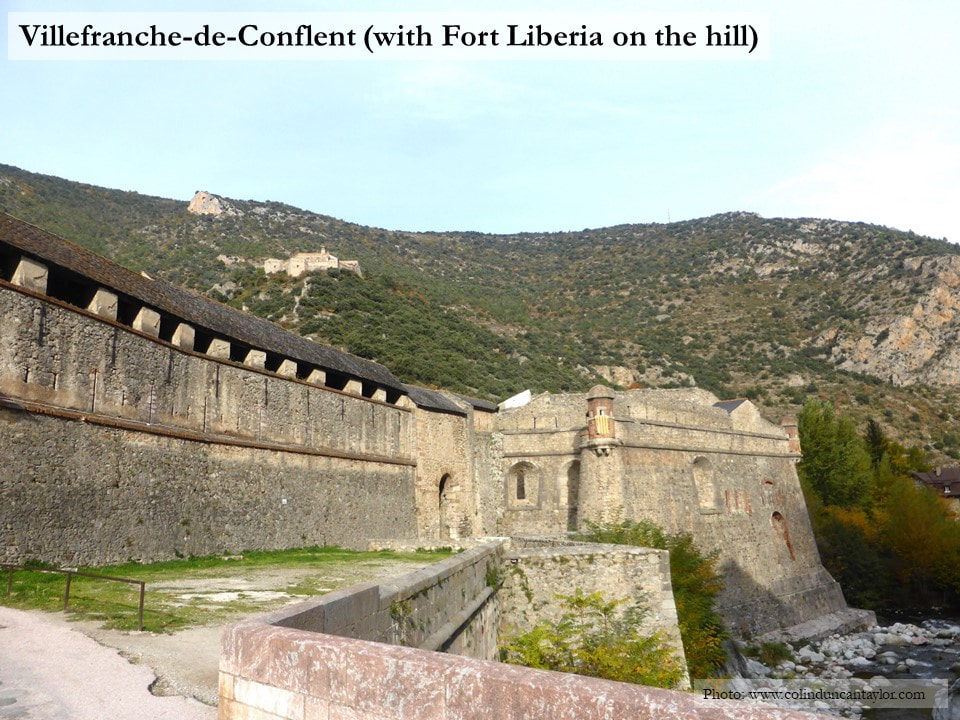
EATING AND SLEEPING: Enveitg has an international railway station: as well as the SNCF line to Toulouse and Le Train Jaune to Villefranche-de-Conflent, there is a RENFE line to Barcelona. But because it has a population of only 637, Enveitg offers few places to stay and even fewer places to eat. This is why we walk 4 kilometres along a pleasant track to cross the border to Puigcerda where there are numerous bars, restaurants and hotels. From Puigcerda, it is another 1.6 kilometres to cross the border back into France at Bourg-Madame where you can pick up Le Train Jaune. Both times, we have eaten in Puigcerda but slept in Bourg-Madame in a simple but clean hotel called the Cedisol Cerdagne that is a two-minute walk from the train station. This naturally involves multiple border crossings, and right next to the old border post between Bourg-Madame and Puigcerda is a bar called La Confianza, not much to look at from the outside, but the interior opens out into a succession of quirky lounges, dining areas, outdoor courtyard and terrace, cosy corners and a winter fireplace where we enjoyed a Saint Valentine’s dinner. For a more upmarket stay, the Hotel del Prado, where we enjoyed a fine dinner on our first trip, is a 15-minute walk from Bourg-Madame railway station.
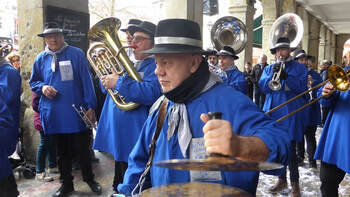
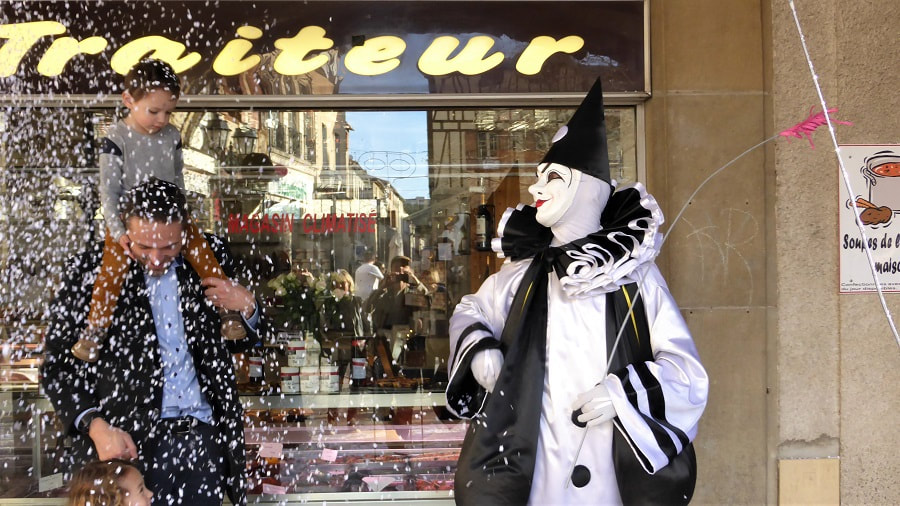
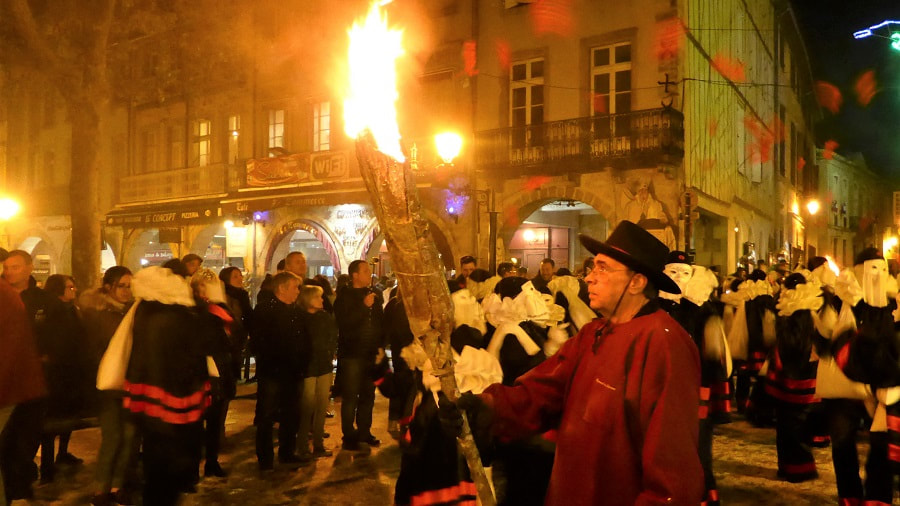
The town of Limoux lies on the river Aude 25 kilometres upstream from Carcassonne. It has two claims to international fame: its carnival (currently in full swing) and its sparkling wine.  The longest carnival in the world Venice may boast the oldest and Rio the largest, but Limoux claims to have the longest carnival in the world. Around 600 dancers belonging to 30 different troupes ensure that these festivities can be sustained three times a day every weekend - plus Mardi Gras – from the end of January until early April (more precisely, in 2023 the dates are 15 January until 26 March). The Carnival of Limoux is unusually compact. Here, there are no carnival floats, no long parades. Events unfold in the intimacy of the medieval square with a graceful beauty which has been described as a miraculous combination of immobility and movement.
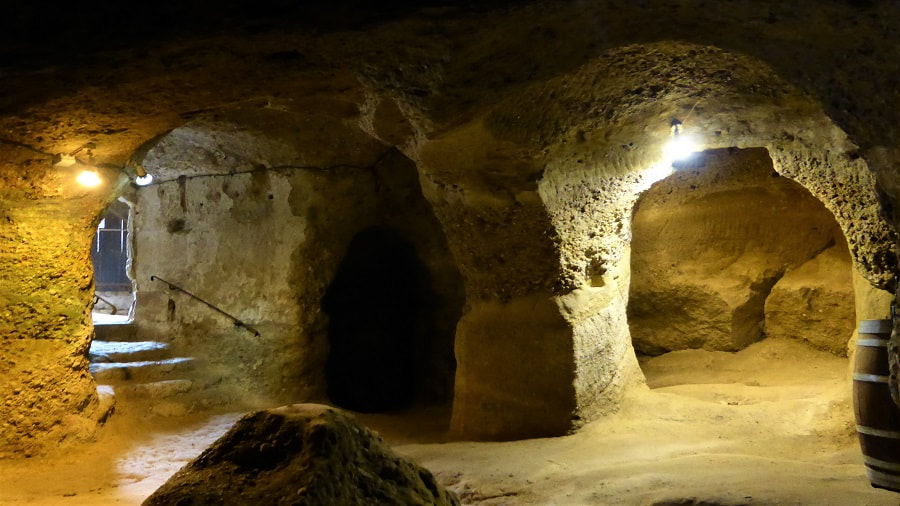
Fake news or hard news? The first part of this legend gained a little more credibility when a document was discovered in 2013. Dating from 1544, it is a ledger kept by the Limoux town treasurer, and in an entry made on 25 October 1544, he records that various wines were supplied to Sieur d’Arques, and among them were four pints of blanquette to accompany the good lord’s dinner (today, Sieur d’Arques is the name of the main cooperative and it is an excellent place for a dégustation). Unfortunately, other historians soon pointed out that there was nothing in the treasurer’s ledger to say that the wine was effervescent, or even that it came from Limoux. Blanquette was the old name for a local type of vine which we now call mauzac, and any wine derived from the mauzac or blanquette vine was also called blanquette, and although this vine was primarily cultivated in the Midi, it was not exclusive to Limoux.
A longer version of this article was first published in Issue 32 of The Good Life in France Magazine.
If you would like to know more about this estimable organisation, please visit: https://cancersupportfrance.org
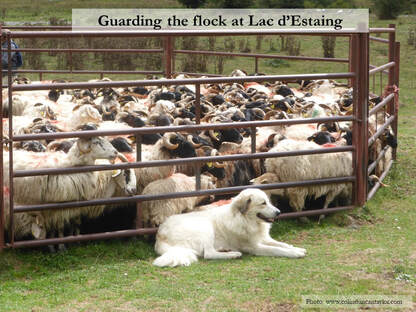
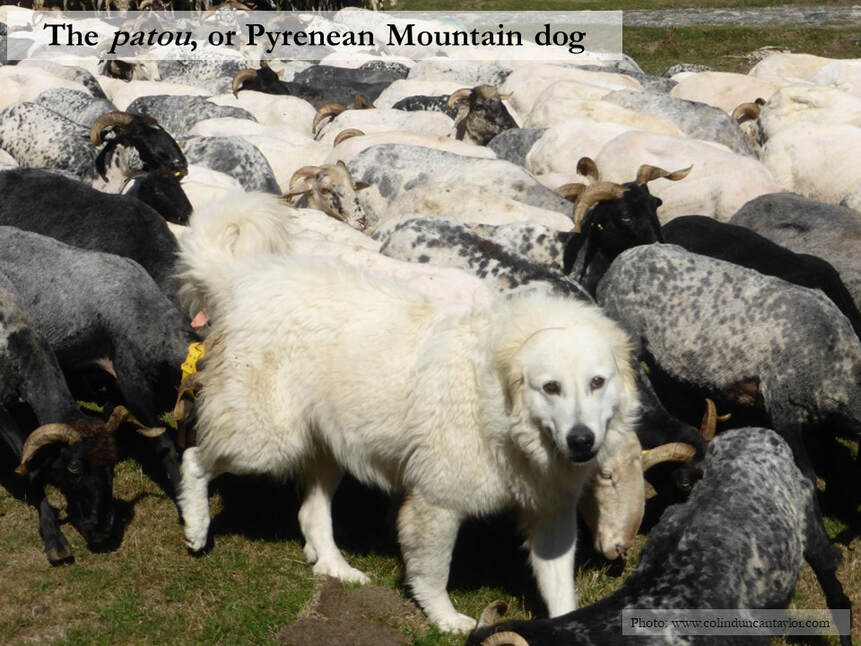 Deterring bears and wolves ‘The shepherd’s dog must be a big mastiff, strong and stocky with a big head, and around his neck he must have a collar armed with sharp iron spikes or long nails.' This advice comes from a shepherd called Jean de Brie in a book he published in 1379. In those days, bears and wolves posed such a deadly threat to flocks of sheep, fearsome dogs were bred to protect them. Not that the dogs were supposed to attack a predator. It was more about dissuasion, particularly where the bear was concerned: a couple of large dogs could harass a bear in much the same way as crows mob a bird of prey. With luck, the exasperated bear would retreat in search of an easier meal, and at the very least, the barking dogs would alert the shepherd to the danger. At around the same time Jean de Brie was writing his book, the inhabitants of Espousouille were writing to their king, John I of Aragon and Majorca. Their tiny village, lost in the mountains to the south-east of Ax-les-Thermes, had a problem with bears. In their letter, the villagers threatened to abandon their community unless the king gave them permission to set fire to all the surrounding forests and flush out the bears. The king duly obliged because, according to his royal edict, these forests sheltered ‘many wild beasts, both bears and wild boar’.
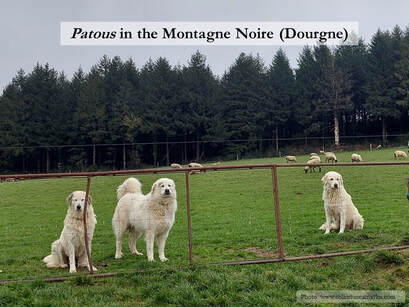
Bringing back the bear Then, between 1996 and 2018, 11 wild bears were captured in Slovenia and released in various parts of the Pyrenees, eight females and three males. In 2021, a census covering the Andorran, French and Spanish Pyrenees estimated that the population had grown to at least 70, nearly all of them living in the central area to the west of Andorra. 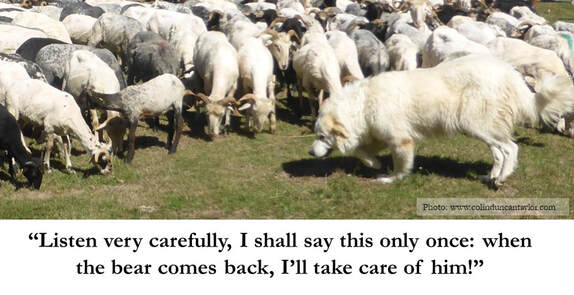 Bringing back the Pyrenean Mountain dog Understandably, many of the shepherds, farmers and other local people whose ancestors had spent thousands of years trying to banish the bear from their doorstep, cultivated field or sheepfold strongly opposed the reintroduction of such a large predator. To allay these concerns, one of the associations supporting the reintroduction of the bear put in place a breeding programme for the patou and employed a specialist who had worked with guard dogs in the Alps and the Rocky Mountains to teach local shepherds how to make proper use of them.
As many as 12,000 workers
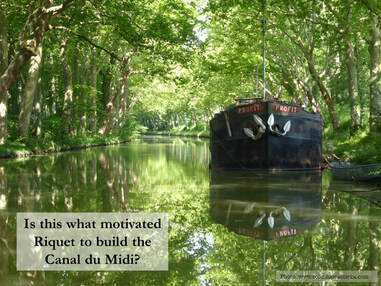
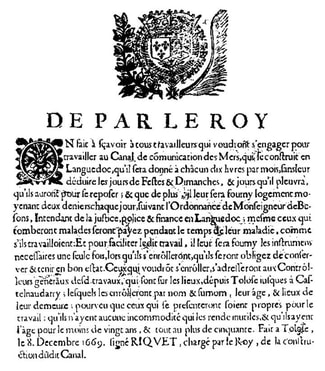
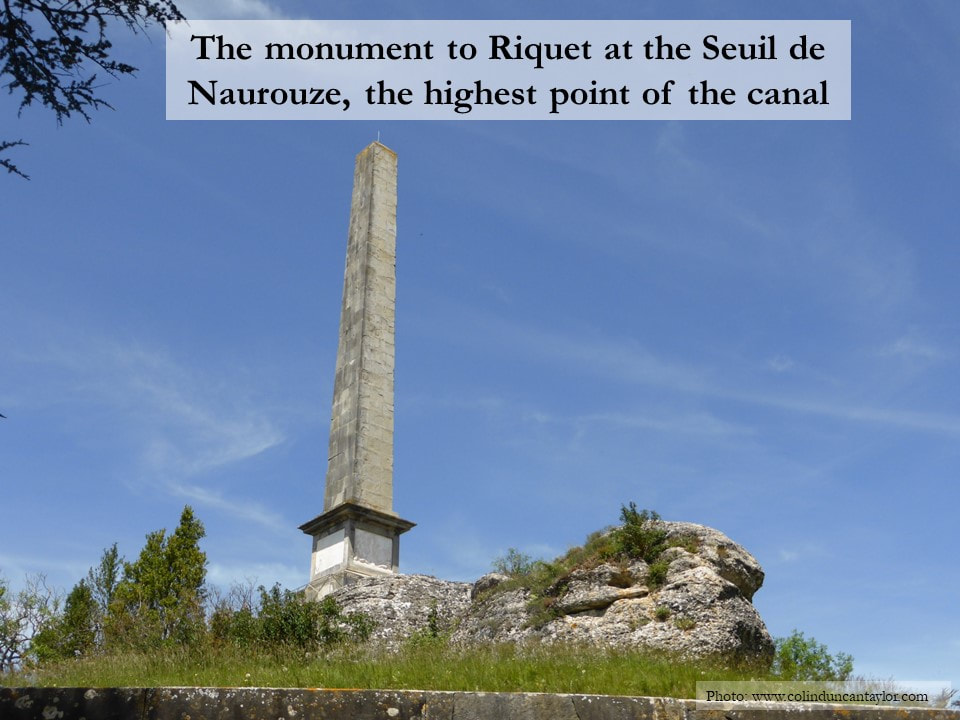
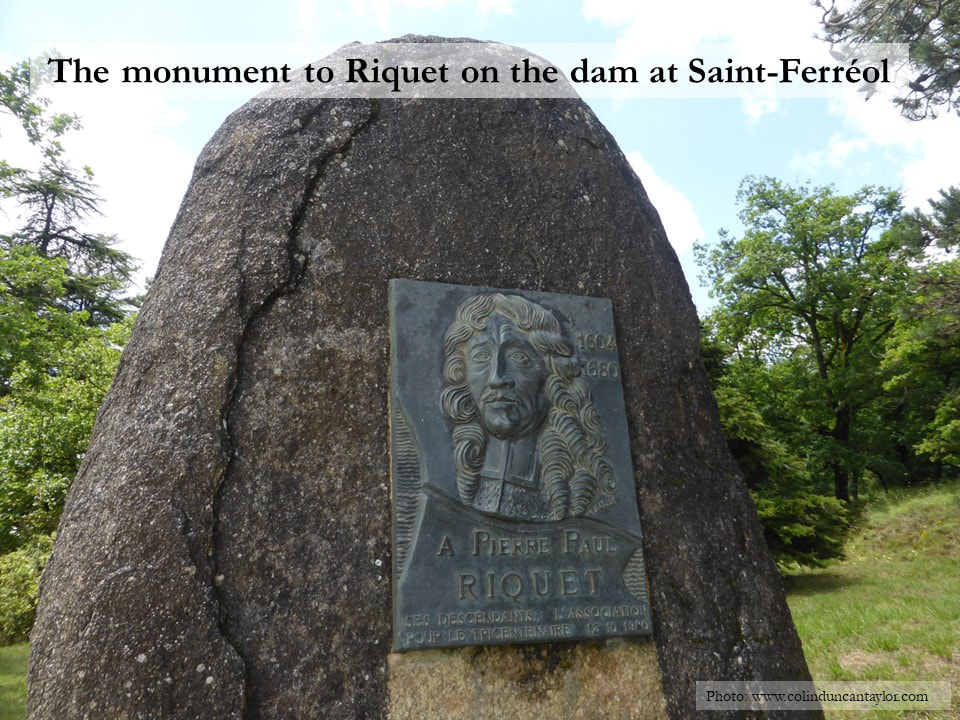
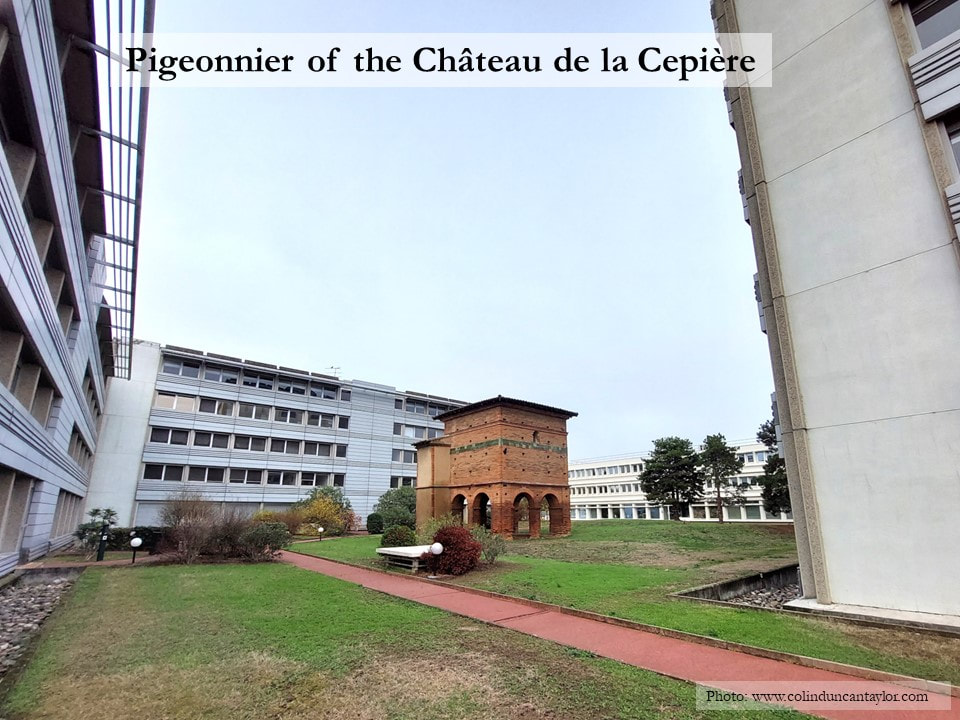
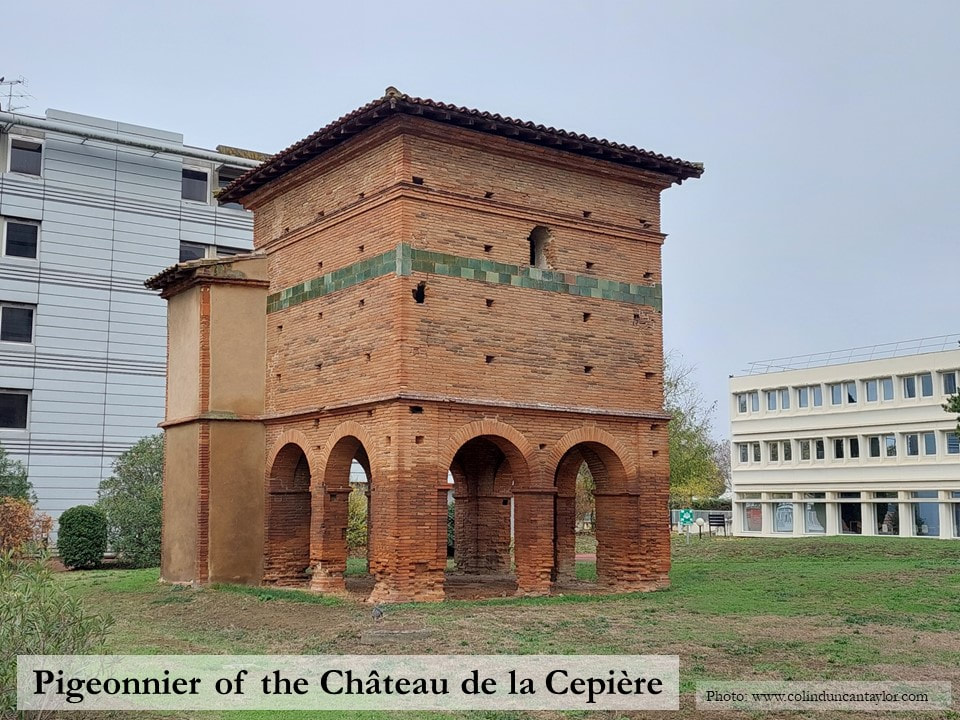
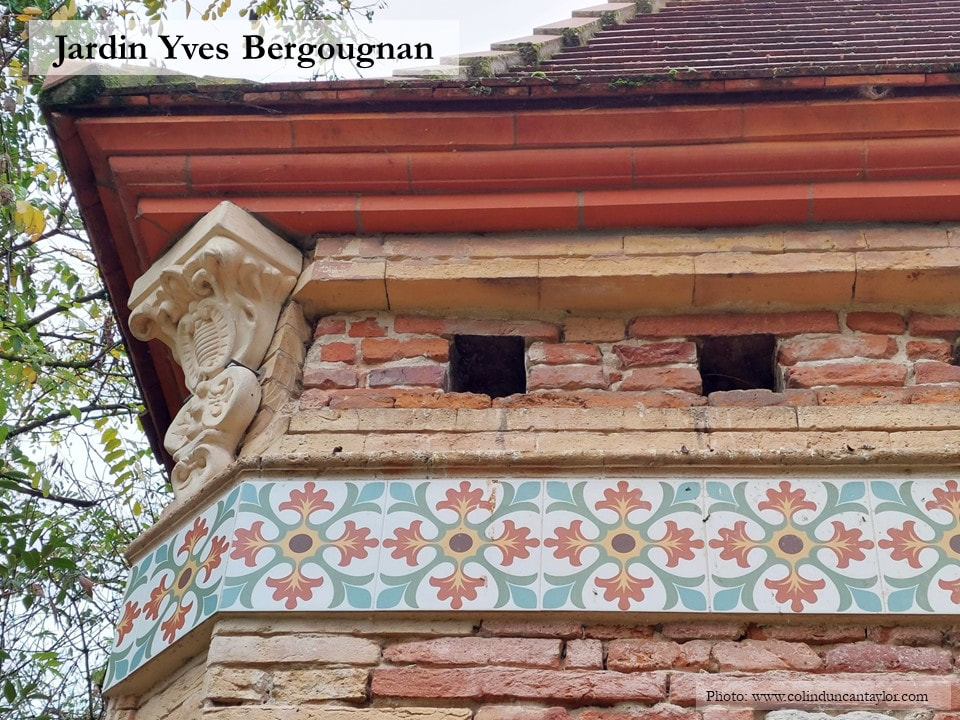
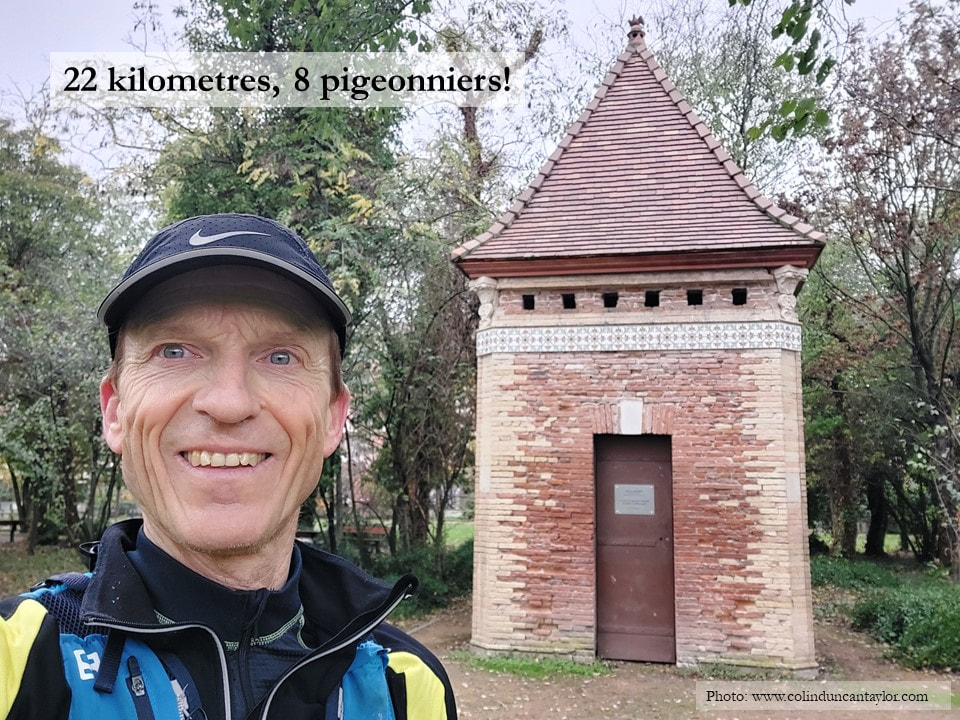
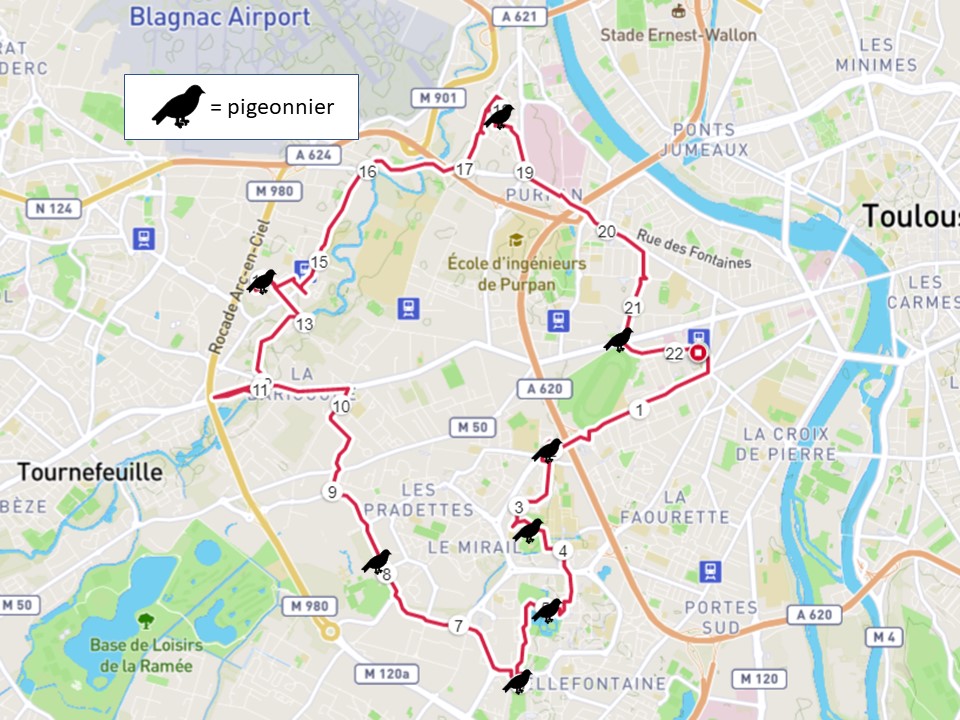
To achieve so much so quickly, he employed platoons of stonemasons, carpenters and blacksmiths, and an army of navvies. His workforce reportedly peaked at 12,000 – although 6,000 is probably a more accurate estimate – and the bulk of it was made up of peasants from the surrounding countryside. A significant proportion were women – perhaps as much as a third – and Riquet even expressed a preference for female workers in a letter he wrote to Louis XIV’s finance minister in 1669: ‘All the women who come to me, I shall hire them in the knowledge that these women working under contract will do as much work as men who are paid by the day.’ 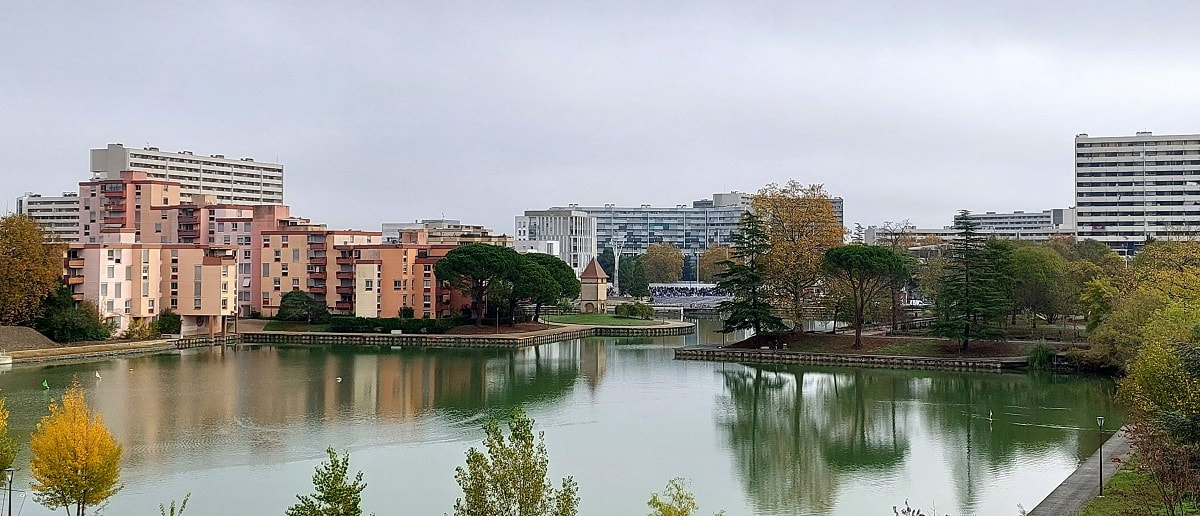 If you travel through the gorgeous countryside of Occitanie with your eyes open, you will soon spot plenty of pigeonniers, or dovecotes. There are 6,000 of them, and they are just as much a part of the architectural heritage as the abbeys and the bastides, or the churches and the châteaux. But you don’t have to venture into the countryside to see them. You will find pigeonniers in the cities of Occitanie too, particularly in Toulouse. In the urban landscape, they can be even more striking. On Saturday, I visited eight of these historic buildings, starting and finishing at Les Arènes metro station. At 22km, this would be a long run or walk for many, but it could easily be split in two. Most of my route followed cycle lanes, cycle paths, the banks of Le Touch or passed through some of the city’s parks: this would be a pleasant bicycle ride in fine weather. Some of the pigeonniers are a little tricky to spot unless you know their exact location. The map and GPX file at the end of this post will help! The first pigeonnier belonged to the nearby Château de la Cepière, built in the 16th and 17th centuries. Note the multiple lines of defence against climbing rodents which posed a grave threat to the baby pigeons: the band of green glazed tiles, slippery to climb, and the two protruding bands of tiles (called randières) above and below the glazed tiles, difficult for a rodent to bypass.
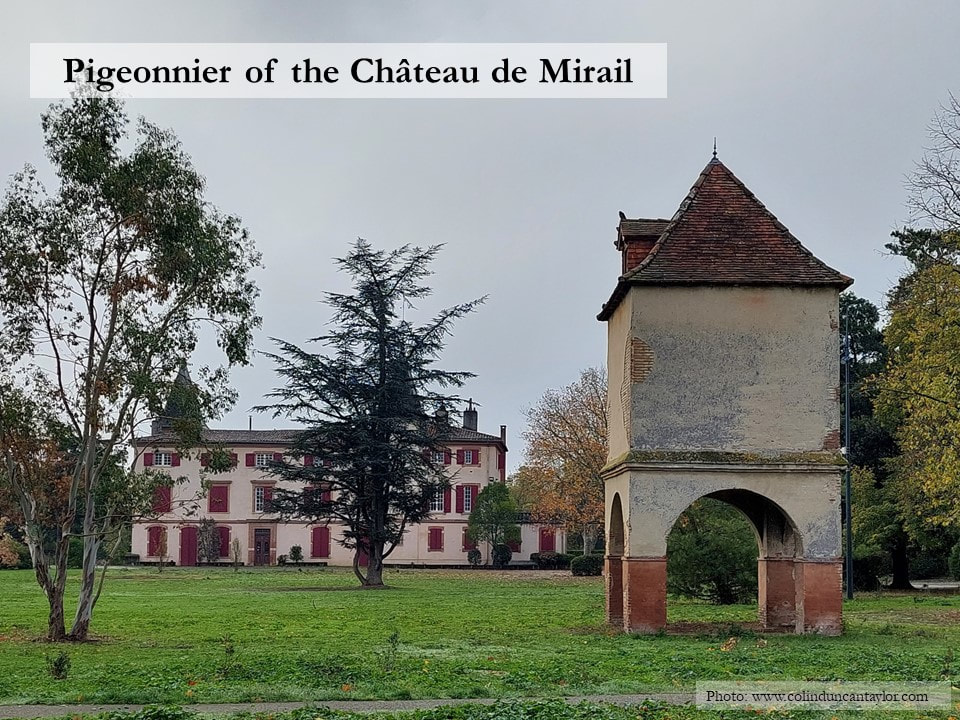
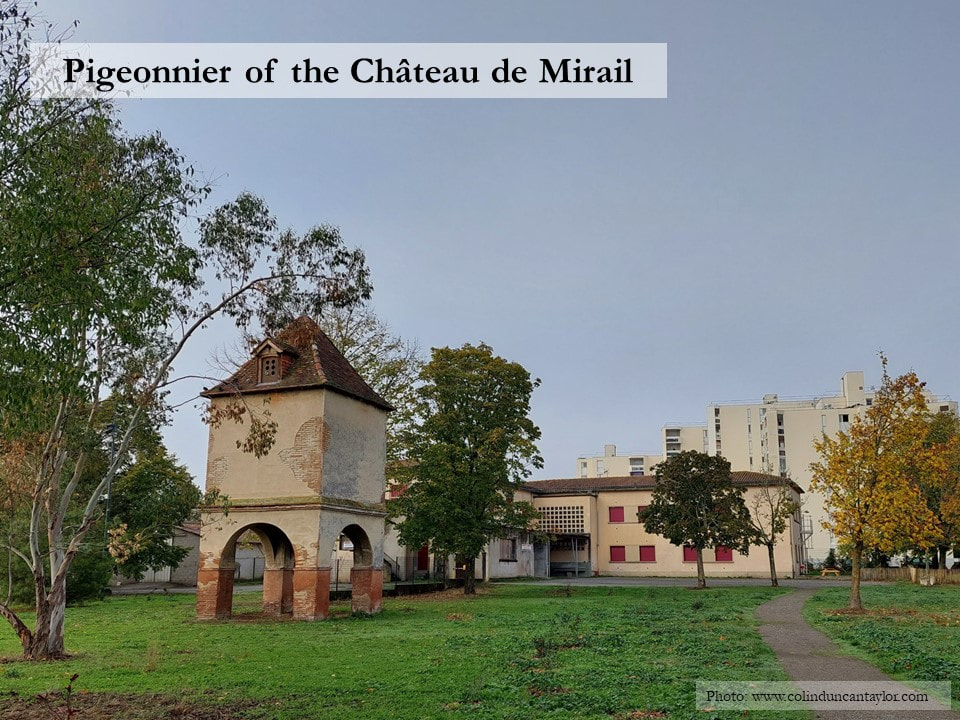
Parc du Mirail. Located in what was once the park of the 17th-century Château de Mirail, this pigeonnier was classified as a Monument Historique in 1994.
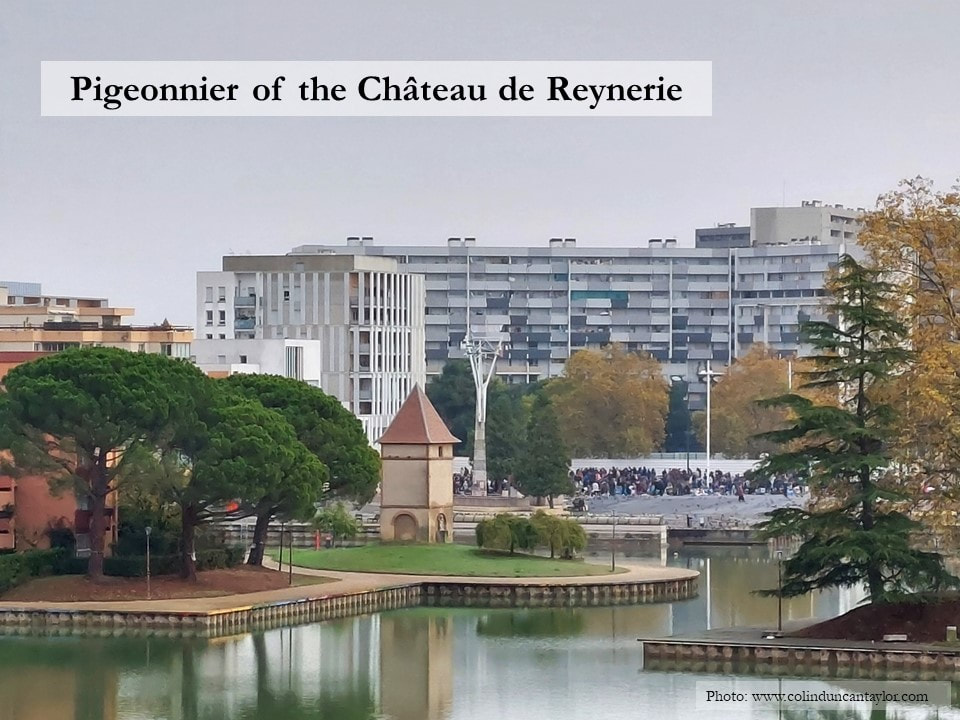
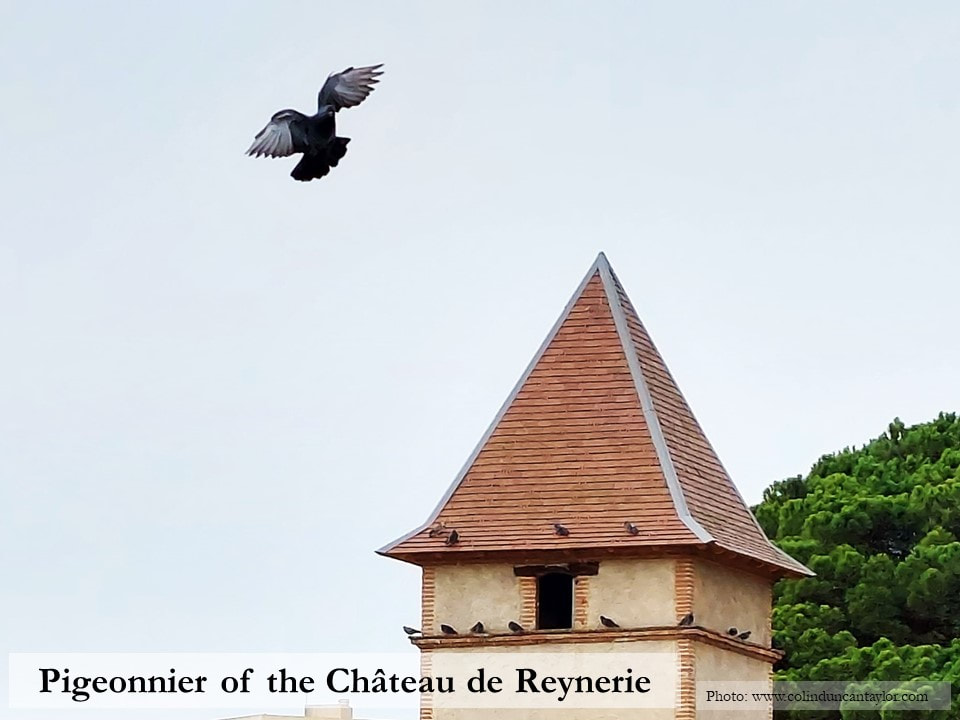
Another pigeonnier belonging to a château, this time the 18th-century Château de Reynerie. In 2013, the pigeonnier was put back to work as a giant contraceptive. The principle is simple: the adults settle in and lay their eggs; once a week or so, someone goes inside the pigeonnier and shakes each egg to mix the white and the yolk; this action stops the embryos forming, but the pigeons carry on sitting on their now sterile eggs and the population can be managed.
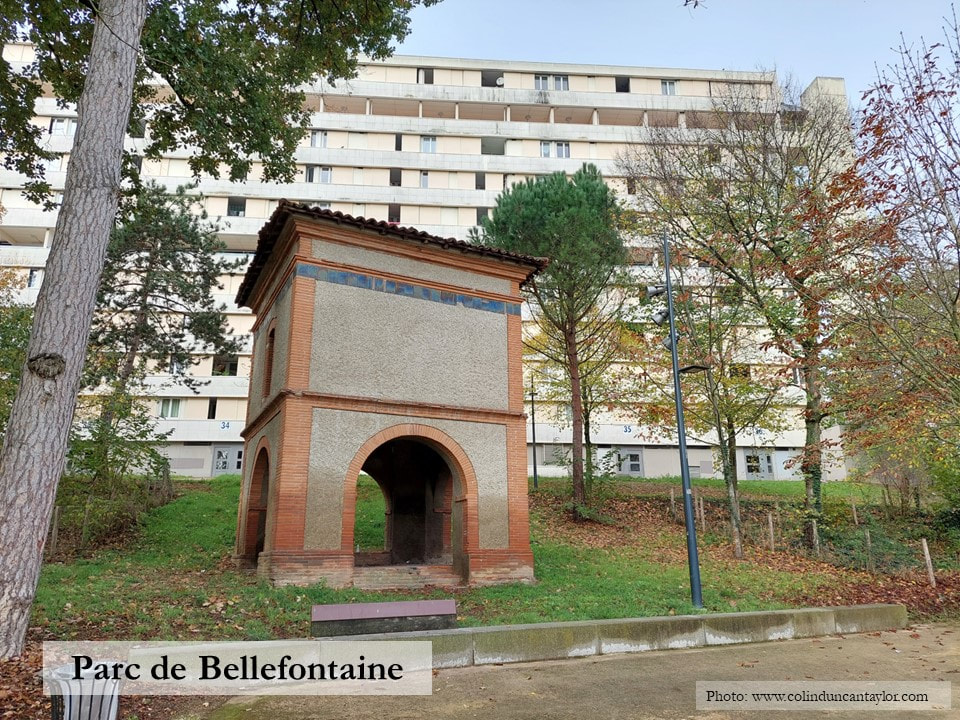
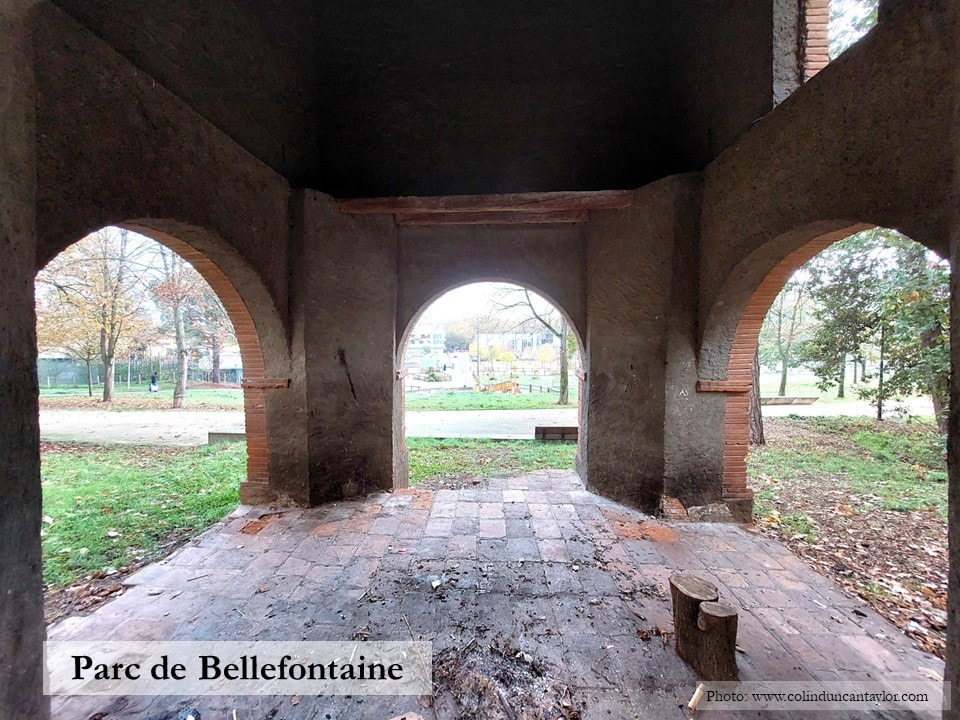
The park at Bellefontaine used to belong to a château of the same name, destroyed by the city authorities in 1960 to make way for a housing project. The 18th-century pigeonnier survives, despite its ancient arcades appearing to provide shelter for the odd barbecue.
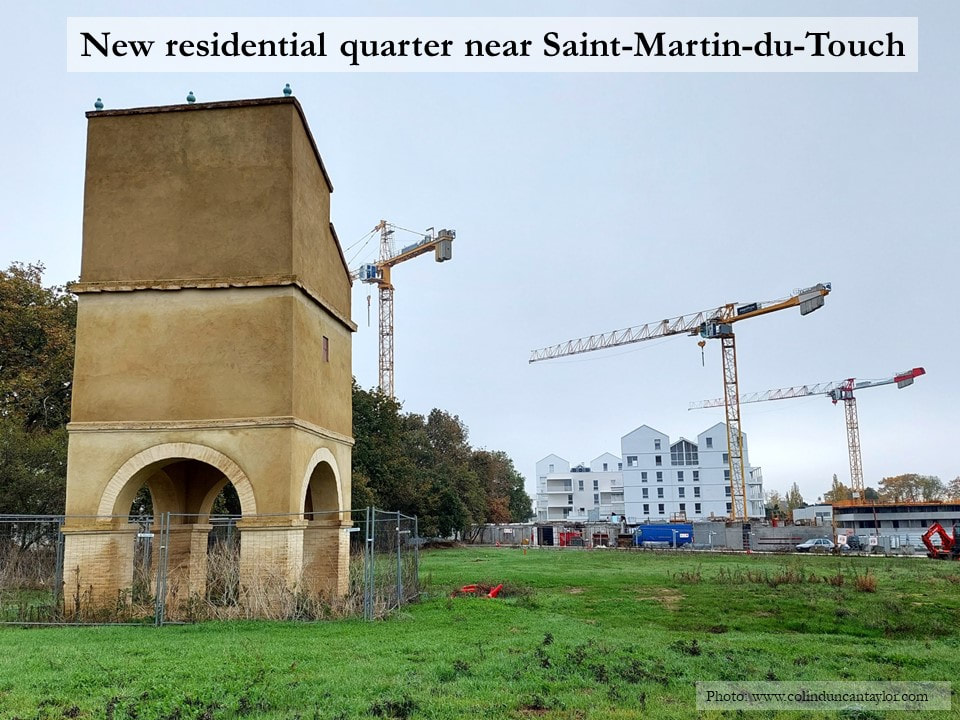
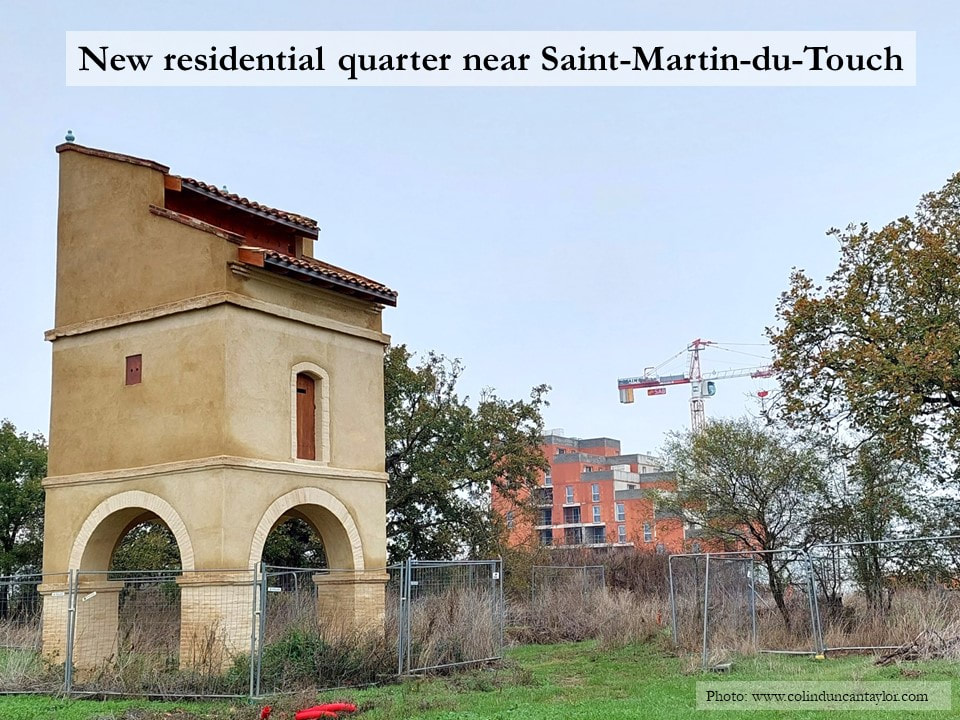
The pigeonnier of the Château de la Mounède has been incorporated into the site of an EDF office complex. The family that built it minted coins, and the name of their home comes from the Occitan for money: la moneda. 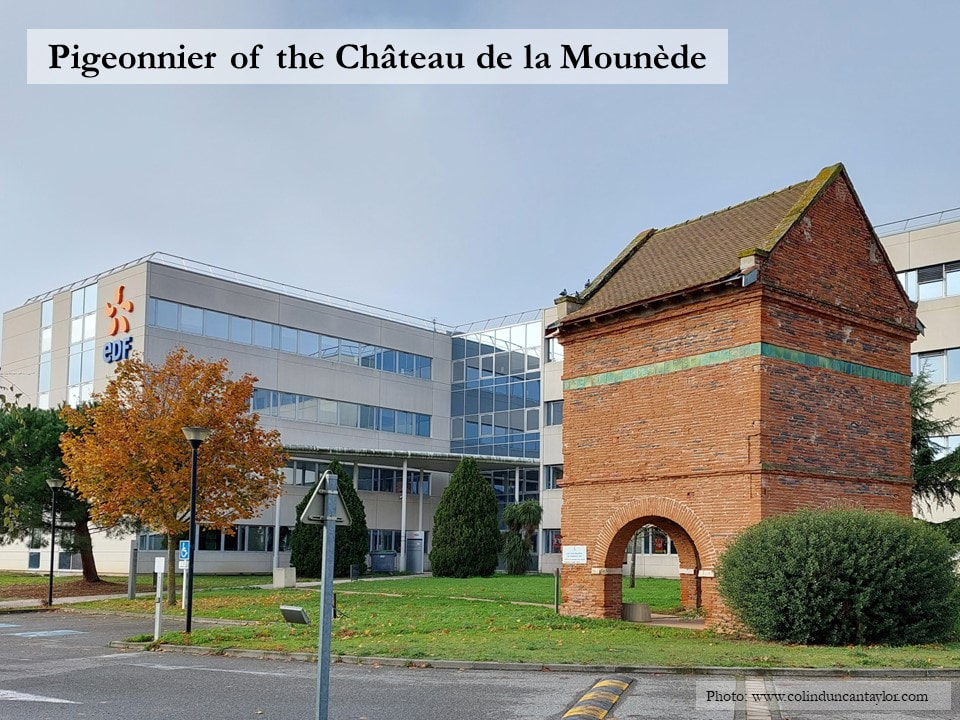 The next pigeonnier is built in a style often referred to as pied de mulet, or mule’s foot (when viewed upside down, it resembles an equine hoof). This style was common in the 19th century. Located just south of the airport and close to the old village of Saint-Martin-de-Touch, it has been restored by the developers of this new residential quarter which, as can be deduced from all the cranes in the photo, is still under construction.
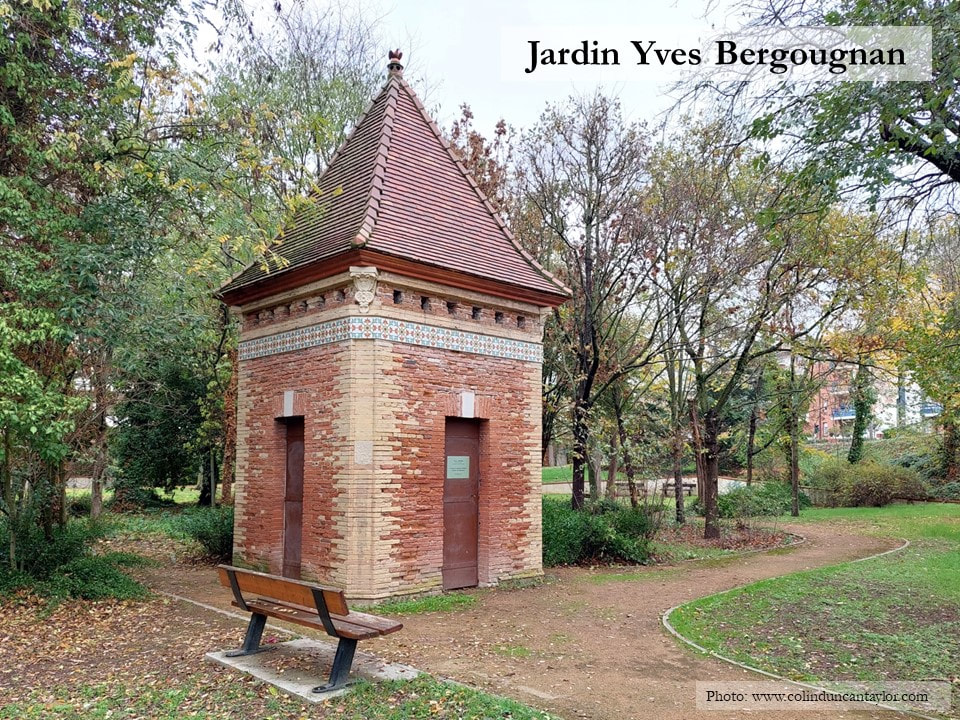
Located in an overgrown corner of the Parc de la Flambère, seemingly used by rough sleepers, this is the saddest pigeonnier on my route, the only one falling into ruin, the only one scarred by graffiti. Built in 1670 and later converted into a windmill, it belonged to the Château de Purpan. 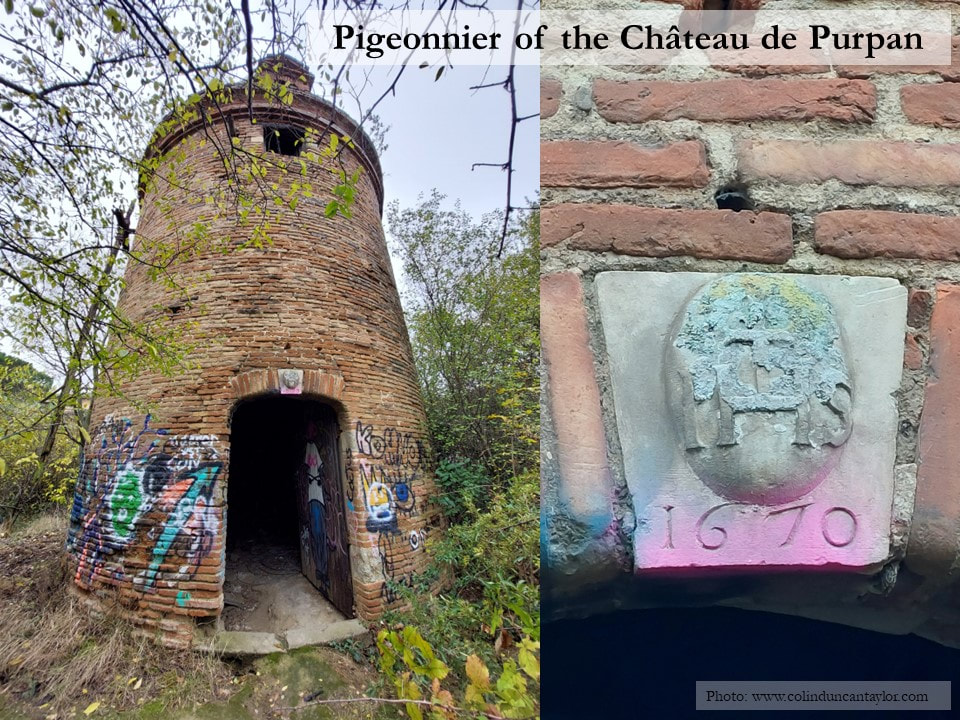 Renovated by the mairie, this bijou pigeonnier in the Jardin Yves Bergougnan is now being used as a contraceptive. Most contraceptive pigeonniers are purpose-built wooden constructions on stilts, and you can see one which was installed in the Parc de la Faourette earlier this year.
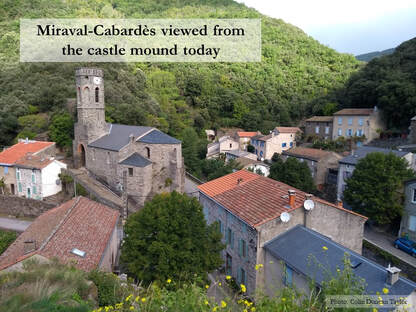
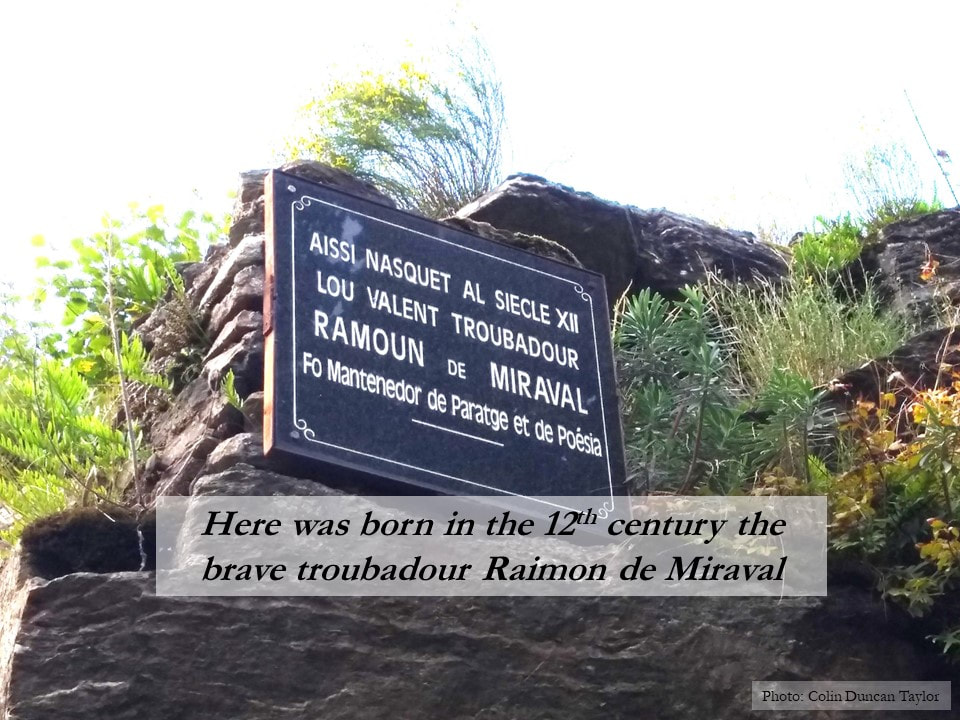
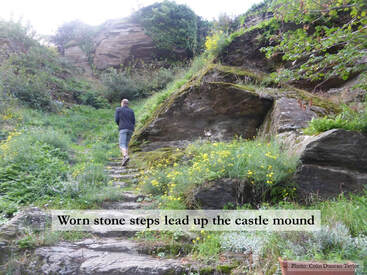
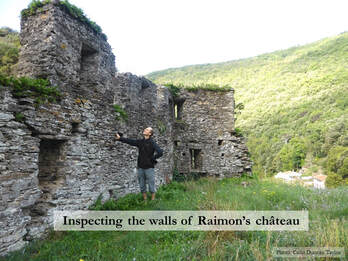
A castle mound surrounded by wooded mountain slopes. Forlorn sections of crumbling fortifications. A plaque informing any visitor who can read Occitan that the troubadour Raimon de Miraval was born here in the hamlet of Miraval-Cabardès sometime in the 12th century. The sign wouldn’t make anyone stop – unless they know his story. Raimon de Miraval was a troubadour who truly lived his art. He was a knight so poor he only owned a quarter-share of this insignificant castle hidden in a lost valley of the Montagne Noire. He fell hopelessly in love with the wives of the two brothers who owned the bigger château next door, and in his old age he was tempted to come out of retirement in a bid to save the world, the Cathar world, from destruction by Simon de Montfort and his crusaders.
Divorce and unrequited love His romantic life was often a disaster. He divorced his wife Gaudairença, allegedly because she composed dances and it was too much to have two poets under one roof. After that, he composed his songs of courtly love for ladies who pleased him. First came Etiennette de Pennautier. She was reputed to have a voracious appetite for men, and she is better known as Lady Loba, ‘loba’ being the Occitan for ‘she-wolf’. She was the wife of Jourdain de Cabaret who, with his brother Pierre-Roger, owned the eponymous château down the road above what is today called Lastours. In one song, Raimon beseeches her to return his love. Deaf to his entreaty, she chose instead to become the long-term mistress of the Count of Foix. King Pedro II becomes a fan After that setback, sometime around 1206 Raimon de Miraval turned his attention to Azalaïs de Boissézon, wife of the lord of Lombers. Azalaïs was a lady in search of fame, or at least notoriety, and she was delighted when such a famous troubadour agreed to write songs about her. Unfortunately for Raimon, he fell in love with her himself, but Azalaïs was aiming higher than a poor knight with a minority stake in a tiny château. She wanted to attract the attention of the King of Aragon. When she asked Raimon to extol her charms in a new song, our troubadour duly obliged and probably wished he hadn’t. When King Pedro II first heard the composition, he rushed hot-footed and hot-blooded all the way to Lombers, situated between Castres and Albi.
The Battle of Muret When he was in Toulouse two years later, Raimon wrote his final song. Perhaps remembering how one of his previous compositions had brought King Pedro rushing north to conquer Lady Azalaïs, Raimon de Miraval decided, or was persuaded, to write a song with a more political motive. He exhorts King Pedro to recapture the city of Carcassonne from the crusaders, and to make these invaders fear him as much as the Moors whom he had defeated a year earlier. At the end of August, Pedro crossed the Pyrenees with a thousand knights from Aragon and Catalonia, and they joined up with the armies of the counts of Toulouse and Foix outside the town of Muret to the south of Toulouse. Did Raimon de Miraval follow King Pedro and Count Raymond into battle? No one knows and it is difficult even to guess because, depending on which date of birth you favour, Raimon was somewhere between the ages of 48 and 78. Defeat and exile
The crusaders won a crushing victory at Muret and Raimon went into exile on the other side of the Pyrenees. He never saw Miraval again, and if he wrote any more songs, they have not survived. |
Colin Duncan Taylor"I have been living in the south of France for 20 years, and through my books and my blog, I endeavour to share my love for the history and gastronomy of Occitanie and the Pyrenees."  |
||||||||||||||||||||||||||||||||||||||||||||||||||||||||||||||



 RSS Feed