The Cathar Memorial at Les Cassès
This windy promontory hides a tragic history and a moving memorial to some of the victims of the Albigensian Crusade.
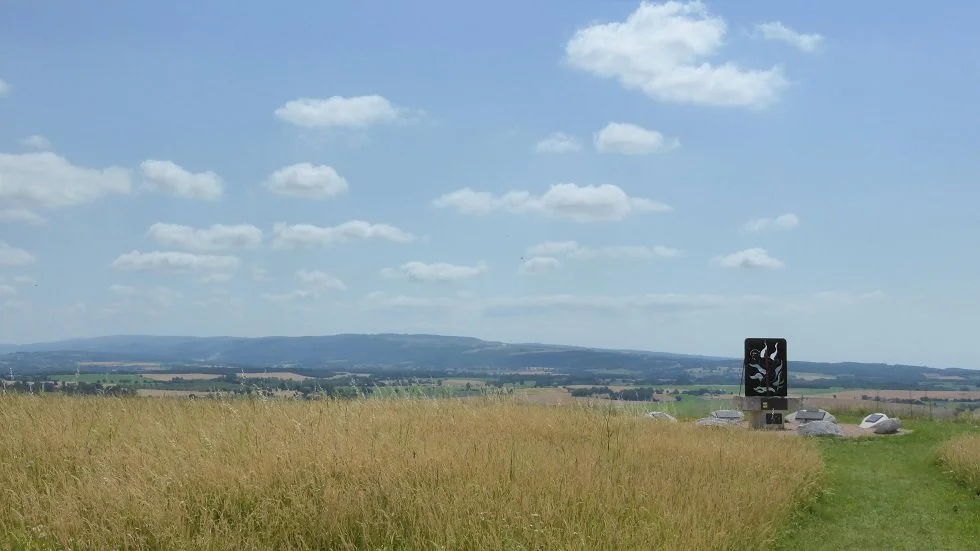
The Mémorial Cathare was created in 2011 to mark the 800th anniversary of a mass burning carried out here by Simon de Montfort and the Bishop of Toulouse. It’s an hour’s bike ride from my home and I have been here a dozen times without meeting a living soul. But instead of tranquillity, I am always filled with a sense of desolation. How can I admire the splendour of the Pyrenees and the Montagne Noire without reflecting on the brutalities committed by both sides during the crusade? The memorial also tests your knowledge of this tragic period of French history.
The centrepiece of the memorial is a thick sheet of iron plate mounted vertically on a block of stone. Shapes have been cut out from the iron to create an image of a heretic being burned at the stake, based on an engraving from the mid-thirteenth century.
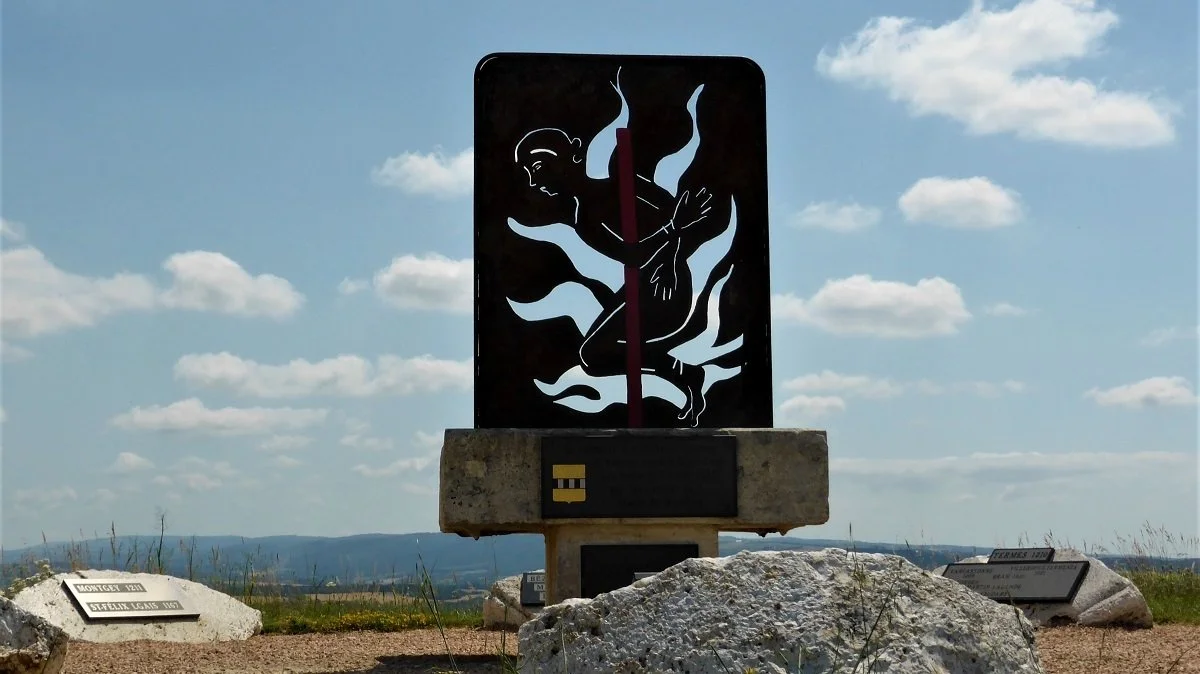
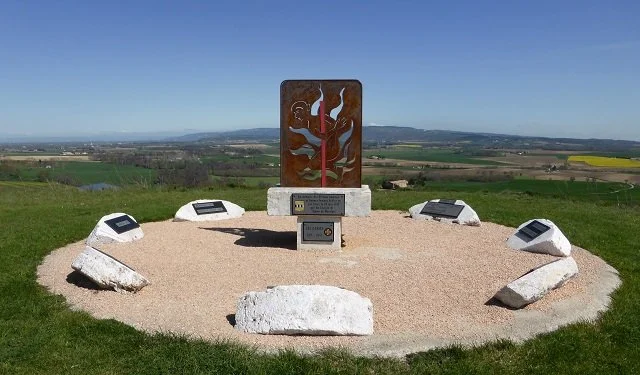
Around the perimeter of the gravel circle are eight more blocks of stone. Each one carries a plaque listing the names of towns and villages where other bloody events took place during the Cathar wars. The earliest is 1167, when the Cathar bishops may have held their first synod a few kilometres up the road in Saint-Félix-Lauragais (historians are still debating whether this event really took place). Then there is the fall of Béziers in 1209, the first action of the crusade when 20,000 of the town’s inhabitants – Cathars and Catholics alike – were butchered. The final date is 1321 when the last known Cathar parfait was burned at Villerouge-Termenes. The death of Guillaume Bélibaste marked the end of Catharism in south-west France.
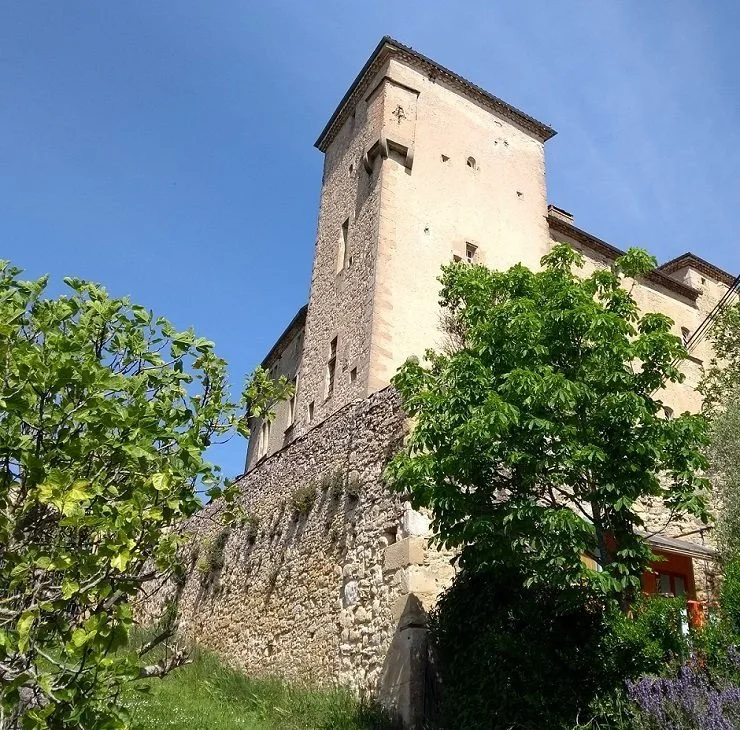
The Château de Montgey.
The Cathar memorial stands on the site of the old village of Les Cassès. A few kilometres down the road in Montgey, the Cathars slaughtered 6,000 crusaders in April 1211. These unfortunate recruits were new arrivals from Germany, on their way to join Simon de Montfort at the siege of Lavaur. Even without their help, the crusaders captured Lavaur on 3 May 1211 and promptly lit the most murderous bonfire of the crusade. Four hundred Cathar faithful perished in the flames.
Simon de Montfort then rode to Montgey. The village was deserted, and he razed it to the ground and set fire to the château (subsequently rebuilt as you can see from the photo) in revenge for the massacre of his German reinforcements. He then besieged Les Cassès.
When the defenders found themselves encircled by de Montfort and his army, the Cathar knights saved their own lives by agreeing to abandon ninety-four Cathar clergy to the crusaders. Bishop Foulques of Toulouse tried to convert them to Catholicism, but sixty unfortunate souls refused to renounce their faith and were burned alive near the memorial.
