The French concept of laïcité: the story of a village cross
I live close to one of Europe’s most-travelled pilgrimage routes – the road to Saint-Jacques-de-Compostelle. This proximity has often made me toy with the idea of making a pilgrimage of my own, but frankly, it’s a long, long way to the wild western coast of Spain. Last weekend I had the opportunity of making a much shorter pilgrimage – less than three hundred metres from my front door. How could I resist such an easy alternative?
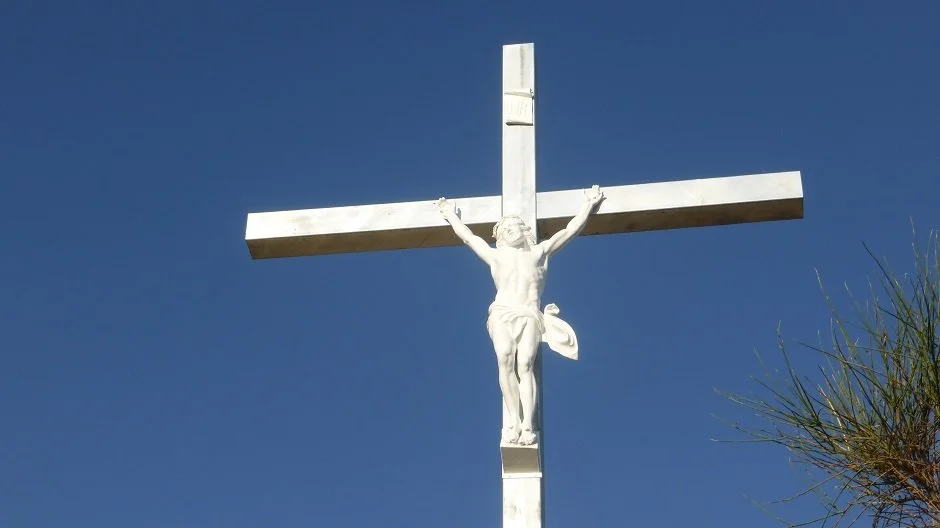
The hill above my village has been graced by a life-sized effigy of Christ on a seven-metre-high cross since 1943. Usually I can see if from my kitchen window, but for over a year, the skyline has been empty. In a winter storm, the cross fell, and Jesus broke his arm. The original cross was the initiative of a local priest, Julien Salles. He believed it would watch over Saint-Sernin-les-Lavaur during the German Occupation. Since then, it has often been the other way around, and the villagers have had to watch over the cross.
Anyone who climbs up the steep hillside to our cross can enjoy a magnificent panorama of the Lauragais, the Montagne Noire and the Pyrenees. Towards the end of the 10th century, there was a motte and bailey castle up there. One major disadvantage of such an elevated position, particularly if you are a wooden cross, is its exposure to all the winds and rains that nature has to offer. Despite this, the solid oak construction of 1943 lasted forty years. The faithful erected a new one in August 1983. In 2009, the cross was felled once more. This time, the mairie decided to bury the base of a new wooden cross inside a concrete plinth, but that did not stop the wood from rotting, and a decade later I looked out of my kitchen window one morning and thought, where’s the cross?
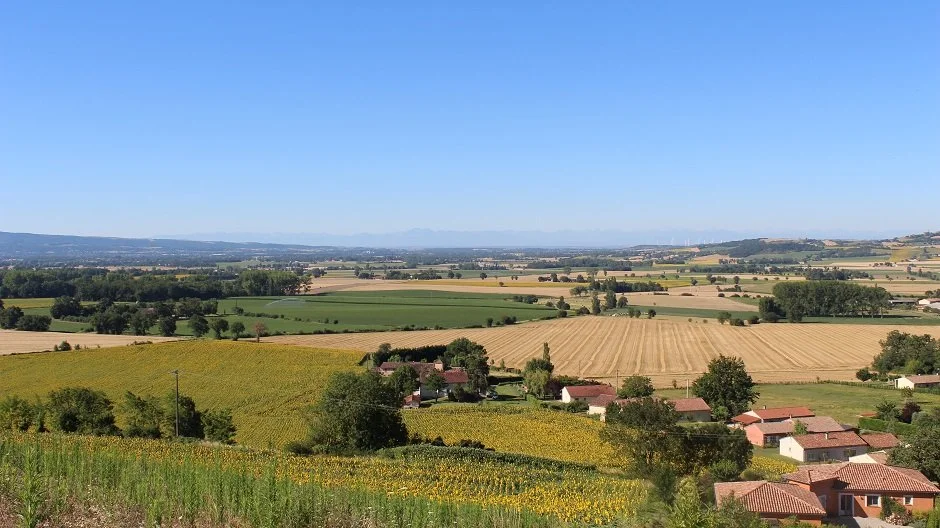
The view from the cross
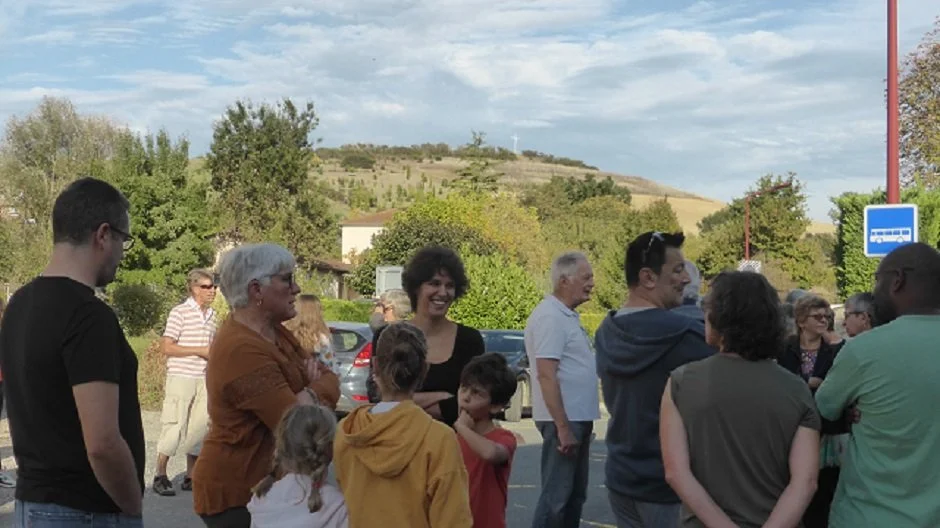
The villagers prepare themselves for a short pilgrimage
So there we were on 19 October 2019, almost the whole village gathered outside the church ready to start our pilgrimage. The mayor gave us a short historical resumé, then off we went. The intrepid attacked the hill by its shortest, steepest route, the majority took a longer path around the back, and the infirm were ferried to the top in a couple of 4x4s.
For a pilgrimage, there was a disappointing lack of religious representation. When I reached the top, I was expecting at least a priest, or even a nun or two. Instead, we were simply a gathering of villagers celebrating the rebuilding of our most notable and most noticeable monument. And a fine sight it now makes: Jesus has been re-armed and firmly attached to a sturdy new cross of galvanised steel. This one should outlast the Eiffel Tower.
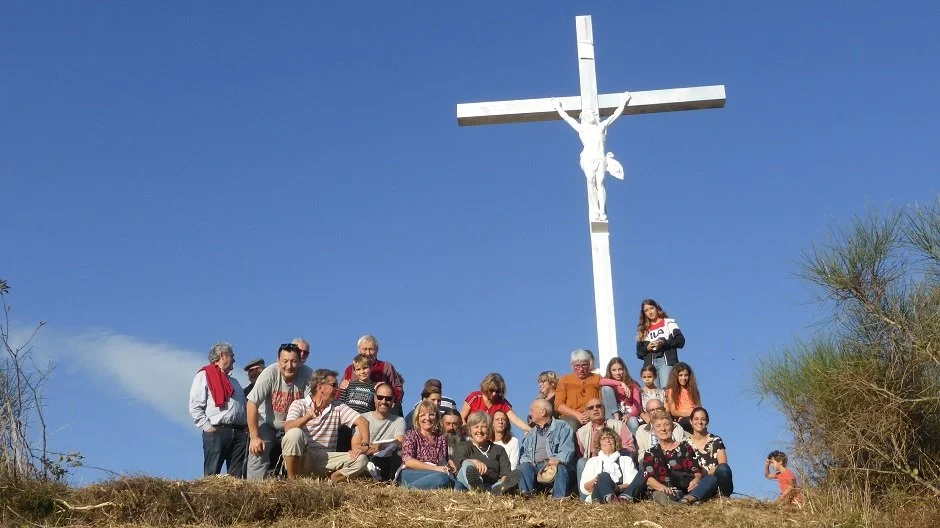
After a photocall, the assembly headed back down to the village. A pause at the church would perhaps have been in keeping with the spirit of a pilgrimage, but instead the mayor led us all to the Salle des Fêtes for a different kind of spirit: whiskey or pastis, accompanied by a celebratory buffet.
Over a glass I reflected that my short pilgrimage was a good illustration of the French concept of laïcité – the strict separation of civil society and religious society. The mairie can pay for the upkeep of the village church, repair fallen crosses, and provide a good buffet, but it must not involve itself in religious practices such as entering a place of worship.
