Wearing woad, Napoleon and a charity for sick children
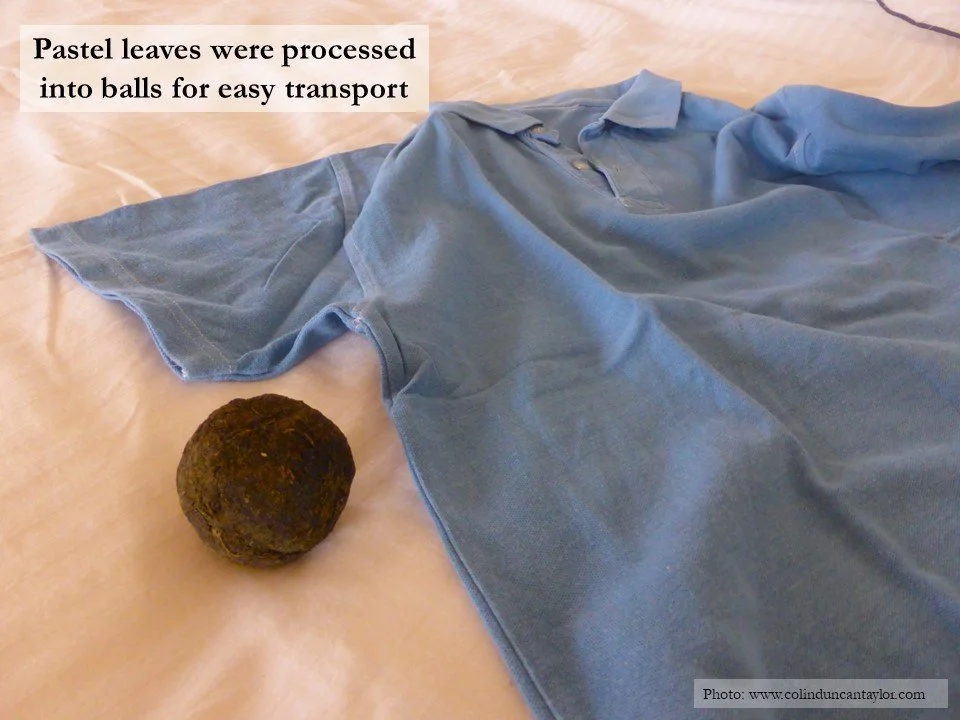
Between 1460 and 1560, woad was the most important crop grown in Occitanie, and its transformation into blue dye was the most lucrative industry. The trade in pastel, as it is known in French, made the merchants of Toulouse immensely rich. After this Golden Age, pastel fell out of favour and was supplanted by indigo until Britain and France became embroiled in the Napoleonic Wars.
The Continental Blockade backfires
The British began a blockade of French ports in 1806. Six months later, Napoleon retaliated by declaring his Continental Blockade which was intended to close every port in Europe to British merchants. In practice, the Continental Blockade leaked like a sieve. Instead of damaging British commerce, it soon began to cause shortages of numerous products in France, and the search for alternatives began. Before long, chicory was being used instead of coffee; grape syrup or sugar beet instead of sugar; linen instead of cotton.
Resurrecting pastel under Napoleon
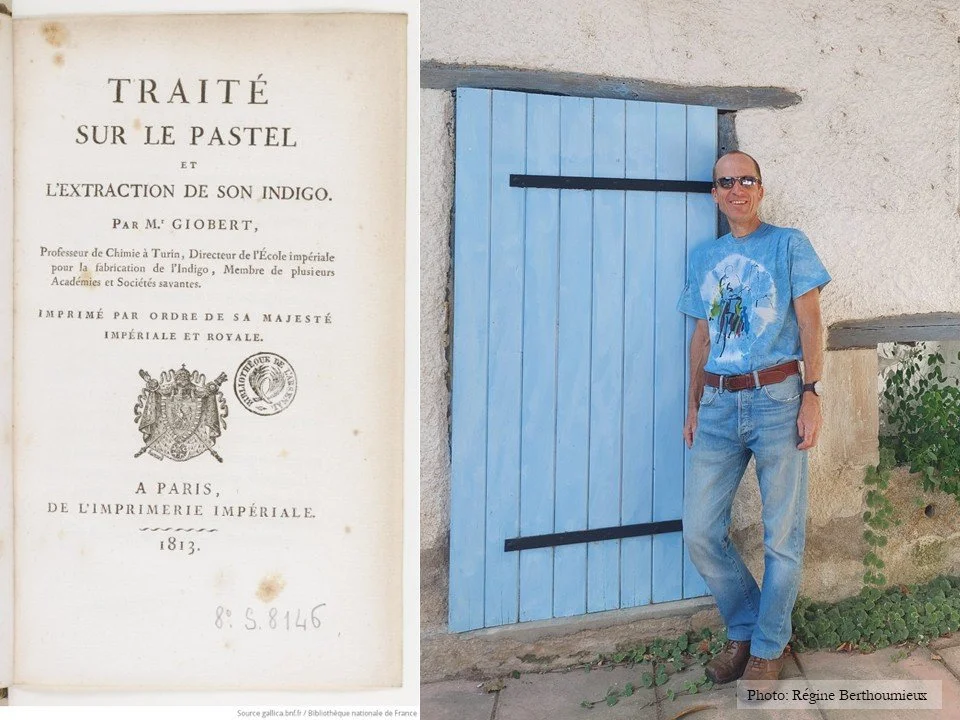
Most indigo came from Asia, and Napoleon began to run out of blue dye. Although he himself often wore the green uniform of the Imperial Guard’s light cavalry regiment, he liked to see most of his boys dressed in blue. Pastel was an obvious solution, but despite its long history, nothing much had been written down about the complicated process of turning green leaves into blue dye. Napoleon launched a competition to find a solution. In 1813, Professor Giovanni Antonio Giobert, director of Napoleon’s Imperial School for the Manufacture of Pastel Pigment in Turin, was able to publish a book based on his evaluation of all the proposed solutions.
Resurrecting pastel for modern times
Despite this reprieve, pastel was forgotten once the wars were over, and the invention of chemical dyes in the 1870s even put an end to indigo. Then, in the 1990s, this central component of Occitan heritage was resurrected, largely due to research by Henri and Denise Lambert in collaboration with Professor Vilarem at the School of Chemistry in Toulouse. Since then, it has gathered wider interest throughout the region and in other parts of the world.
A field of pastel
During my extensive research into this ancient blue dye, the only people who have been able to show me a field of pastel grown in Occitanie are Bruno and Régine Berthoumieux. Over the years, I have made numerous visits to their family estate at the Château de La Serre near Cambounet-sur-le-Sor. I have trampled on their crop, watched the harvest, witnessed the transformation of green leaves into blue dye, admired the process of dyeing and even dipped the odd cloth into the vat myself.
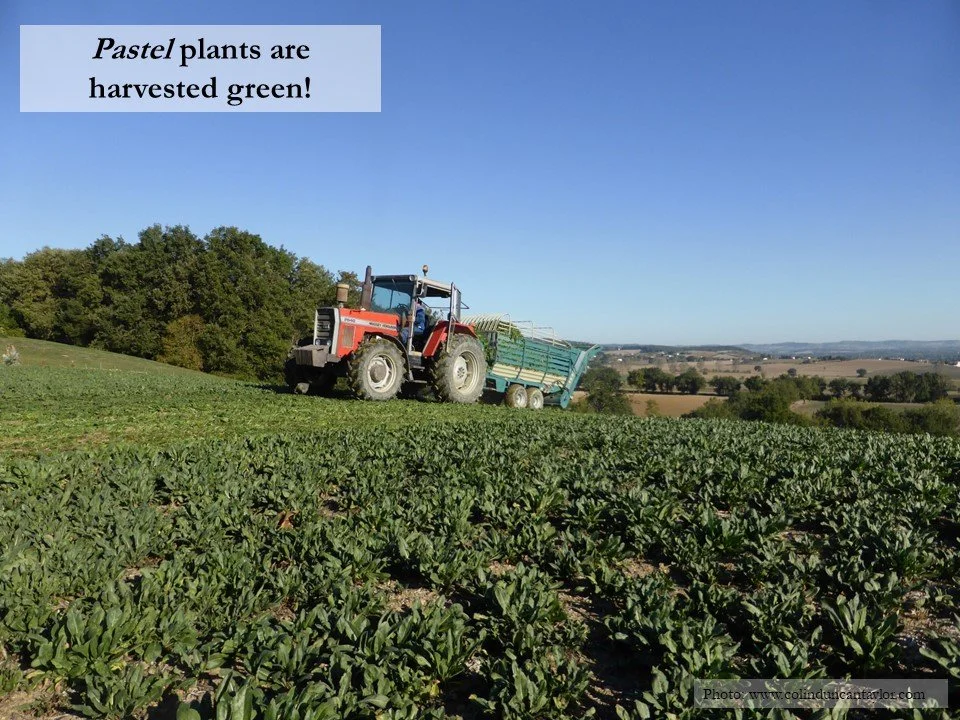
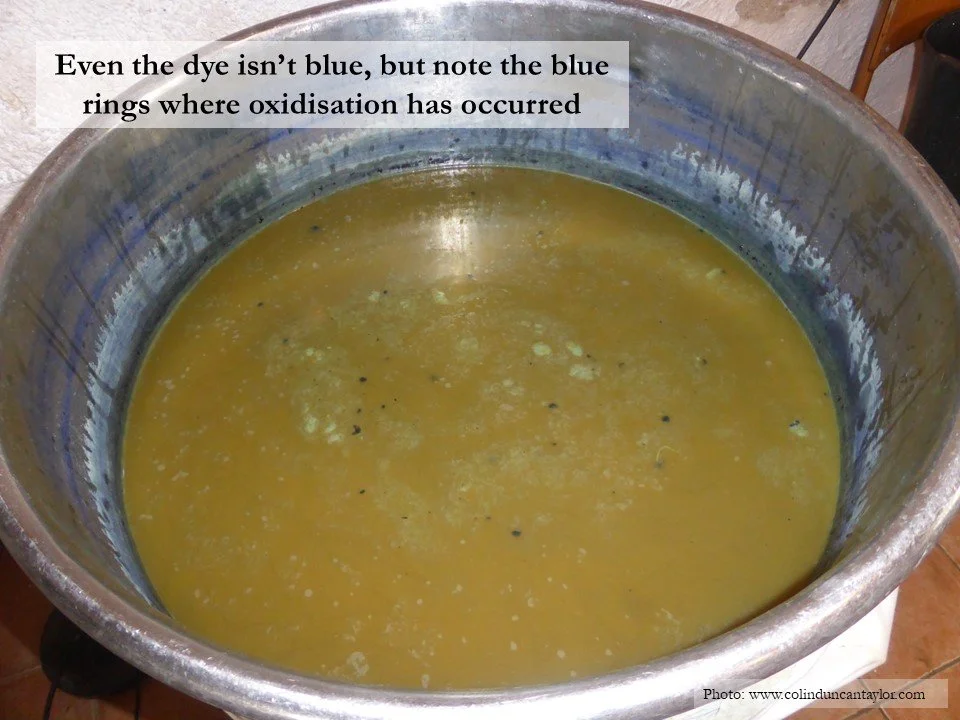
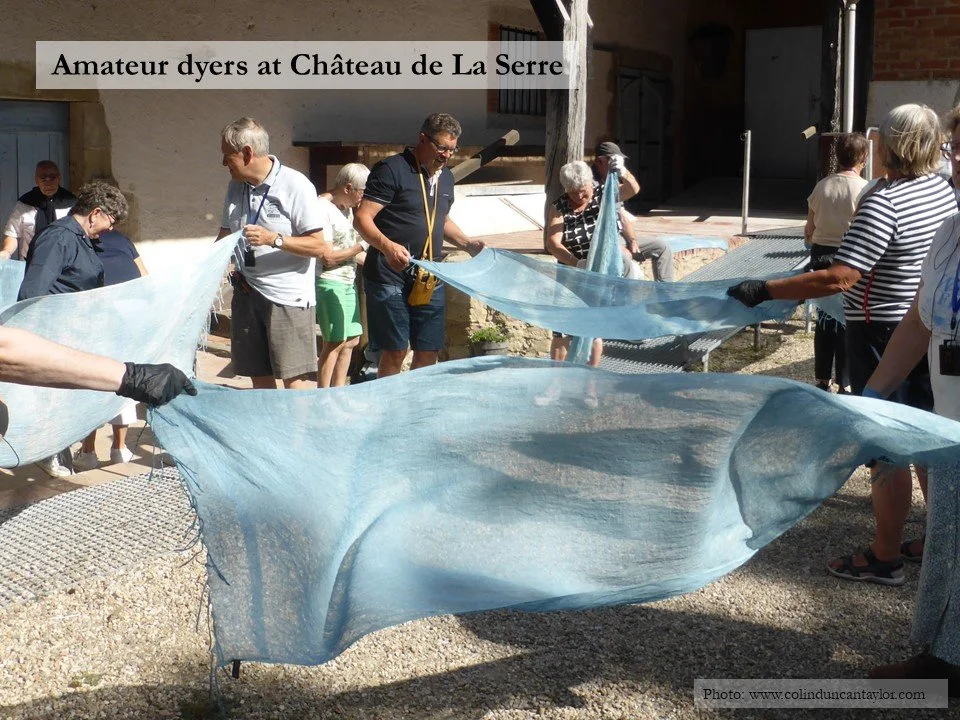
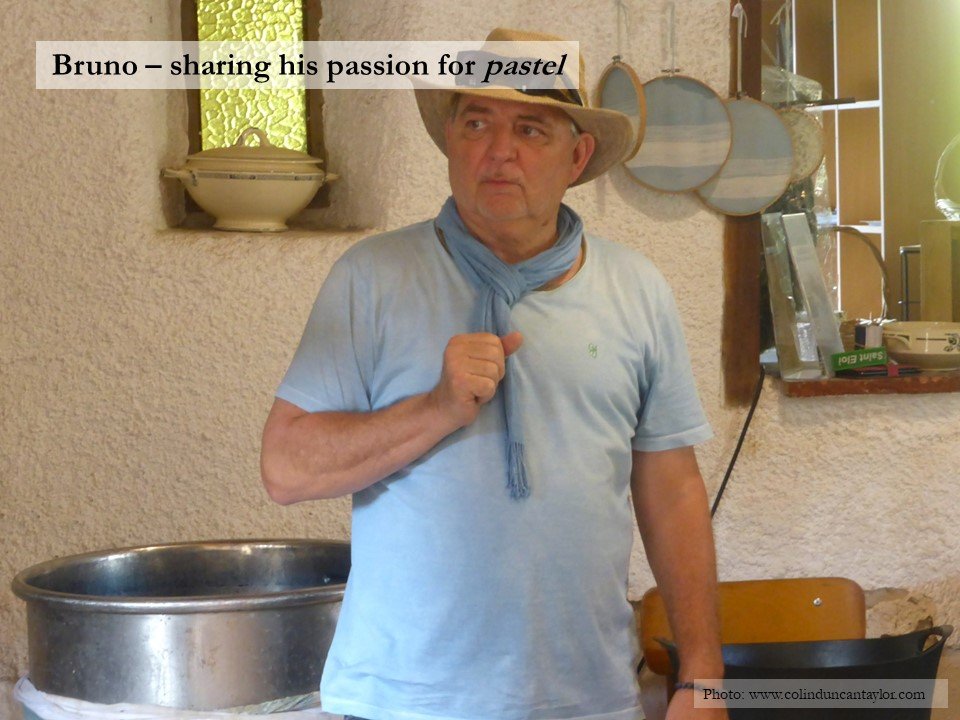
Recently, I was back there again, tagging onto a group of 30 Belgians who had come to learn more about the history of pastel and try a spot of dyeing for themselves. As a seasoned visitor, my eye was caught by something new – an exceptionally striking tee-shirt.
Dyeing for charity
In May this year, an association called ‘1000 étoiles pour l'enfance’ (1,000 stars for childhood) asked Bruno and Régine to transform some of their promotional tee-shirts by dyeing them with pastel. You can judge for yourself the success of this transformation thanks to these two photos taken by Régine. You may also like to decide if I’m too sexy for my shirt (too sexy for my shirt). If you can tear your eyes away from the tee-shirt, you will notice that the door beside me is also painted blue. People used to believe that this colour repelled insects. Modern science has discovered that paint made using pastel does indeed provide a natural protection against insects and some types of fungus, but the active ingredient is a transparent substance rather than the colour blue itself.
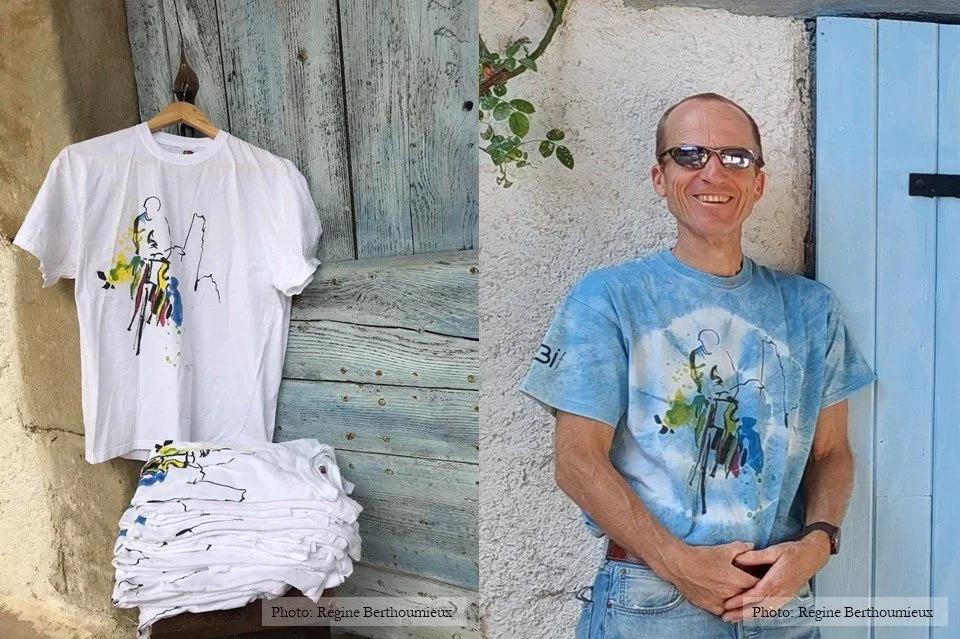
‘1000 étoiles pour l'enfance’ was founded in 2003 by an artist from the Tarn called Casimir Ferrer and it raises money to help ill children through activities including the sale of these tee-shirts. The design shows the Tour de France against a backdrop of Albi cathedral, inspired by the tour’s frequent visits to the town, most recently in 2019.
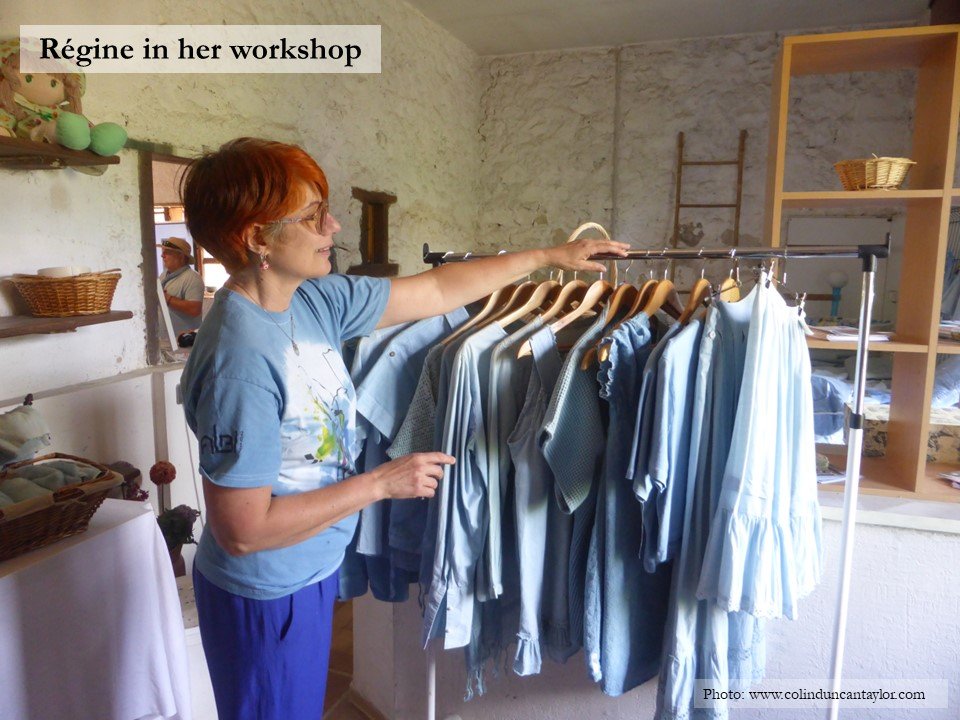
To find out more about the Château de La Serre where you can experience pastel for yourself and even buy your own tee-shirt, visit www.pasteldelaserre.fr
