In the early 20th century, Henry Bataille was a celebrated playwright. Many of his plays enjoyed successful runs in Parisian theatres and on Broadway. Some were adapted for the big screen, including the last film made by Douglas Fairbanks, ‘The Private Life of Don Juan’.
With a poet’s eye for drama, Henry knew exactly how he wanted to be buried. Although his dramatic output has passed into oblivion, his tomb is unforgettable. It may even give you nightmares.
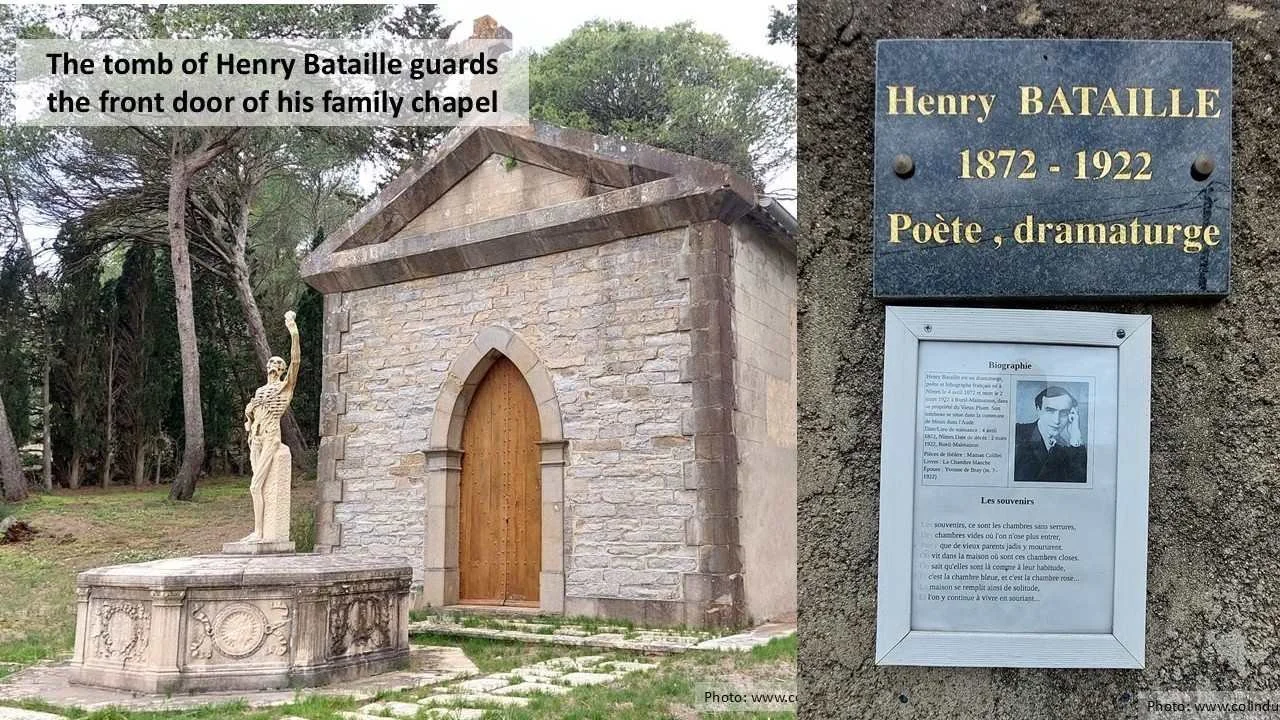
The village of Moux lies next to the A61 autoroute halfway between Carcassonne and Narbonne. Just beyond the village cemetery lies a private chapel where Henry’s ancestors have been buried over the centuries. A few weeks before an embolism killed him in 1922, he expressed his funerary wishes in writing.
Henry asked to be buried alone outside the chapel’s front door, as if he were a guard dog consulting the stars, questioning the night and the morning dew. And he didn’t want to be buried in the ground. Instead, he wanted an octagonal marble tomb from where his soul would be able to see the Montagne d’Alaric, the mountain where the last king of the Visigoths may be buried.
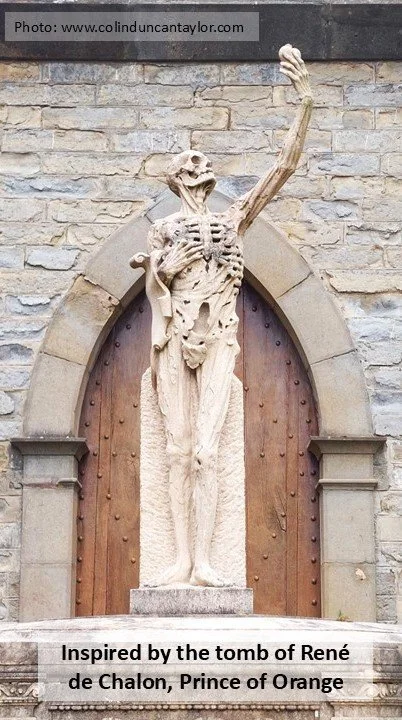
On top of this tomb was to stand a macabre statue, a decomposing corpse with a few scraps of flesh still clinging to its bones. This was not an original idea – it was to be a copy of a 16th-century masterpiece variously known as The Cadaver Tomb of René de Chalon, The Memorial to the Heart of René de Chalon, or simply The Skeleton. René was the Prince of Orange from 1530 to 1544, and his tomb can be found in Bar-le-Duc in north-east France.
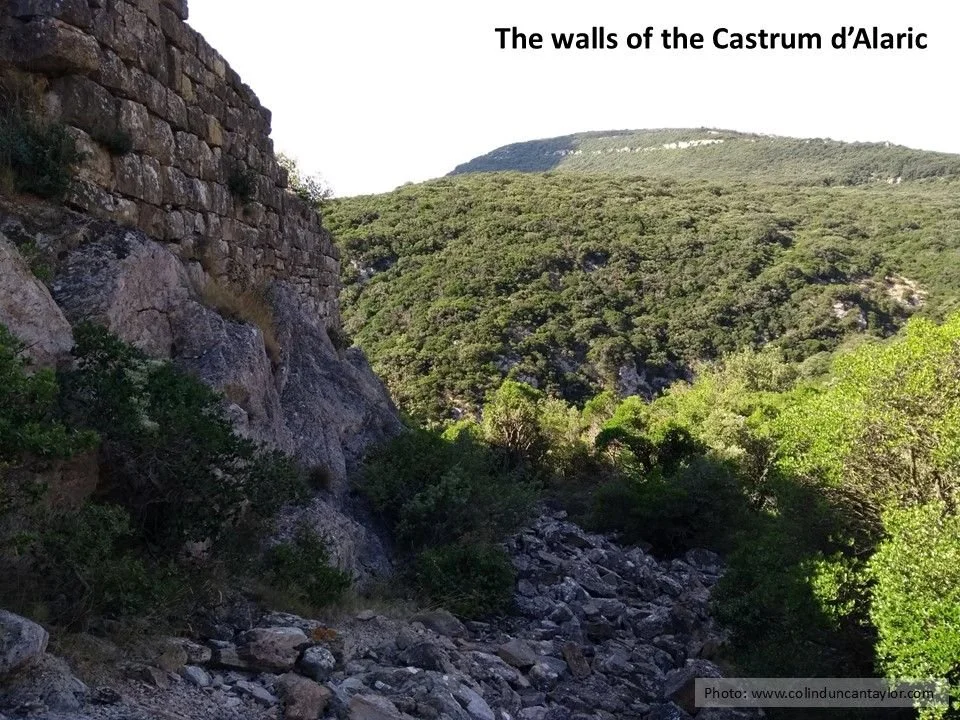
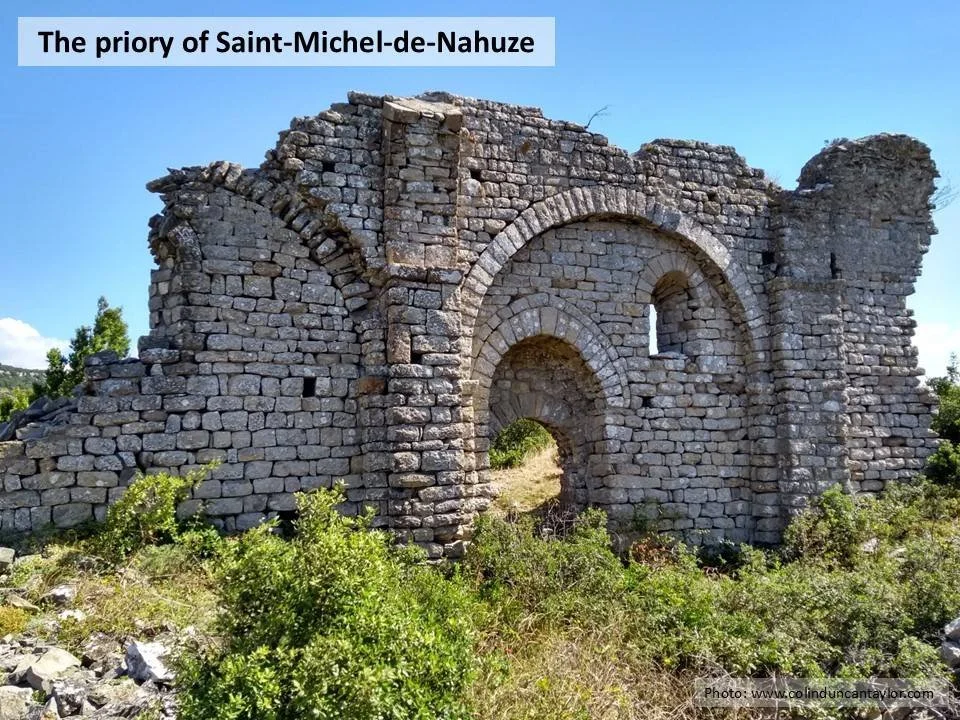
Following Henry’s death, his gruesome burial request was realised by the sculptor Edouard Ponsinet and mounted on the poet’s tomb in 1923. And there it has stood ever since, seen only by history afficionados and passing hikers. Should you decide to see it for yourself and you enjoy a good hike, you may like to carry on along the road, pass beneath the A61 and head up into the Montagne d’Alaric. There you can seek out the ruins of a fortified village – the Castrum d’Alaric – captured by Simon de Montfort in 1210 during the Albigensian Crusade and the remains of the priory of Saint-Michel-de-Nahuze. On the way, splendid views will take you mind off the grisly marble corpse.