An artist in the kitchen
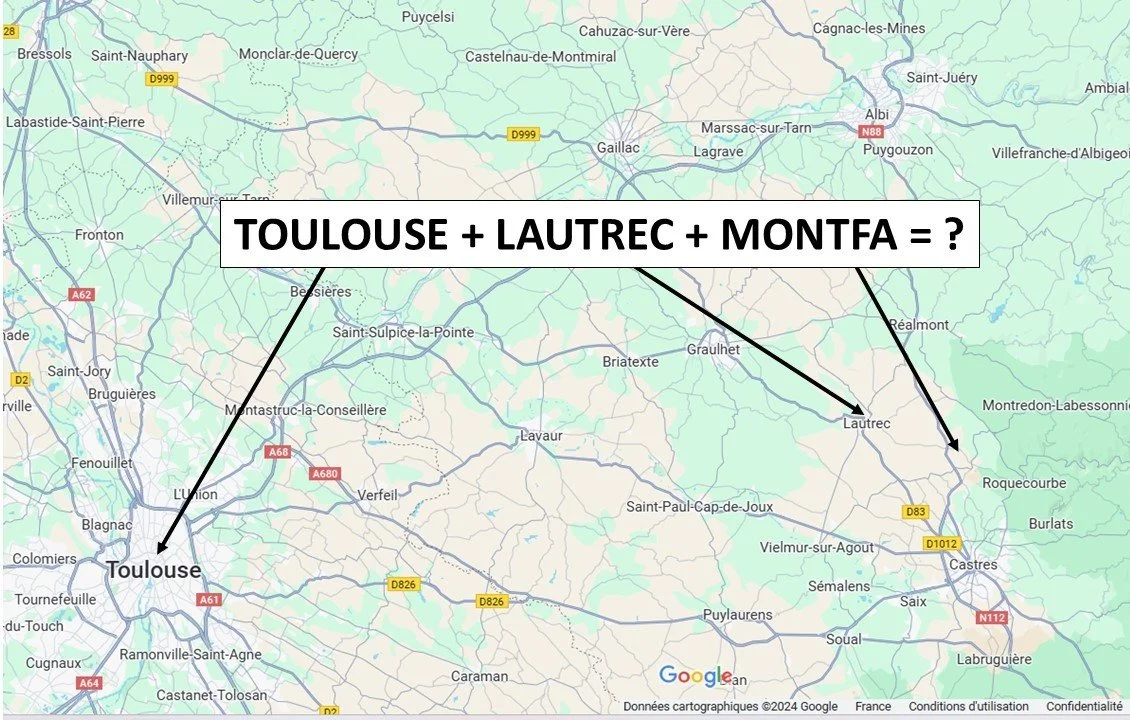
If you leave the metropolis of Toulouse and head north-east into the countryside, you may discover Lautrec. If you have a truly adventurous streak, you may even stumble across the Château de Montfa. In my mind, these three places are separated by little more than a hyphen thanks to a certain painter: Henri Marie Raymond de Toulouse-Lautrec-Montfa, more conveniently known as Henri de Toulouse-Lautrec.
A little further north-east lies the city of Albi where Henri was born in 1864 and where today many of his works are exhibited in the grandiose former bishop’s palace next to the iconic cathedral.
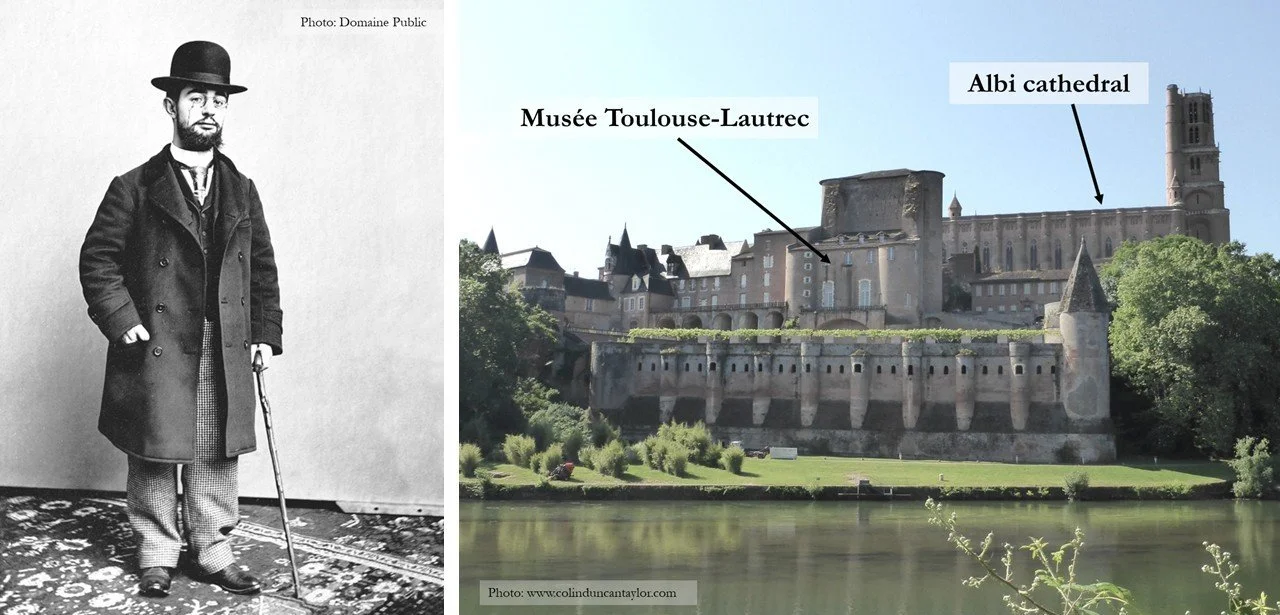
Travel another 30 kilometres north-east of Albi and you may find another château that belonged to the Toulouse-Lautrec-Montfa family. The Château de Bosc is where Henri fell off a chair in 1878 and fractured the femur in his left leg. The following year, he fell over in the Pyrenees and broke his right femur. As a result of these accidents, he never quite reached five feet in height, and while he was convalescing he dedicated himself to painting.
Henri wasn’t careless. His fractures were due to a congenital health condition possibly caused by his parents being first cousins. He inherited something else from his mother: a love of cooking. Henri became an accomplished and enthusiastic artist in the kitchen.
‘He bubbled over with ideas, and whether he was in Brussels, London, Paris or Arcachon, he would improvise simple yet succulent menus in honour of his guests of both sexes.’ So writes his childhood friend Maurice Joyant in the preface to a book illustrated by the artist himself. It also includes numerous family recipes from Henri and his mother.
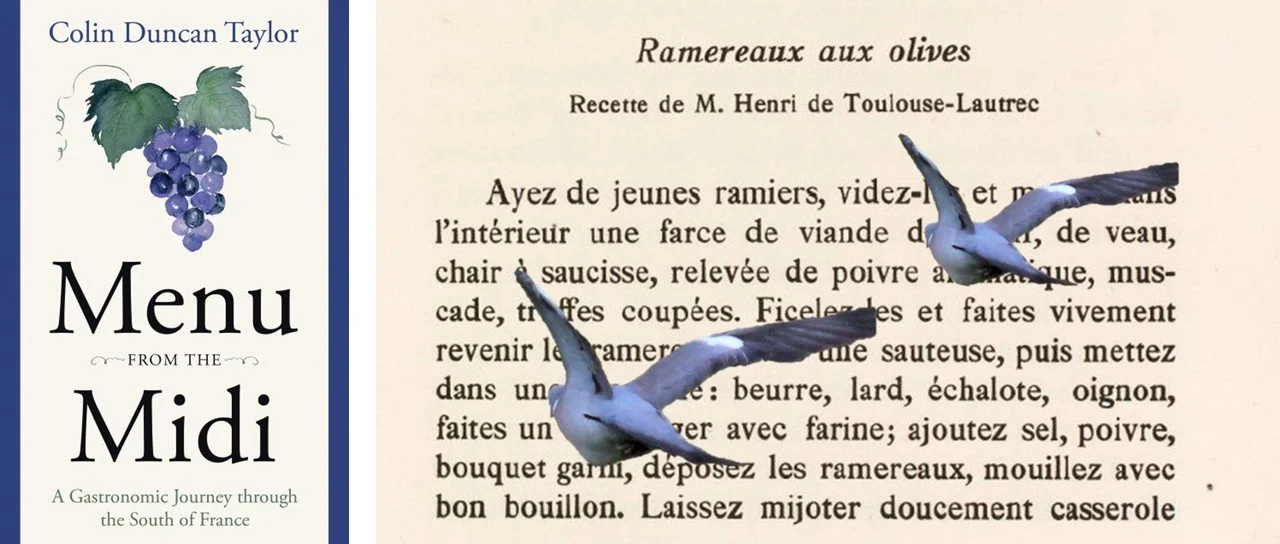
My own book, ‘Menu from the Midi’, includes Toulouse-Lautrec’s recipe for fish soup. At the end of this post, I offer you his recipe for stuffed baby woodpigeon.
As for the Château de Montfa, it may have fallen off the end of the celebrated painter’s name, and literally fallen to ruin, but not everyone has forgotten its existence. I was there yesterday, and I shall write about this haven of tranquillity in my NEXT ARTICLE.
Ramereaux Aux Olives après une recette de M. Henri de Toulouse-Lautrec
1. Gut two young woodpigeon and stuff them with a mixture of beef, veal and sausage meat seasoned with aromatic pepper, nutmeg and truffles.
2. Tie up the woodpigeons and quickly brown them in a frying pan.
3. In a saucepan, make a light roux sauce with butter, lard, shallot and onion. Then add salt, pepper, bouquet garni, the woodpigeons and some broth.
4. Simmer gently for an hour, and during the last 20 minutes, add de-pitted and de-salted green olives and a glass of wine brandy. Let the meat braise until the liquid has reduced well.
5. Serve the woodpigeons on a dish surrounded by olives and drizzled with the strained sauce which should be creamy.
