How far to Montfa?
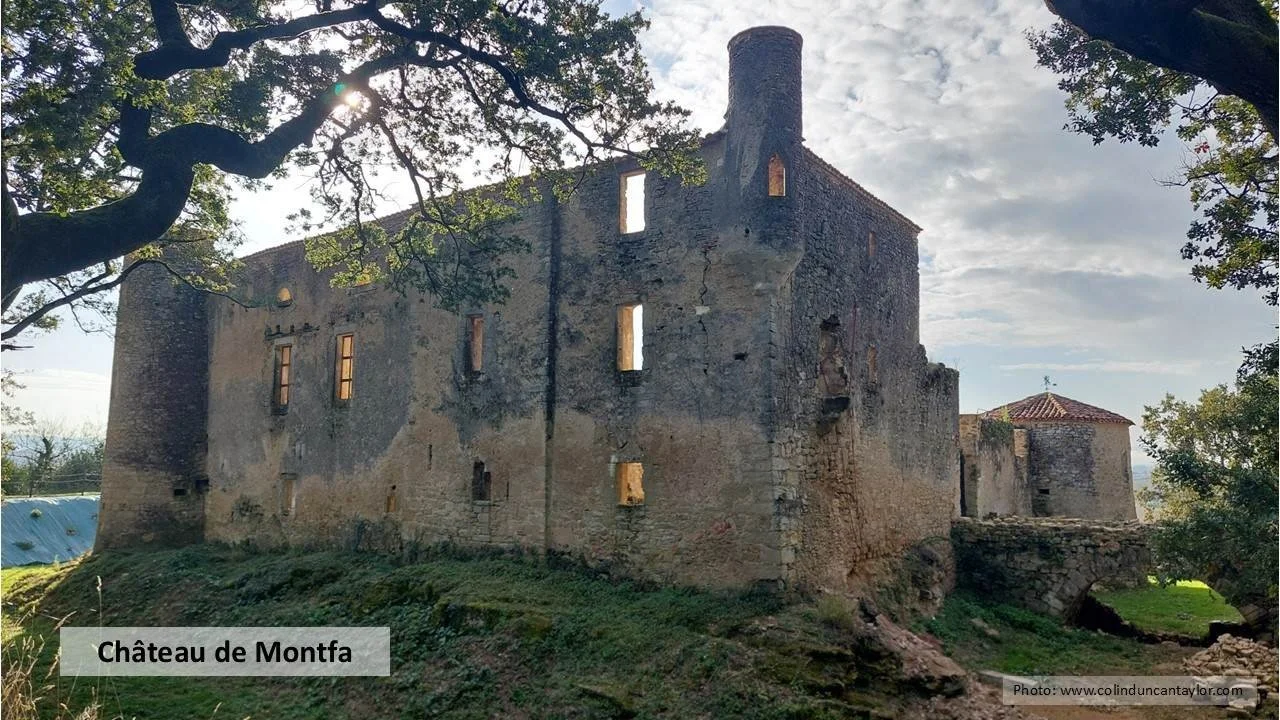
If you take the road from Castres to Albi, after ten kilometres you may spot the ruins of a castle on a hill. Take a right turn, look out for a discreet wooden sign, drive up a rutted track to a rustic car park and walk the last hundred metres to reach the tranquil remains of the Château de Montfa. The earliest written reference to this once-powerful castle comes from 1275 when its owner, the Viscount of Lautrec, mentioned it in his will.
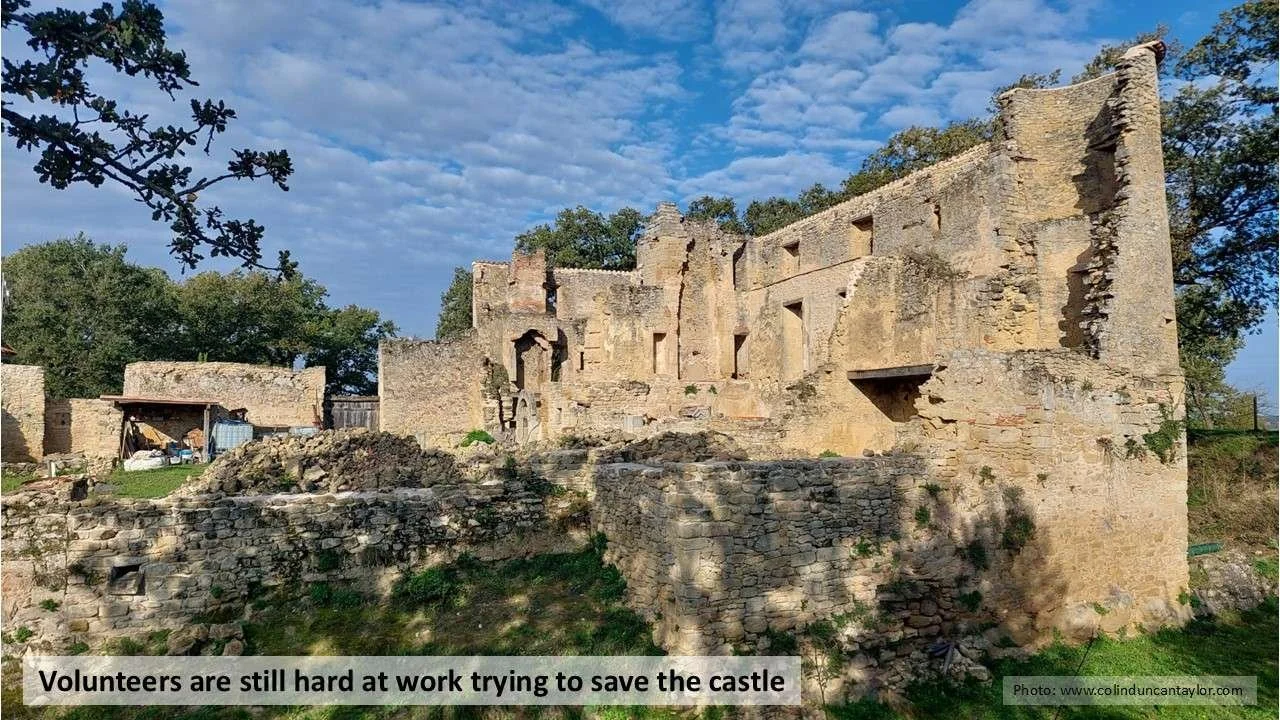
Since 2017, an association of volunteers has been busy restoring some parts of the castle and protecting others from further decay. Should you wish to help them, visit the website shown at the end of this post for more details. Volunteer days are usually every Thursday and two Saturdays per month. Guided visits are offered on the same days, but only if you reserve in advance. At other times, you can wander around the grounds and the exterior of the castle at will, as I did, and enjoy fine views of the Pyrenees and Montagne Noire.
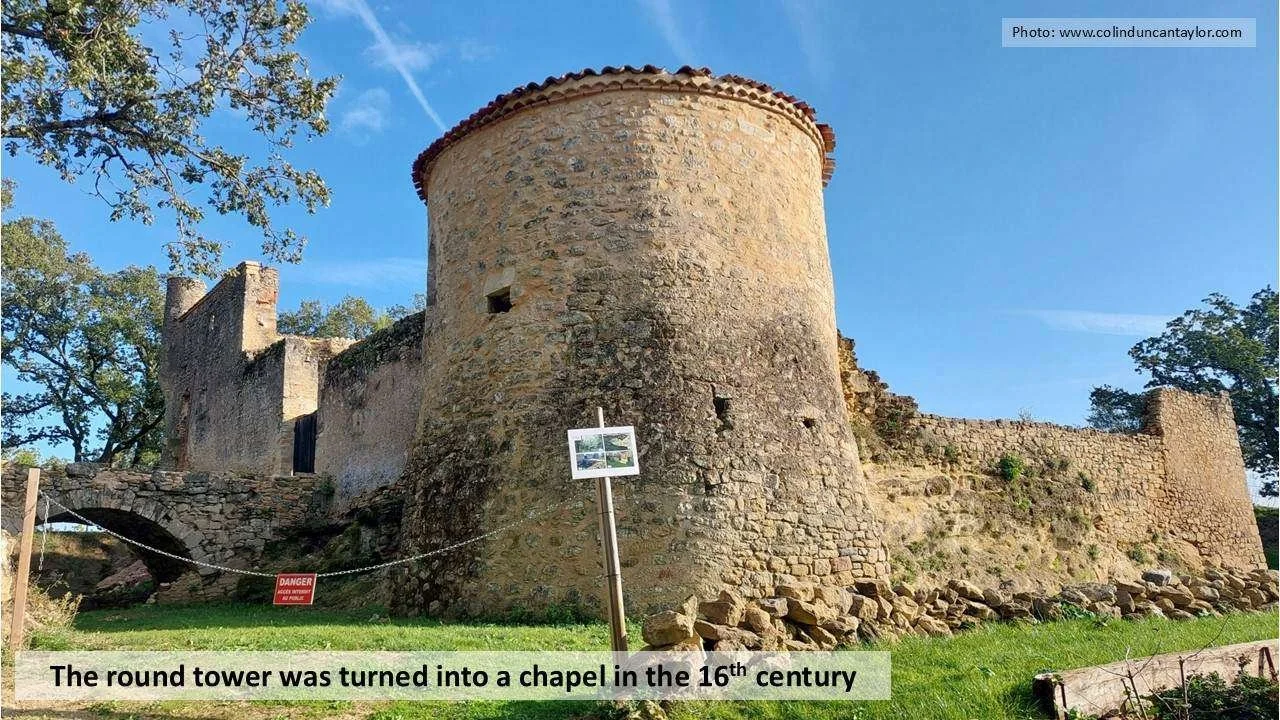
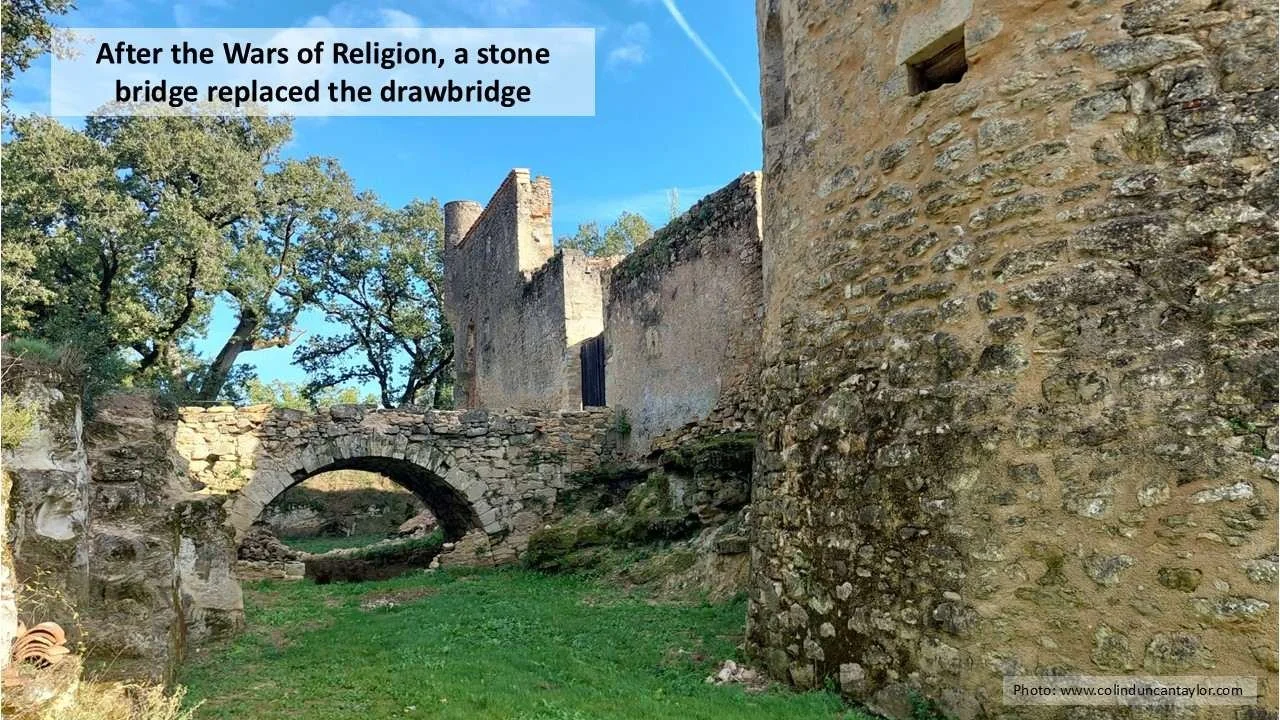
No one knows when the first castle was built here, but it was certainly long before that will dated 1275. During the Wars of Religion in the 16th century, the viscounts of Lautrec took the side of the Catholics. In 1569, Montfa was captured and destroyed by the Protestants. In 1591, the Lautrec family regained control and began to rebuild it. Over the next few centuries, the castle was modernised. The drawbridge was replaced with a stone bridge, the barbican was transformed into a dovecote. The round tower had been turned into a chapel shortly before the Wars of Religion.
In 1871, the château was inherited by Alphonse de Toulouse-Lautrec-Montfa. He had separated from his wife three years earlier, and their famous son, the painter Henri de Toulouse-Lautrec-Montfa, lived mainly with his mother. As far as we know, Henri never visited Montfa and the word dropped off the end of his name. When he signed his paintings, he often used his initials: HTL, or even simply TL, with no sign of an M for Montfa.
Despite this lack of interest, Henri would have inherited the château if he had outlived his father. But Henri died in 1901 and Alphonse 12 years later. Montfa then passed to Alphonse’s brother, but the brother lived in Britanny and the château was left empty. Little by little, local people helped themselves to its stones and this ancient home literally fell down.
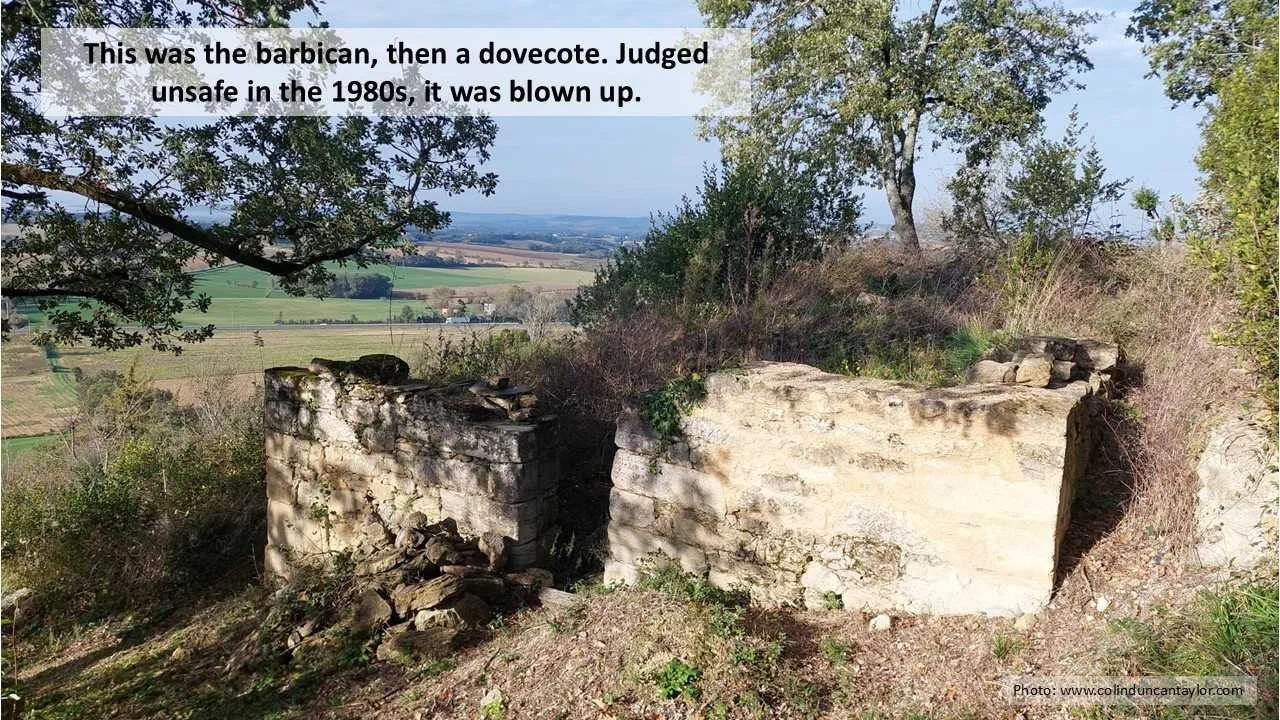
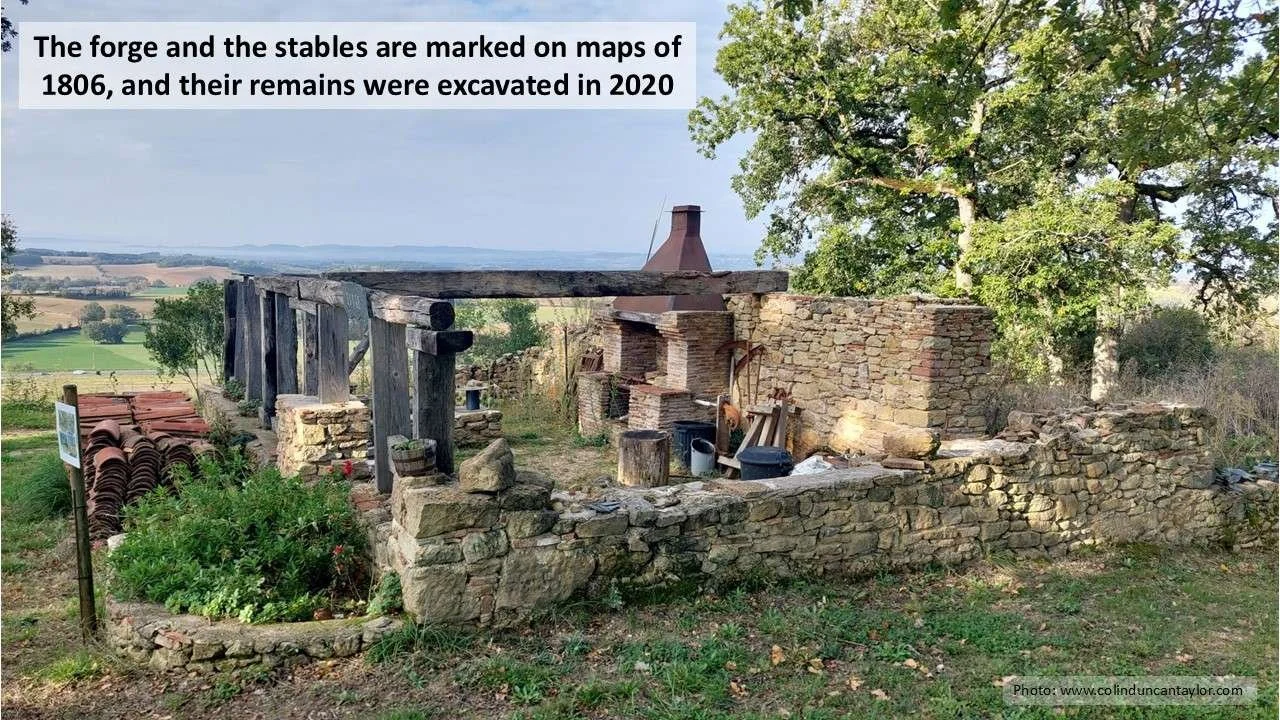
Today, the volunteers are trying to reverse the decay, and the site is now described as a castle-school, an outdoor classroom freely open to history lovers of all ages.
You may also enjoy this article about Toulouse-Lautrec’s cookery skills: LINK
