July 1381: The Battle of Montégut-Lauragais (or the Battle of Revel)
A few days ago, I cycled through an ancient battlefield near my home. I thought I would share its story with you.

There were 62 major battles during the Hundred Years’ War, starting with an English victory at Cadzand in 1337 and ending with a French victory at Castillon in 1453. There were, of course, countless other minor battles and skirmishes during this period, and not always between the armies of England and France.
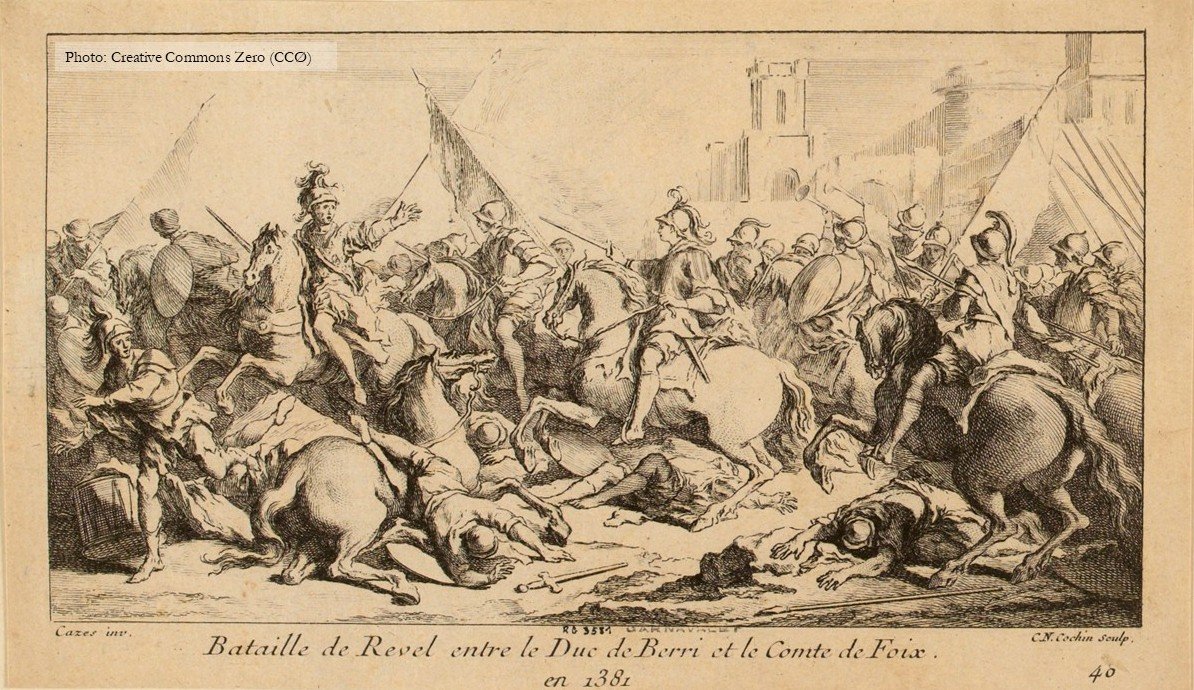
One curious episode took place somewhere between the villages of Montégut-Lauragais and Roumens. Today, a platoon of wind turbines looks down on squadrons of straw bales scattered over golden fields. In 1381, the Duke of Berry looked down on the Count of Foix and his army.
The most famous Count of Foix?
Gaston Phoebus is arguably the most famous count of Foix.* He was lord of various territories in south-west France, mainly in the foothills of the central Pyrenees. He protected these lands from the worst ravages of the Hundred Years’ War by playing off one king against the other. Neither side trusted him, but neither side wanted him as an enemy. In 1380, his latest scheme was undone by an untimely death.
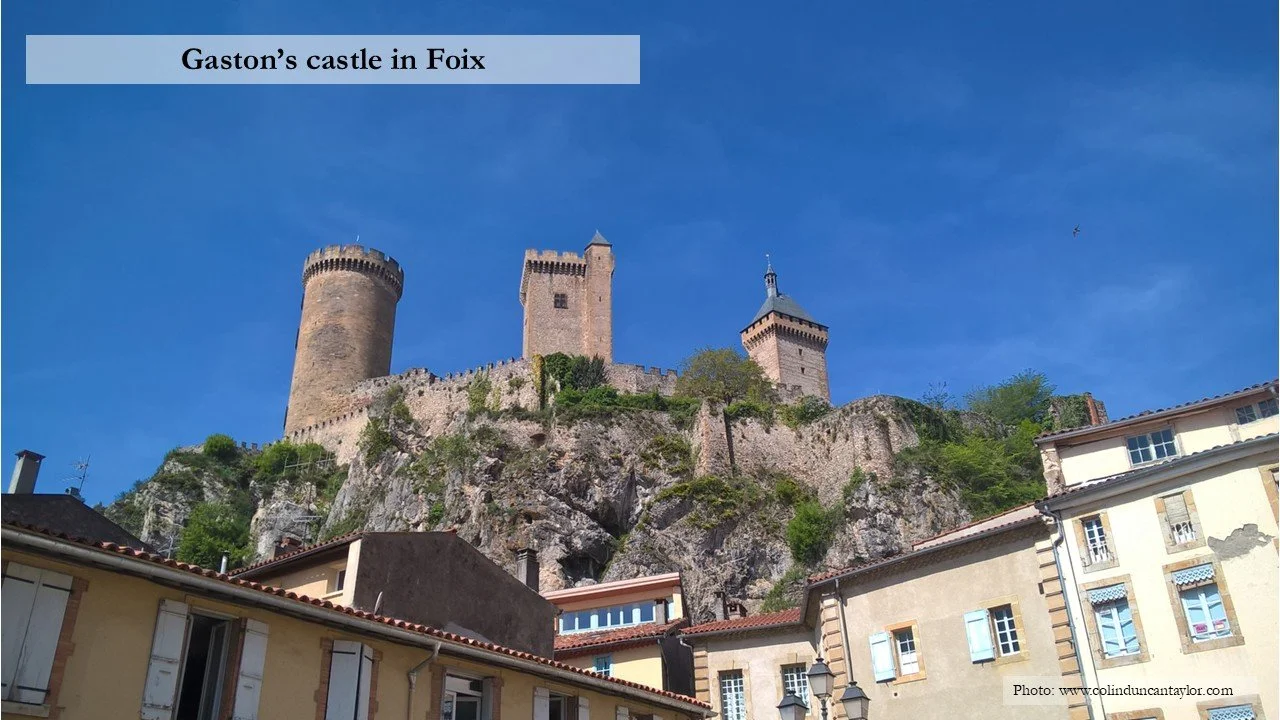
King Charles V of France had promised to make Gaston Phoebus governor of the Languedoc, but then the king had inconveniently died before the parchment-work could be completed. The new king, Charles VI, was only twelve years old, and his elder uncle became regent while his younger uncle, the Duke of Berry, chose to become governor of the Languedoc.
Open rebellion
Gaston Phoebus was a popular lord and, along with most of the local nobility, he refused to recognise the self-appointed royal governor. The following spring, the Duke of Berry marched south with an army to deal with what he viewed as a rebellion. Gaston Phoebus gathered his troops in Toulouse and prepared for battle.
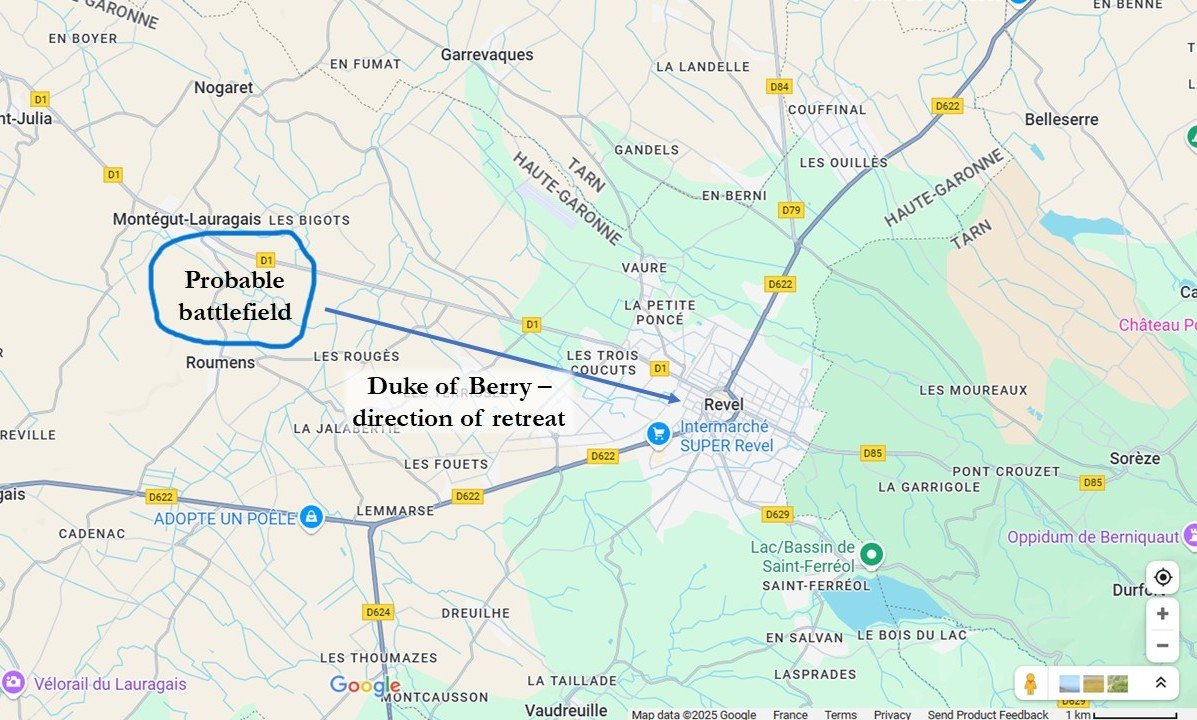
There is some disagreement among historians about the place where the two armies met. The flat fields between Roumens and Montégut-Lauragais to the east of Toulouse are favoured by local experts due to the large number of ancient horseshoes discovered there in the early nineteenth century.
The battle was fought on 15 or 16 July 1381. Gaston Phoebus had a much larger army, and when one of the Duke of Berry’s officers saw how heavily his side was outnumbered, he advised his commander to avoid a fight. The duke replied, ‘It won’t please God if the son of a king shows so much cowardice. Au contraire! I swear I shall not move from this spot until we have done battle!’
Revel closes its gates
The proud duke’s army was soon overcome. Three hundred soldiers lay dead or dying in the golden fields, and their comrades fled five kilometres across the plain towards Revel where they hoped to find refuge (this explains why some sources call the encounter the Battle of Revel). Unfortunately for the survivors, they found the gates firmly shut and the citizens of Revel refused to open them. Infuriated and powerless in the face of such opposition, the Duke of Berry paid off some of his troops, and retreated with the rest to Carcassonne where he hoped to find a warmer welcome.
Writing in retirement
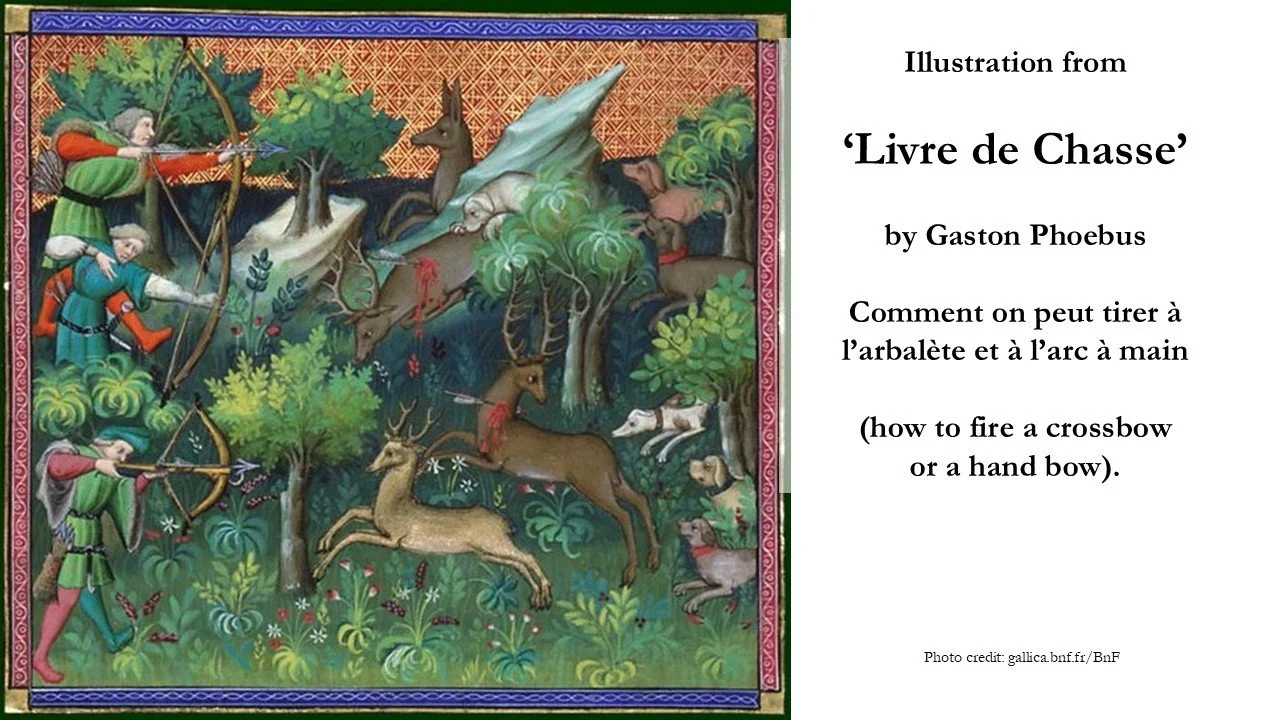
Soon afterwards, peace was restored and Gaston Phoebus renounced his claim to govern the Languedoc. And then, when he was in his 50s, he devoted himself to more leisurely activities. He had always been a passionate hunter, and in 1387 he started writing his ‘Livre de Chasse’. Today, you can turn the pages of an imaginatively projected electronic copy in the Round Tower of his château in Foix, or there are 44 physical copies of this wonderfully illuminated guide to medieval hunting in various libraries and museums around the world including Brussels, Geneva, London, Los Angeles, New York, Paris, Stuttgart and Turin.
You can read more about this period in my book ‘Lauragais: Steeped in History, Soaked in Blood,’ including the story of how Gaston Phoebus went hunting with the Black Prince in 1355.
* Henri Bourbon, Count of Foix, is a far more important figure in French history, but his fame is due to two of his other titles: the third King Henry of Navarre and the fourth King Henry of France. He was also Count of Béarn, Count of Bigorre, Count of Comminges, Viscount of Castelbon and Co-Prince of Andorra, and that was just in the Pyrenees.
