Toulouse: in memory of the exploding fertiliser factory
At 10.17 on the morning of Friday 21 September 2001, Toulouse was shaken by an explosion which killed 31 people and left behind a crater 9 metres deep and 30 metres in diameter.
SUSPICIONS OF A TERRORIST ATTACK
We remember dates for various reasons. I remember this one because, earlier that morning, I had arrived at London Stansted airport full of excitement at the prospect of showing my wife the house I wanted to buy in the south of France. But due to the huge cloud of dust and red smoke that was drifting northwest towards Toulouse Blagnac airport, our flight was cancelled. This was exactly ten days after the attack on the Twin Towers in New York, and at first, there was speculation that this might be another terrorist atrocity.
A clue to the true cause can be found in the name of the company that operated the site: AZF, standing for Azote Fertilisant. The catastrophe was caused by the explosion of 400 tonnes of ammonium nitrate fertiliser. As well as the dead, thousands more were injured, numerous buildings were destroyed, and the blast blew out windows 6 kilometres away.
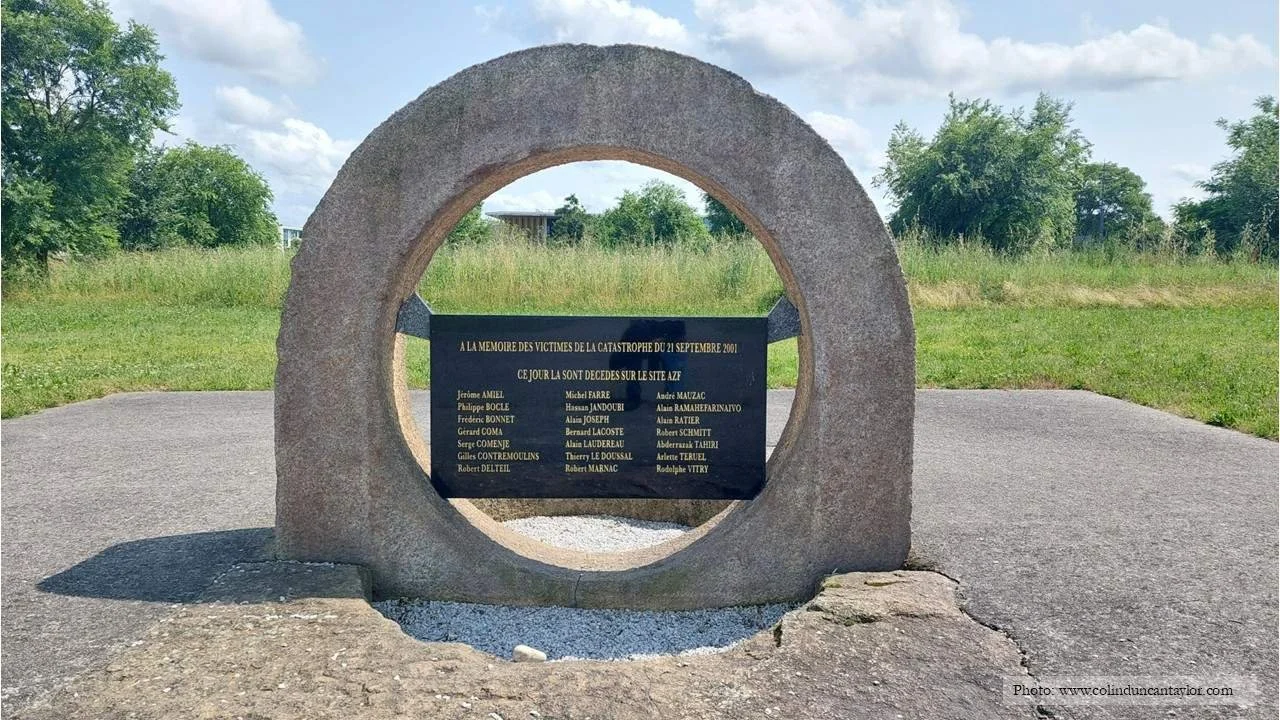
A MULTISENSORY MEMORIAL
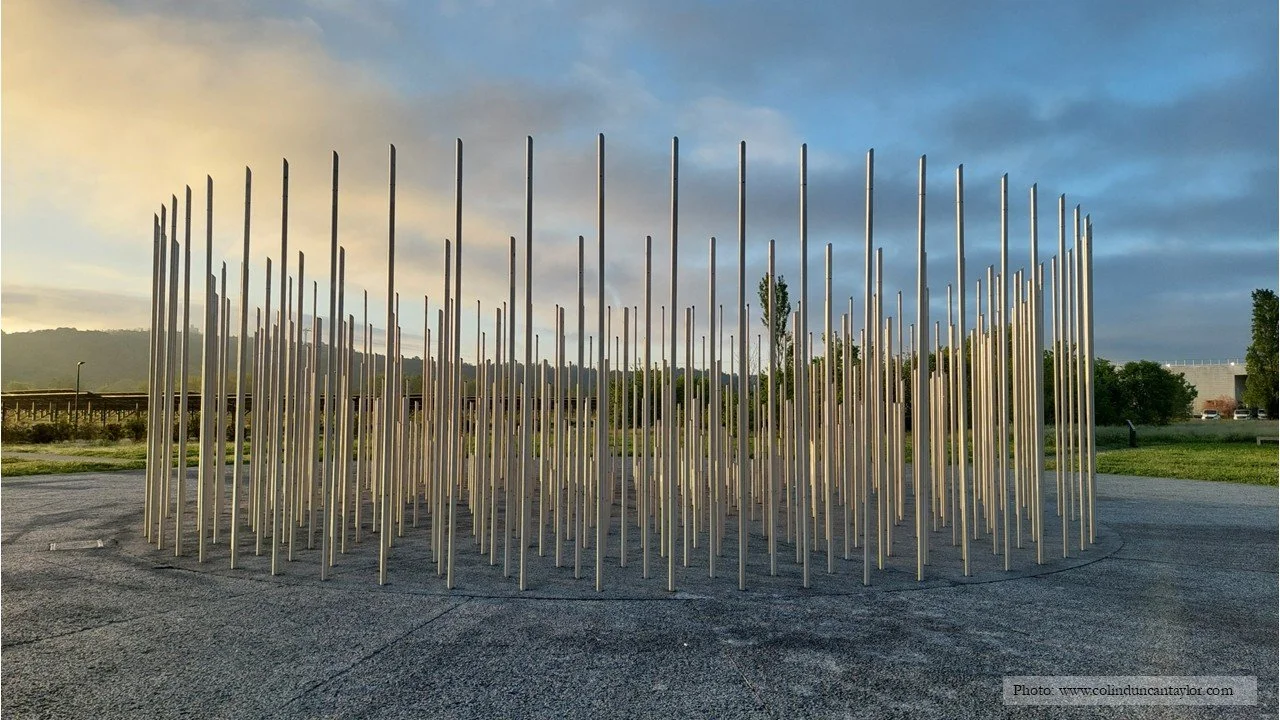
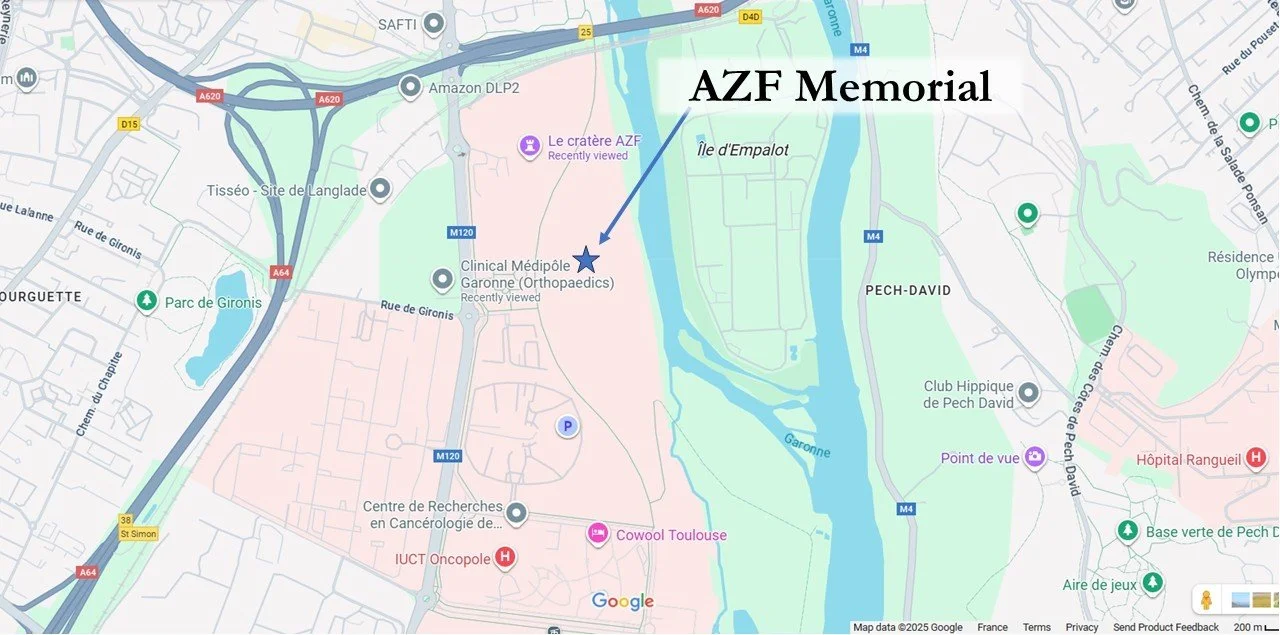
A few weeks ago, I visited the memorial which now stands on the site. The centrepiece is an unsettling sculpture. It stands on a concrete base 30 metres in diameter – the same size as the crater created by the explosion (the actual crater lies around 300 metres to the north). On this base, 397 stainless steel tubes are arranged in a circle. They vary in height from 4 metres around the outside to 50 centimetres at the centre, an arrangement that is intended to create the impression of entering a crater, and enter the sculpture you can because the gap between each tube is around 60 centimetres.
As soon as you pass through the outer ring of columns, your ears will detect a strange buzzing, somewhere between the sound emitted by high-voltage power cables and a distant orchestra preparing to play a requiem. This ethereal music is emitted by tiny speakers in the stainless steel columns, and it is intended to create a combination of tranquillity and tension, balance and chaos. If you are unable to go there and experience it for yourself, play this video.
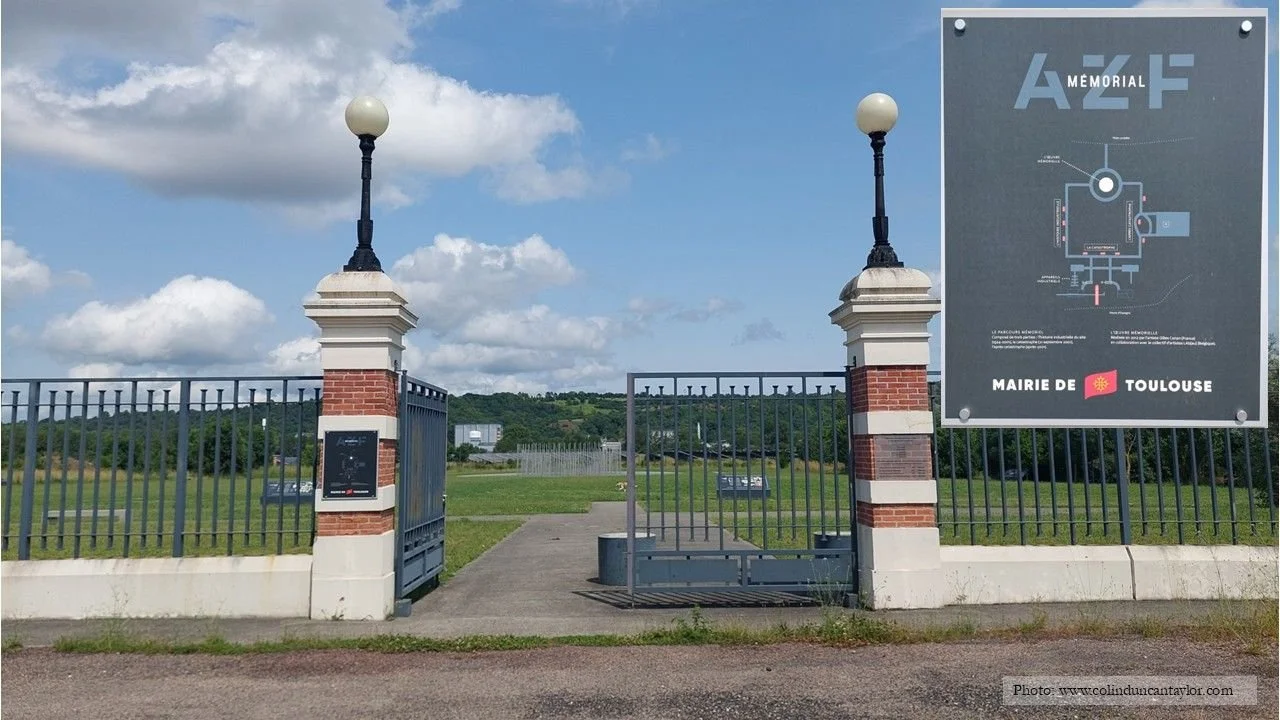
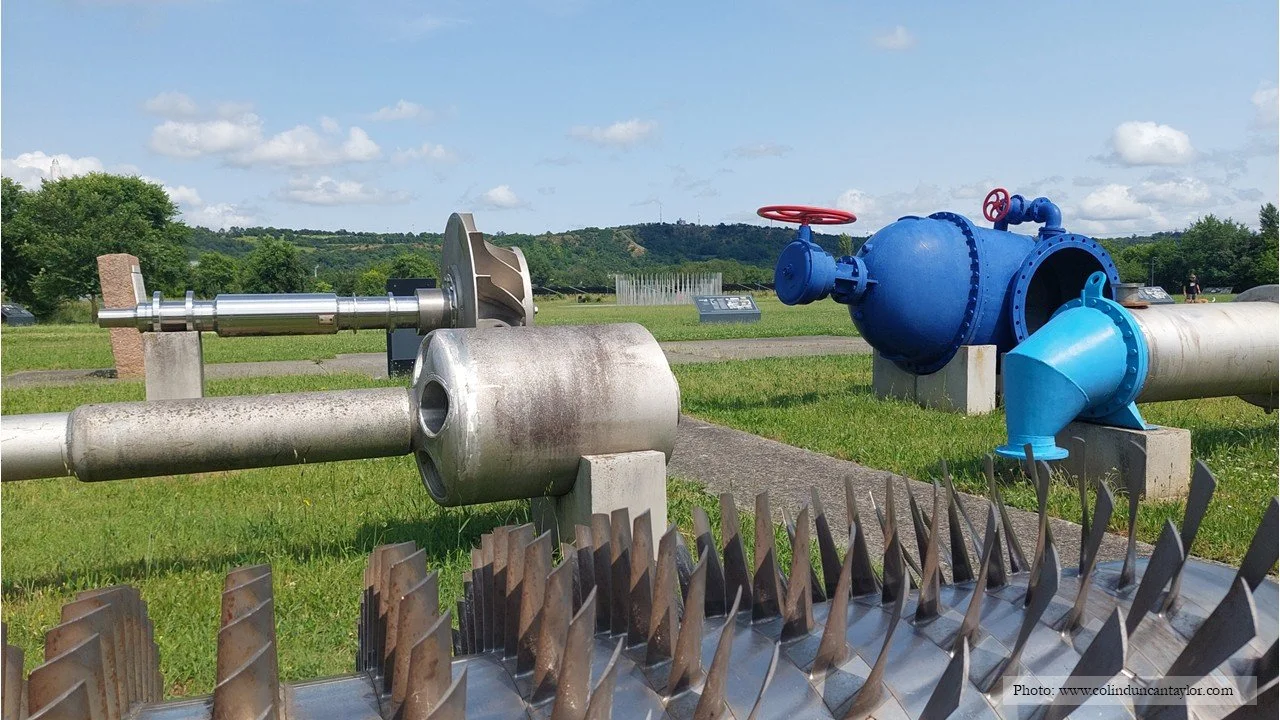
The sculpture is surrounded by a park where information boards tell the story of the factory and the catastrophe, and where various industrial items rescued from the wreckage are on display, such as a circulation pump, a combustion burner and parts of a compressor.
AFTERMATH AND REGENERATION
Following the explosion, 16 years of judicial proceedings and appeals ended in 2017. The company was fined €225,000, and the site’s director was given a 15-month suspended sentence. Meanwhile, a ten-year project had begun in 2004 to clear the site and, in place of the fertiliser factory, to construct what is now one of France’s leading centres for cancer research and treatment (Oncopôle) and a clinic specialising in orthopaedic medicine (Medipôle).
As for our house-hunting efforts back in 2001, I was able to show my wife our future home two weeks later. The date was 5 October, which also happens to be my birthday, and the only explosion that day was caused by a champagne cork.
