In the Place du Capitole in Toulouse, most of the cafes occupy the arcades along the western side of the square. This position offers their patrons an imposing view of the city’s main administrative building, the Capitole, but those who love history should seek out a cafe on the south side of the square.
There are four parts to the story of Le Bibent, and together, they make it the most historically interesting cafe in Toulouse: outstanding architecture, catering innovation, political journalism and an assassination conspiracy.
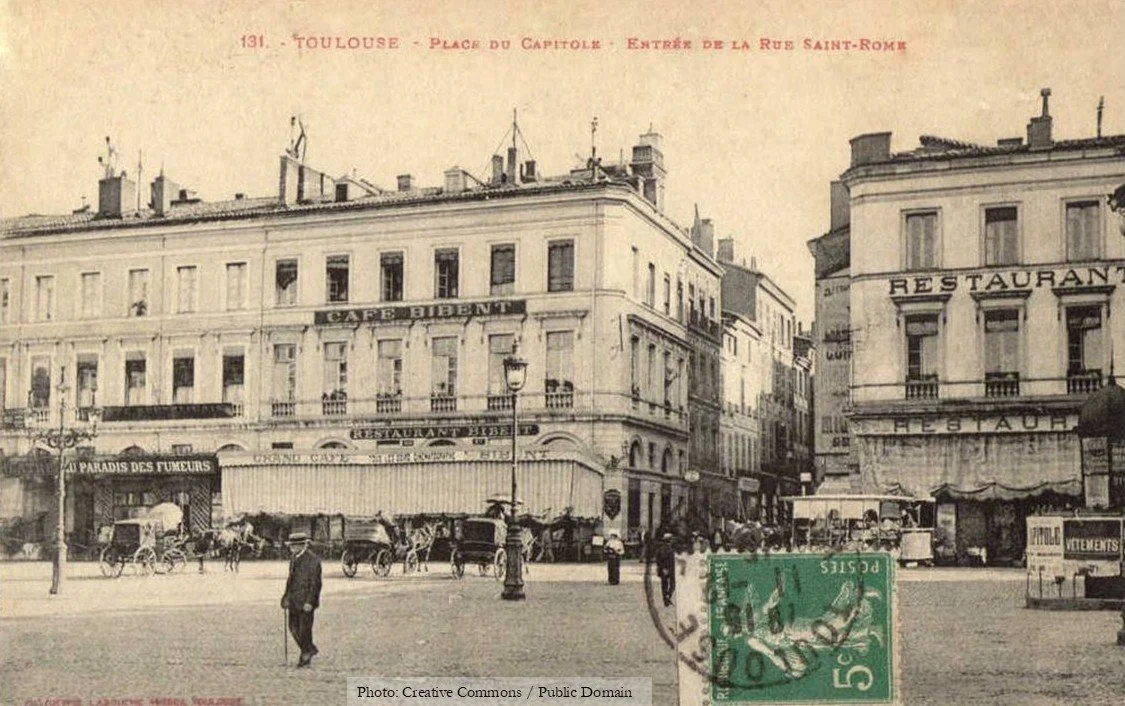
Café Bibent, Toulouse, around 1910. Creative Commons/Public domain
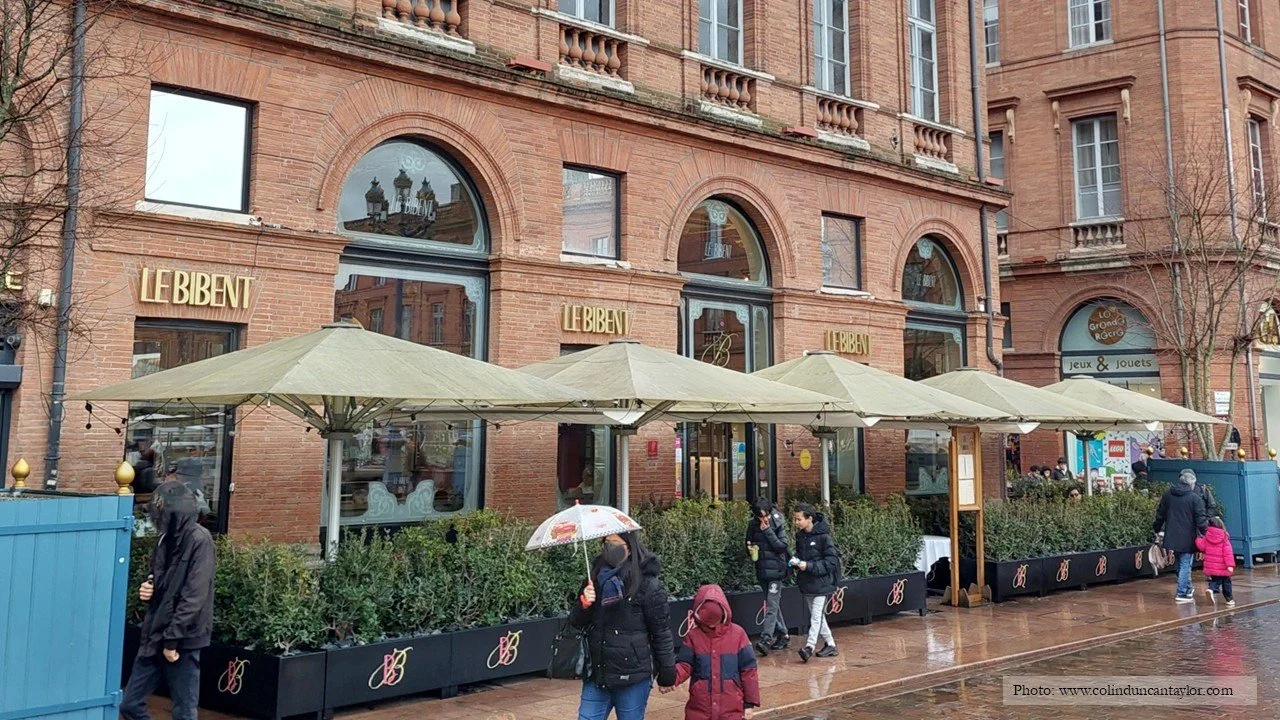
Le Bibent in 2026.
Construction of the buildings which now grace the south side of the square began in 1811, and Le Bibent set up its tables at No. 5. The cafe’s website says it was founded in 1861, but a government website notes that the first written reference to Le Bibent dates from 1843. Perhaps more importantly, it was first classified as a historic monument due to refurbishment works carried out to the interior between 1900 and 1910. The main room is decorated with painted stucco in the style of Napoleon III. These two photographs do the sumptuous interior far more justice than any words.
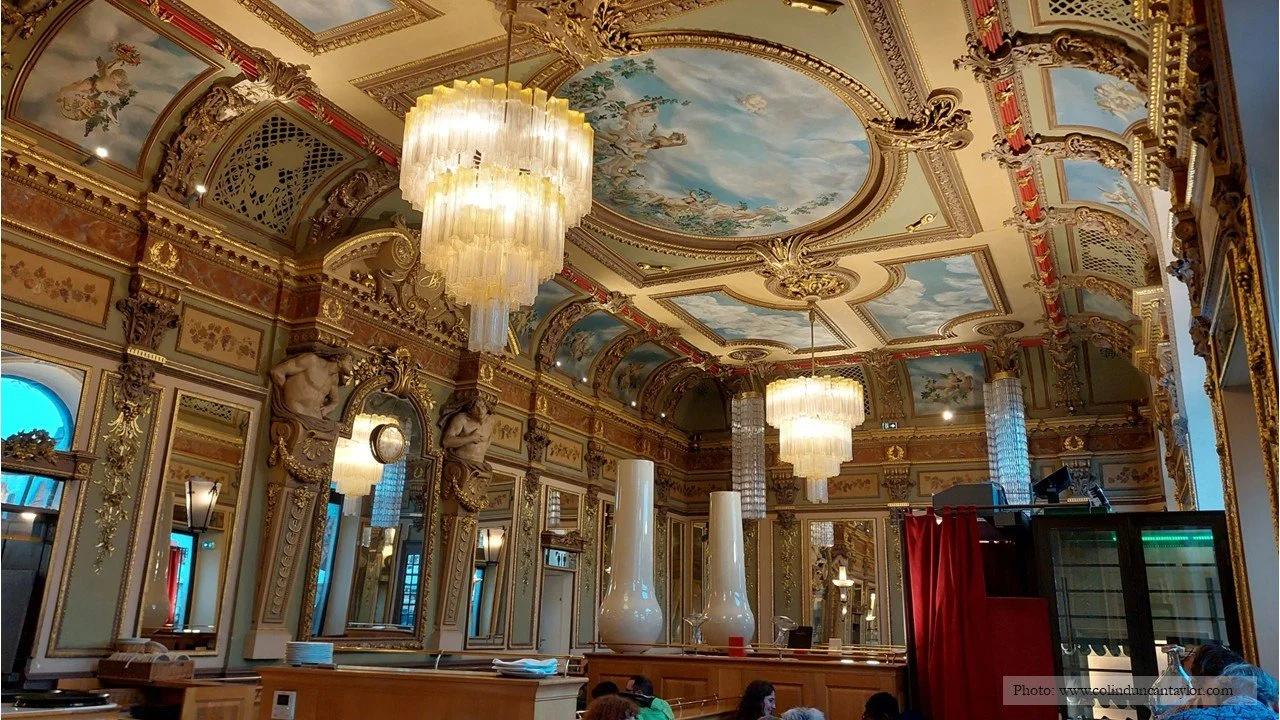
The sumptuous interior of Le Bibent, Toulouse.

The main bar in Le Bibent, Toulouse.
THE FIRST CAFE IN TOULOUSE TO OFFER DRAUGHT BEER
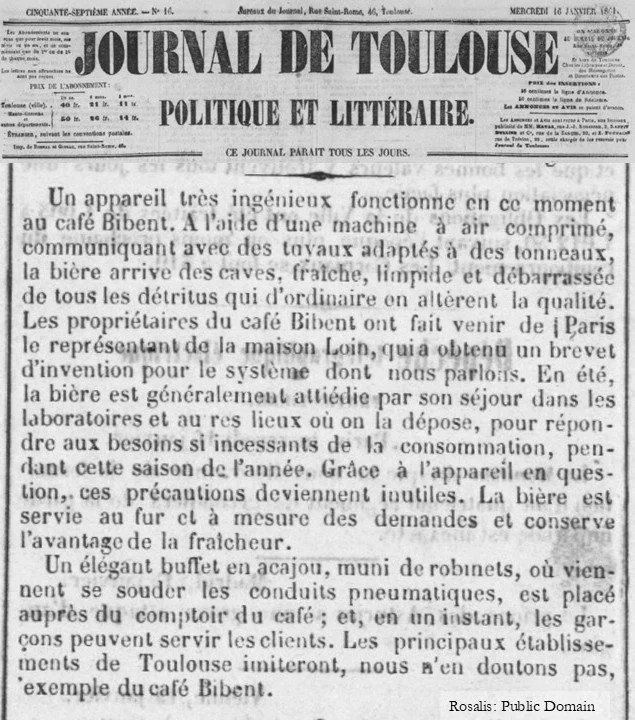
Le Bibent was the first cafe in Toulouse to offer draught beer, and this noteworthy event was reported in detail by Le Journal de Toulouse on 16 January 1861, a date of publication that implies the cafe was founded at an earlier moment in time. You can read the full article for yourself, but in brief, the paper marvelled at the way in which a clever combination of pipework and compressed air propelled the beer from barrels stored in the coolness of the cellar to taps fitted to a specially-constructed mahogany counter in the main room. This innovation was particularly appropriate because ‘Bibent’ means ‘to drink well’ in Occitan, the language spoken by many people in this part of the world until well into the 20th century.
Whether customers were attracted to Le Bibent by the decor or the draught beer is hard to say. Perhaps they came for both. What is more certain is that this establishment was soon attracting the elite of Toulousain society.
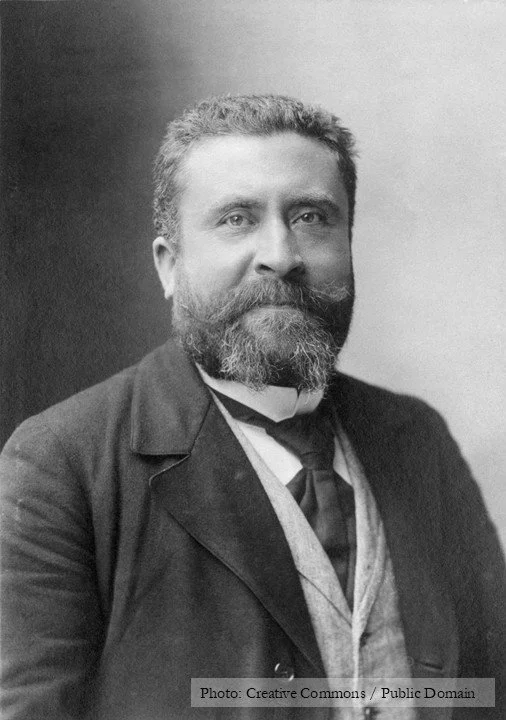
Jean Jaurès in 1904. Creative Commons/Public domain.
JEAN JAURÈS AND LE BIBENT
Jean Jaurès is best known as a socialist politician and a pacifist who was assassinated in Paris in 1914 while he was dining in the Cafe du Croissant. But before then, in the 1890s, he spent much of his time in Toulouse as a teacher, town councillor and deputy mayor responsible for public education. He was also a frequent visitor to Le Bibent where he wrote numerous articles for La Dépêche de Toulouse, a newspaper which became La Dépêche du Midi in 1947. Note that I do not use the word ‘numerous’ lightly: Jaurès supplied the paper with a total of 1,312 articles, although not all of them were written in Le Bibent.
PLOTTING TO KILL ARCHDUKE FRANZ FERDINAND?
My earlier mention of an assassination conspiracy has nothing to with Jean Jaurès. In early 1914, three young Serbs were studying in Toulouse at the Faculty of Arts. They were also members of a secret society called Young Bosnia, and one day over a drink at Le Bibent, they plotted an assassination. In Sarajevo on 28 June 1914, a member of Young Bosnia shot dead Archduke Franz Ferdinand of Austria, a murder which triggered the start of the First World War. Numerous sources – including books, press articles and Le Bibent’s own website – make a link between these two events. The truth is opaque. Several members of Young Bosnia were certainly in Toulouse at that time, and if they were students or conspirators with good taste, they almost certainly drank at Le Bibent. But if they were planning a murder, it was more probably the aborted attempt to kill Oskar Potiorek, governor of Bosnia and Herzegovina, using a poisoned dagger. On the other hand, perhaps they discussed several potential targets.
A WRITER’S HAVEN
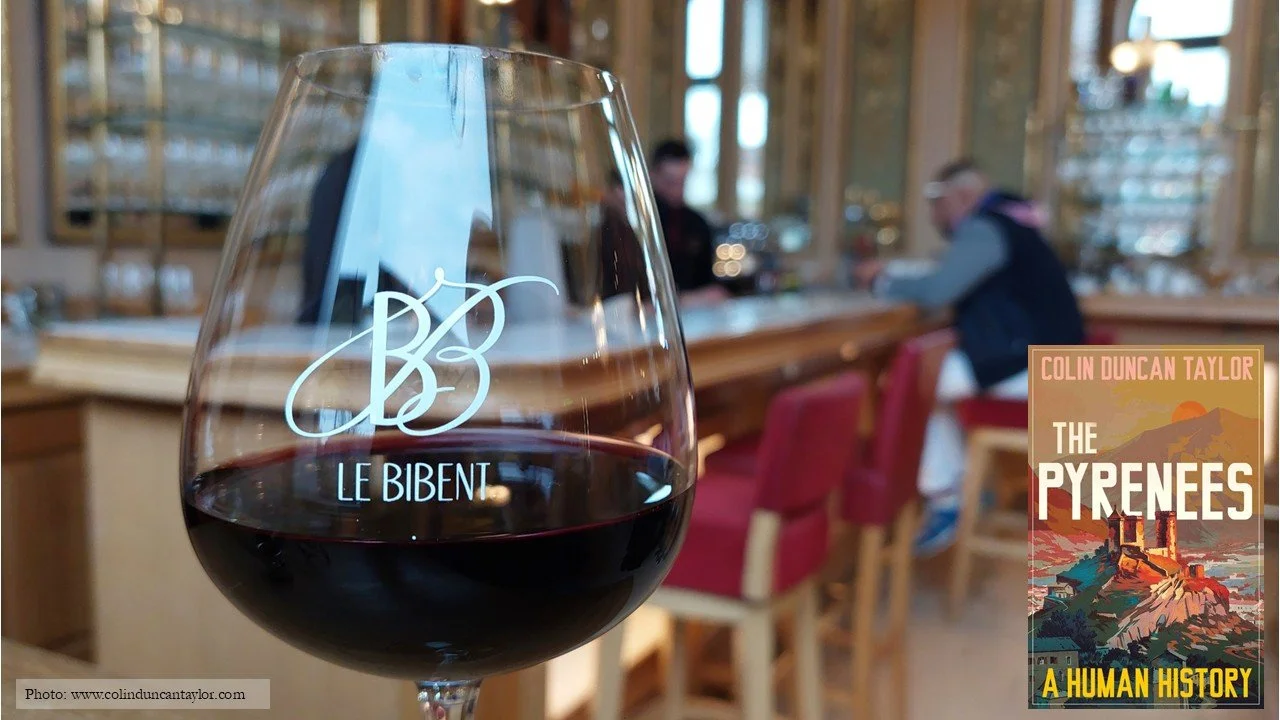
Jean Jaurès is not the only writer linked to Le Bibent. Over the years, its sumptuous surroundings have tempted many others to host ‘meet the author’ events, and last November, I spent many hours at its tables putting the finishing touches to my book ‘The Pyrenees: A Human History’. A change of scene makes it easier to review a text with fresh eyes, aided by a glass or two of wine and an undercurrent of history.
In the next instalment of my blog, we will journey across the Pyrenees to visit a Spanish cafe made famous by a writer who won the Nobel prize in 1954.
