Hemingway: on a bus, on trial and in the Cafe Iruña
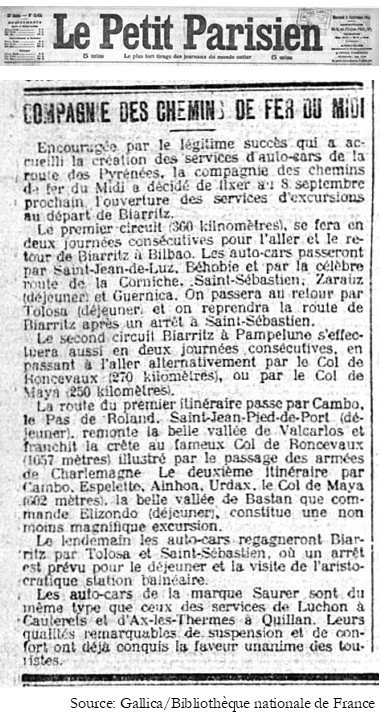
In September 1913, an article in Le Petit Parisien announced the launch of a new bus service. This promised the adventurous tourist a trans-Pyrenean adventure in an open-topped vehicle, crossing the mountains from Biarritz to Pamplona via the famous Roncesvalles pass where Charlemagne’s rearguard was slaughtered by the Basques in 778 CE. Over the centuries, many types of intrepid traveller had taken this route through the mountains. Now, it could be explored by anyone who could afford the bus fare. One of these early tourists included a young journalist who who was destined to become the most famous American novelist of the 20th century.
OVER THE PYRENEES BY BUS
In July 1923, Ernest Hemingway and his wife caught the bus in Bayonne and travelled over the Pyrenees via the Roncesvalles pass, arriving in Pamplona at dusk. This was Hemingway’s first visit to Pamplona, or Iruña as the Basques call it, and he quickly fell in love with the city. Three years later, he published his first novel, ‘The Sun also Rises’, in which the main protagonist plans to make the same trip, but is obliged to hire a car and driver because it is too early in the season for the bus to be running. As for Hemingway himself, he made eight more visits to Pamplona, always scheduled to coincide with the bull running fiesta of San Fermín. His novel and his regular presence attracted more and more people to Pamplona until, for some, this love affair turned sour.
HEMINGWAY’S TRIAL
In 2023, the Navarre Writers Association organised a mock trial. This was the centenary of Hemingway’s first visit to Pamplona, and the prosecution accused him of being responsible for over-tourism in general and overcrowding at the fiesta of San Fermín in particular. According to a Pamplona newspaper, Noticias de Navarra, the prosecution also demanded that Hemingway’s statue should be removed from the Plaza de Toros and the title of his book should be changed to ‘Don't go to Pamplona, and leave its people alone’.
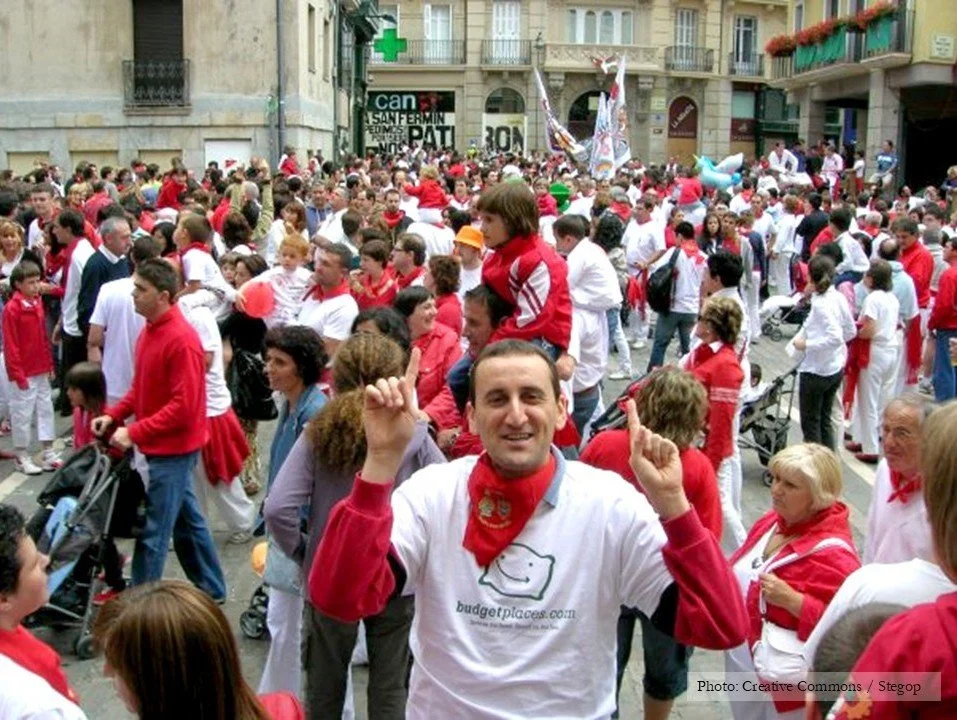
During Pamplona’s festival of San Fermín, everybody wears white and red clothes, especially a red neckscarf.
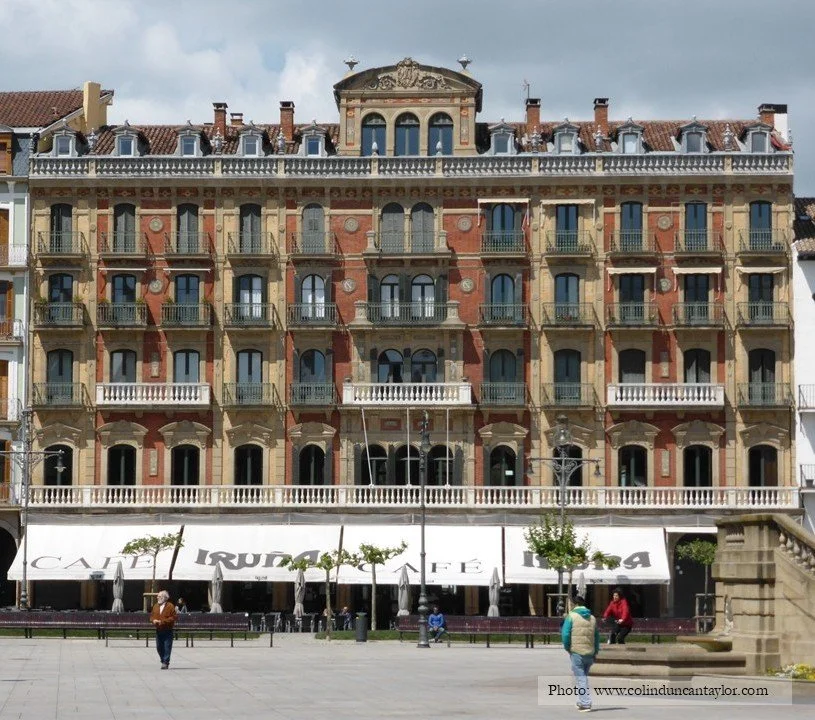
Cafe Iruña, Pamplona.
CAFE IRUÑA TURNS ON THE LIGHTS
Curiously, the trial made no mention of another Hemingway statue, the one that props up a bar inside the Cafe Iruña. This establishment is a contemporary of Le Bibent in Toulouse, and it first opened its doors on the evening of 2 July 1888. This was clever timing. With the bull running festival starting the next day, the cafe was immediately packed with punters. Opening in the evening allowed the owners to show off a novel feature: Cafe Iruña was the first establishment in Pamplona to install electric lights.
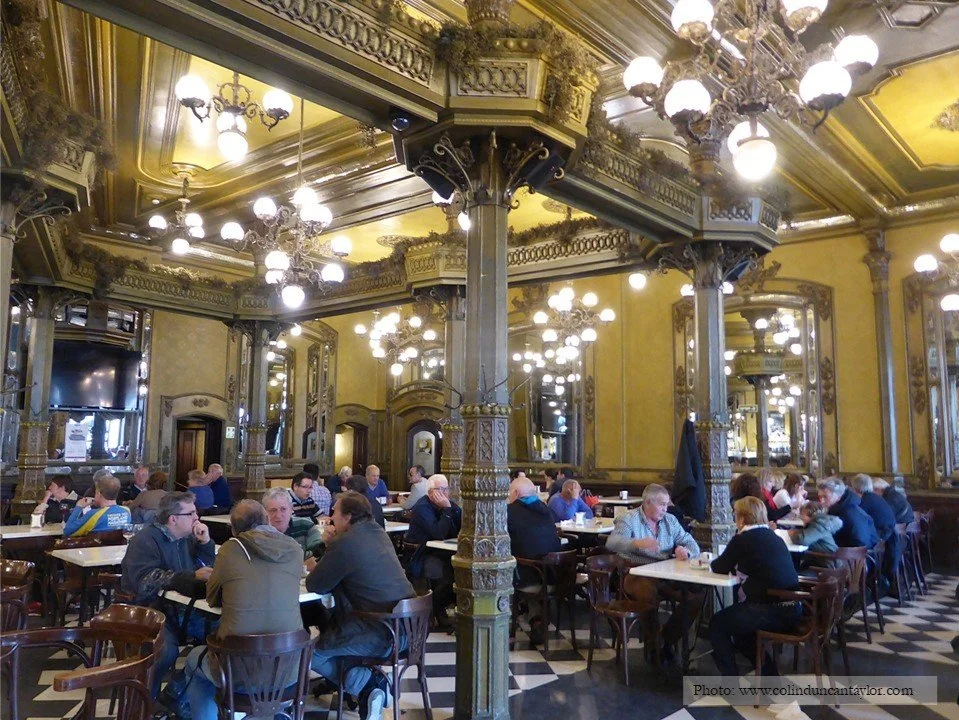
The main room of the Cafe Iruña, Pamplona.
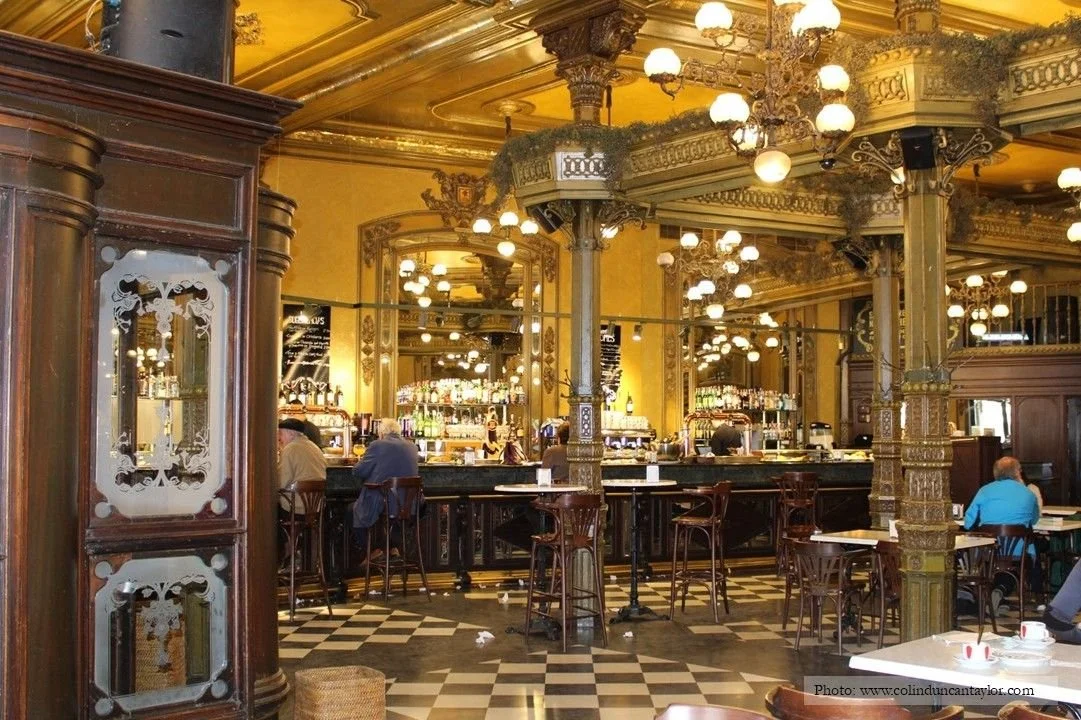
The main bar inside the Cafe Iruña, Pamplona.
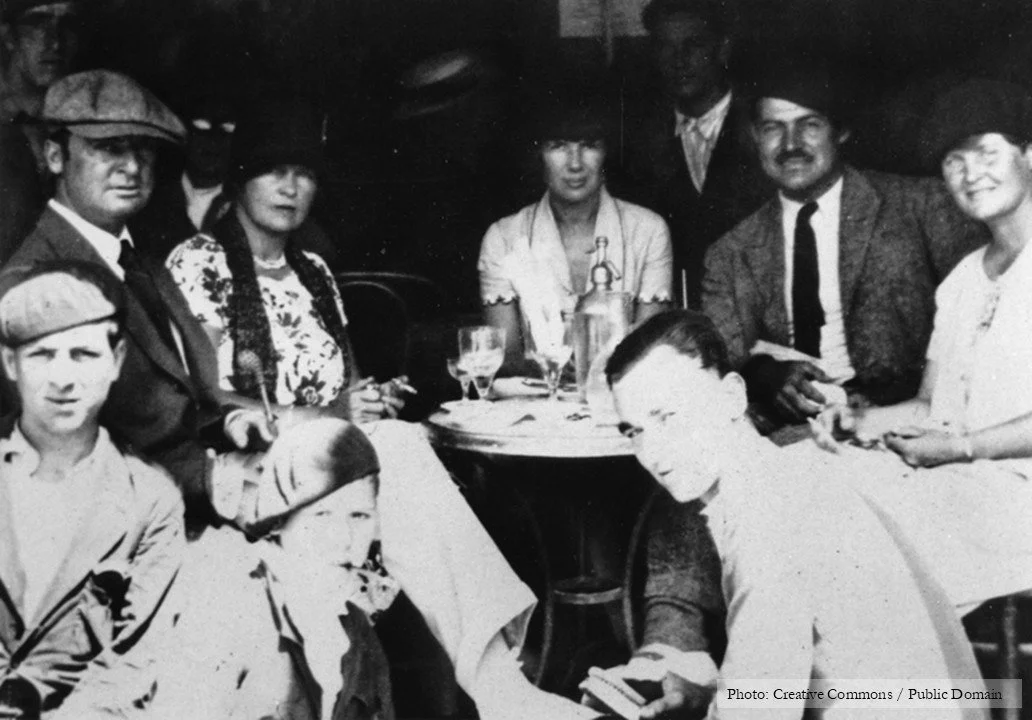
Outside the Cafe Iruña, Pamplona, in 1926. Hemingway and his first wife, Hadley, are on the right hand side of the picture.
This cafe is mentioned a dozen times in ‘The Sun also Rises’ because Hemingway makes it a regular meeting place for his cast of characters. For some mysterious reason, they are always drinking coffee: ‘We went out to walk around under the arcade to the Café Iruña for coffee.’ ‘We had coffee at the Iruña...’ ‘We sat in the Iruña for a while and had coffee.’ From the book, one might conclude the cafe served nothing else. From this photo taken on the terrace in 1926, one can see that Hemingway and his friends ordered something stronger.
HEMINGWAY’S CORNER
Away from the vintage electric lamps and glittering interior of the main room, Hemingway’s bronze statue loiters in a gloomy windowless bar off to one side. It is known as Rincón de Hemingway, or Hemingway’s Corner. According to Pamplona’s tourist office, the life-size statue is turned to welcome visitors. To my eyes, he cuts a lonely figure in search of company, so I always chat to him for a while.
Although his statue is anchored securely to Hemingway’s Corner, the man himself frequented many other places in town during his nine visits. The tourist office has created a Hemingway Route taking in 25 of the city’s sights including hotels where he stayed, houses he rented and anywhere that receives even a passing mention in ‘The Sun also Rises’. And, of course, his statues in the Plaza de Toros and Cafe Iruña.
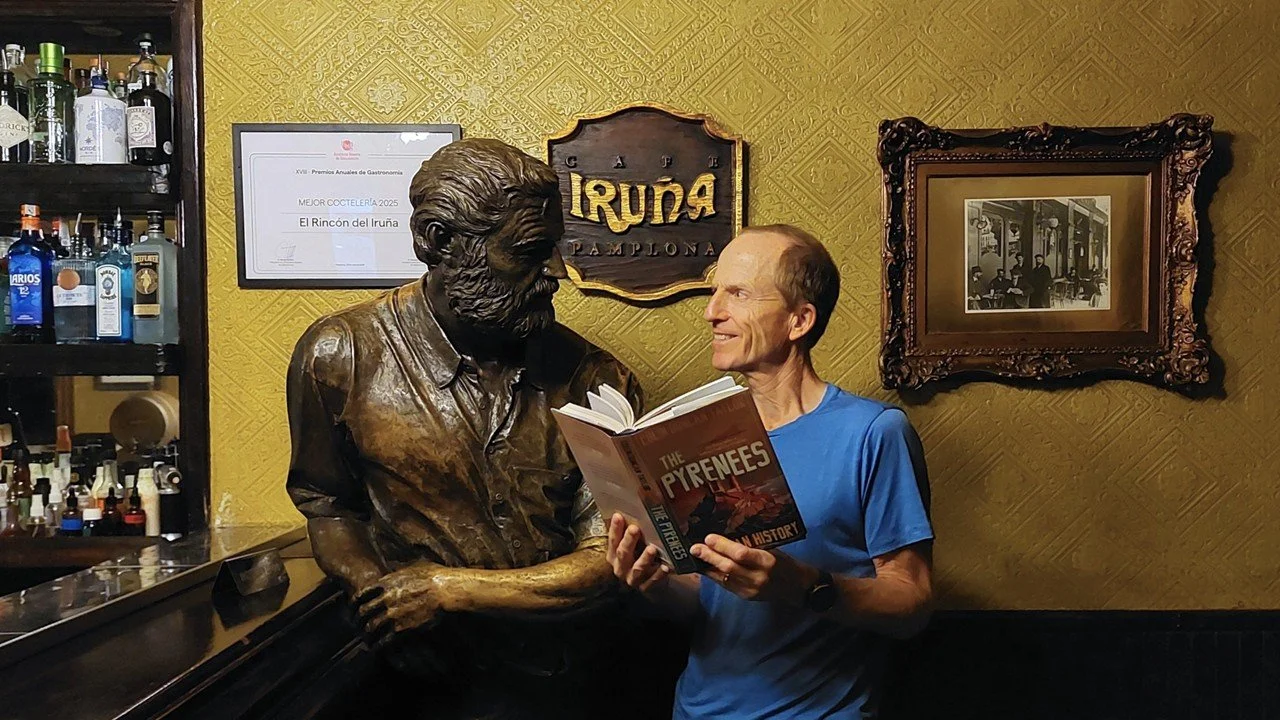
Hemingway’s bronze statue props up a cocktail bar known as Rincón de Hemingway, or Hemingway’s Corner, inside Cafe Iruña.
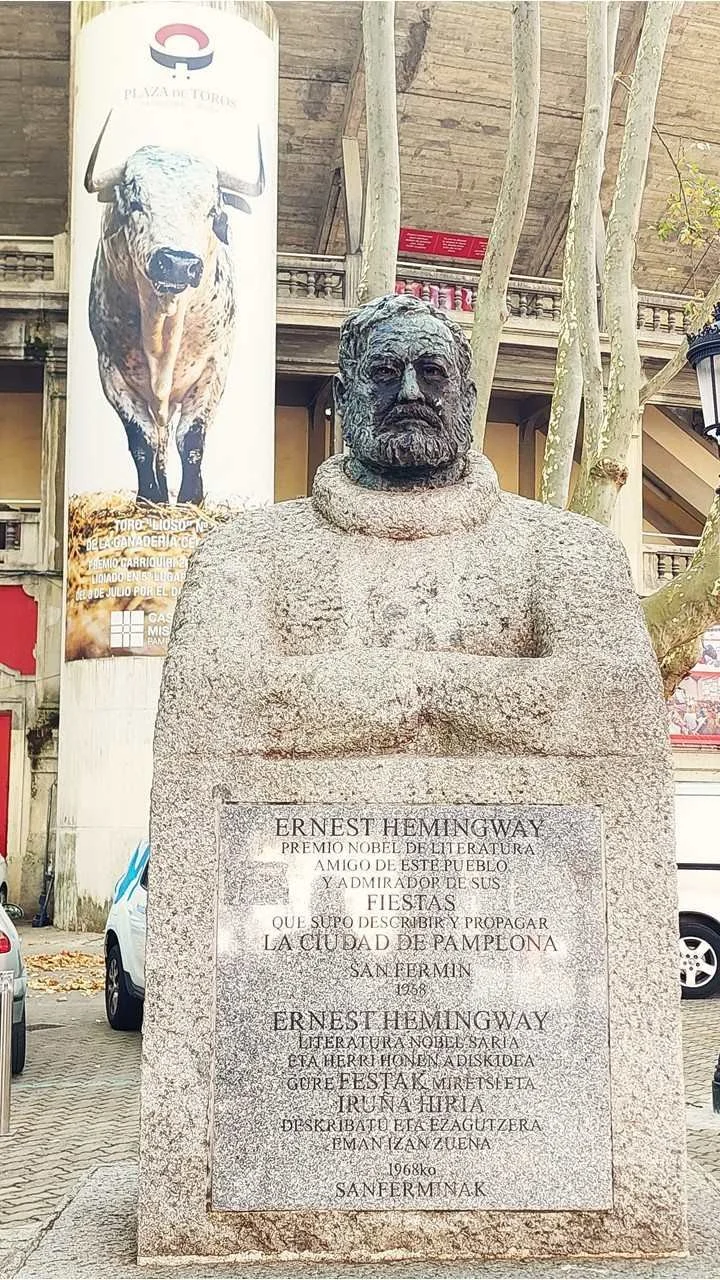
Hemingway’s statue outside the bullring in Pamplona.
I discovered Hemingway’s Corner in 2017, soon after I realised that I would never be a novelist of any description let alone one of Hemingway’s standing. Instead, I was working on a non-fiction book which came out the following year: ‘Lauragais: Steeped in History, Soaked in Blood’. And since then, I have crossed the Pyrenees far more times even than Hemingway in order to research my latest book, ‘The Pyrenees: A Human History’. I showed it to Hemingway when I visited Pamplona again in 2026, and he was particularly fond of the colour photos.
