Never judge a book by its cover

This morning, Yale University Press sent my book to the printers: typeset text, colour plate section, map, index and - of course - the full cover design. That last item was finalised only a few days ago, and I thought I would share it with you.
We all know the saying ‘never judge a book by its cover.’ Nevertheless, anyone who has been involved in the production of an actual book will know about the critical role of cover design. A paperback is complicated enough, with a front, back and spine. A hardback introduces two more elements: front and back inside flaps. You’ll see what I mean if you study the example above.
As with all books, the front cover is designed to grab your attention, both online and in a physical book store. In the latter case, so is the spine – a key consideration unless a book is lucky enough to be displayed full frontal. And then, if you are sufficiently intrigued to find out more, the praise from reviewers on the back cover combined with the synopsis on the front inside flap should between them persuade you to open the book (or click the ‘read inside’ button). Only then can you judge the book by more than its cover. Finally, the back inside flap will contain a few words about the author.
Of course, if you have already enjoyed a book or two by the same author, looking inside either physically or virtually may not be necessary. Which may be useful if, as in my case, it is still too early for the ‘look inside’ feature to be available.
‘The Pyrenees: A Human History’ will be published on 25 August 2026 and is available for pre-order now in real bookshops, or on all the main online platforms.
I also thought I would share one of my favourite photos from the colour plate section.
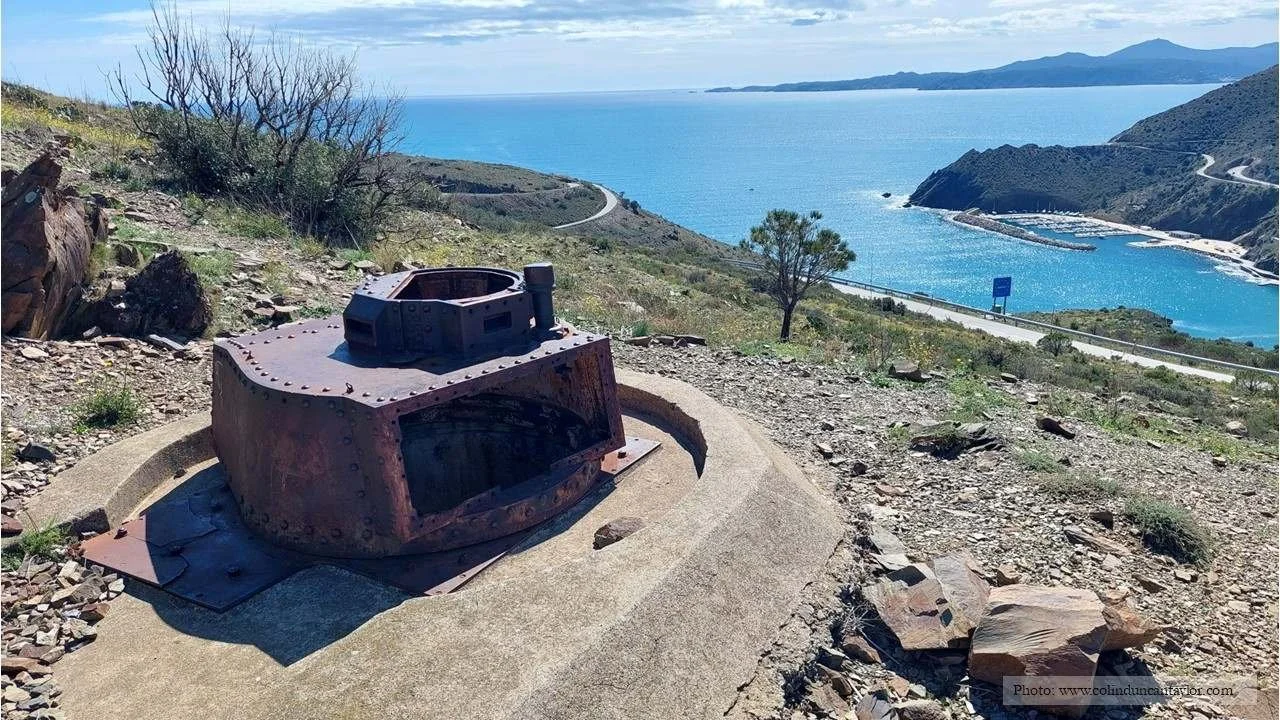
Both Franco and Hitler built defensive lines in the Pyrenees towards the end of the Second World War. This German bunker on the Franco-Spanish border incorporated the turret of an obsolete tank, the Czech-built Panzer 38. It formed part of a defensive line called the Speerlinie Pyrenäen.
