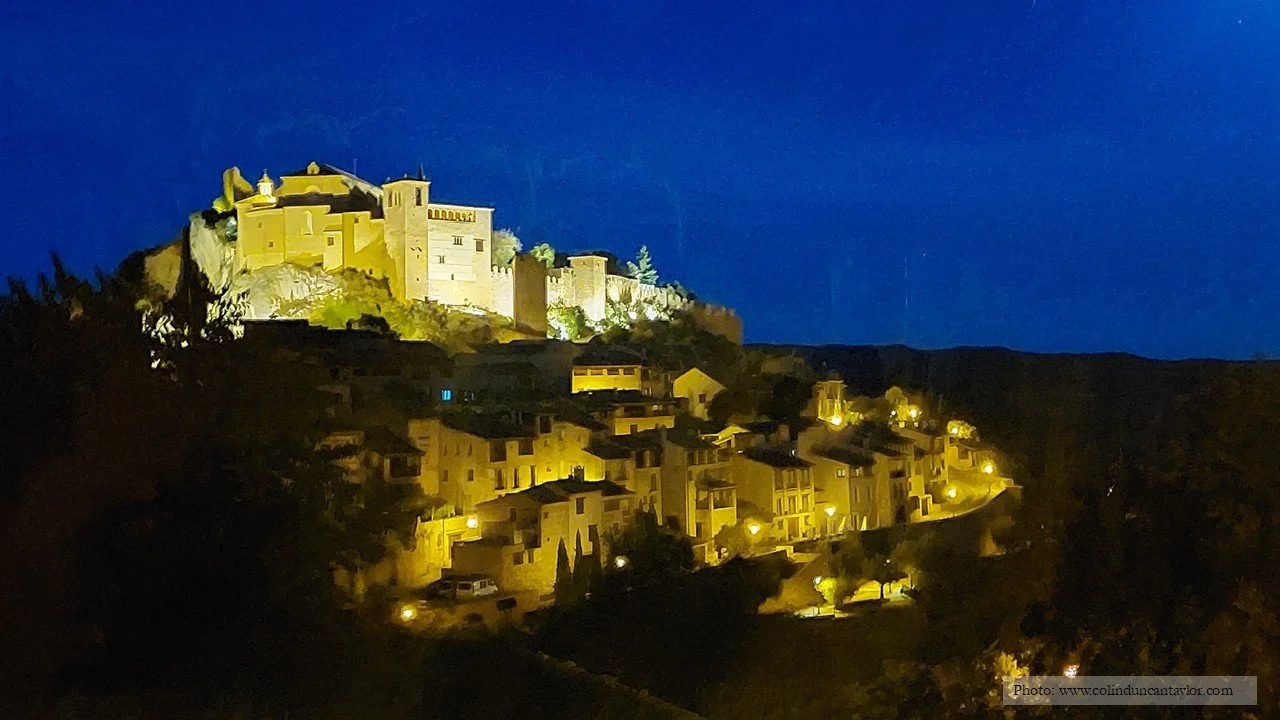
Alquézar by night: the fortress/church glows on its mount, while the medieval town slumbers at its feet.
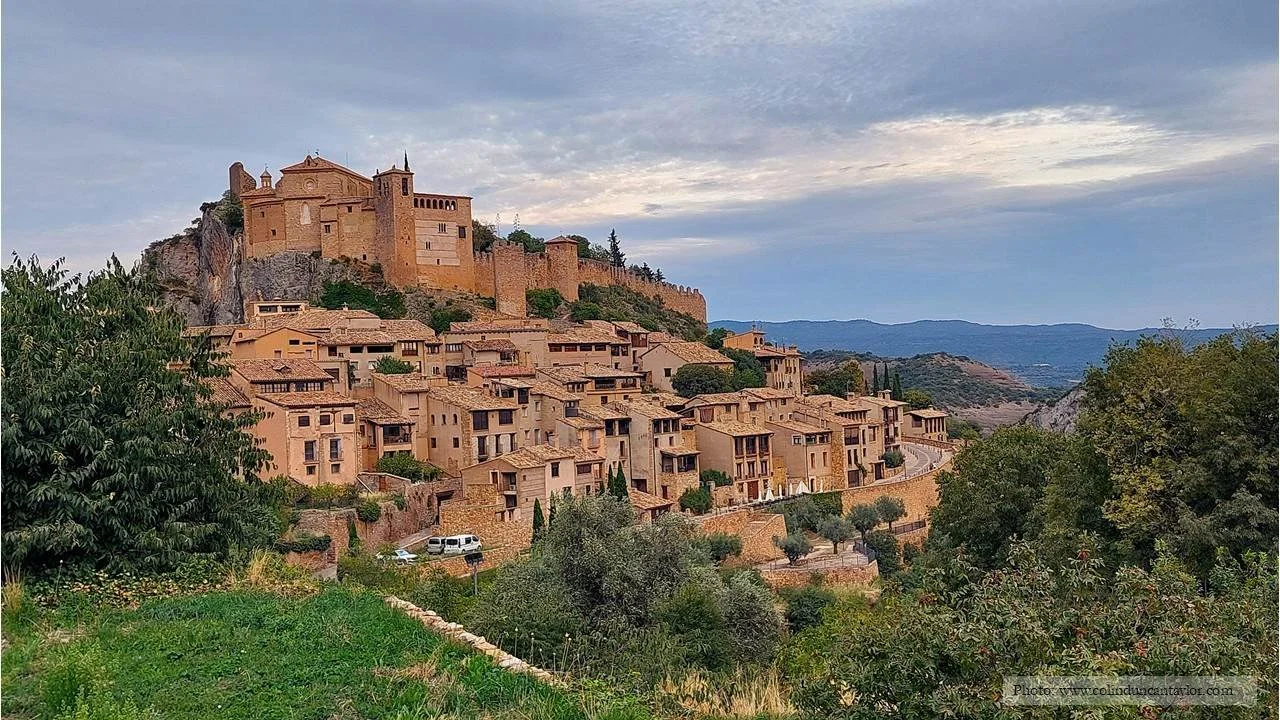
Alquézar by day: most of what we see today dates from the 14th century.
The very name of this quaint little town sounds Moorish, and indeed, Alquézar is thought to derive from the Arabic ‘al-Qasr’ which means ‘fortress’.
ON THE FRONT LINE BETWEEN CHRISTIANS AND MOORS
In the 8th century, the Moors established what they called their Upper March in an area that lay primarily to the north of Zaragoza and the Ebro valley. Along the main communications routes, they strengthened the main towns with walls and gates, Barbastro and Huesca being notable examples. They also constructed a ring of fortresses on the high ground around these centres of power, designed to contain the Christian communities to the north. Alquézar was probably one of these strongpoints.
A GROWING POPULATION AND A NEW TOWN
Around 1067, Alquézar was captured by the king of Aragon, Sancho Ramírez. Over the next few decades, the Christians advanced steadily southwards and Alquézar lost its military importance, but by granting various privileges, the king encouraged the population to grow. Now that the town was no longer in a dangerous frontier zone, the people were able to leave the safety of the castle walls and build new homes at the foot of the castle rock. This medieval quarter has changed very little since then, and a stroll through its winding streets feels like taking a journey back in time. The oldest houses we see today date from the 14th century.
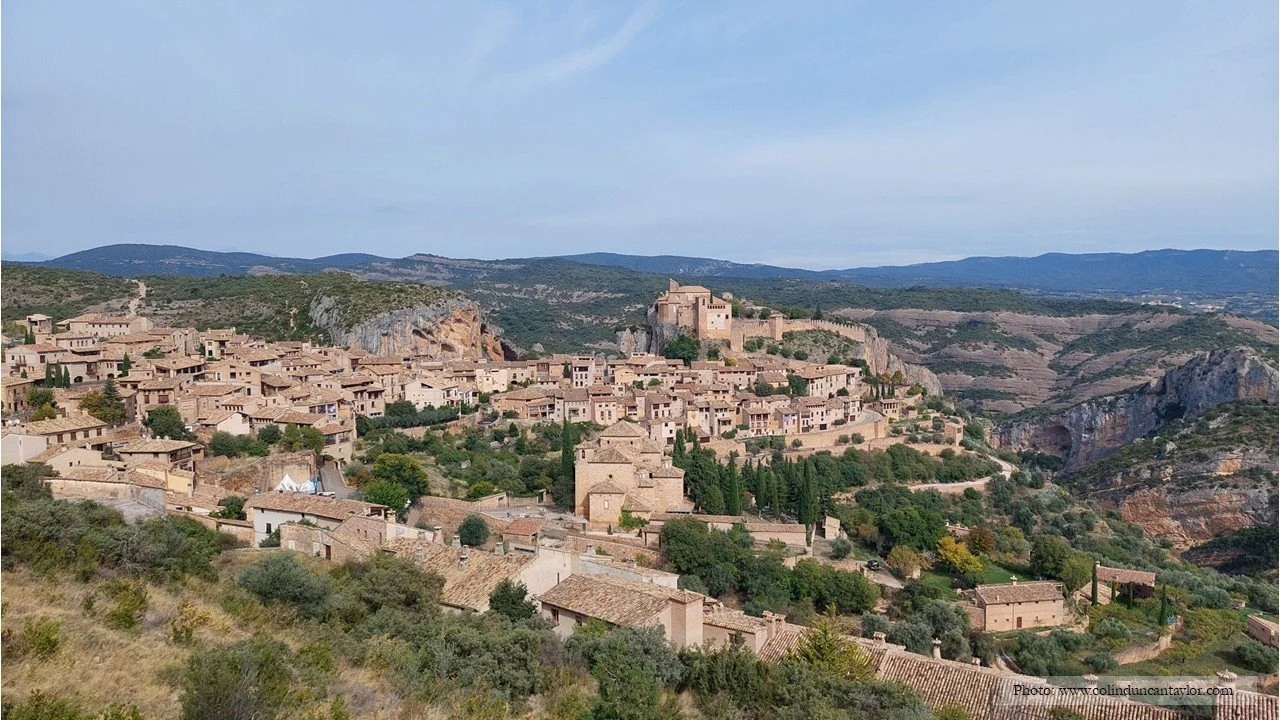
The classic view of Alquézar and its collegiate church dedicated to Santa María la Mayor.
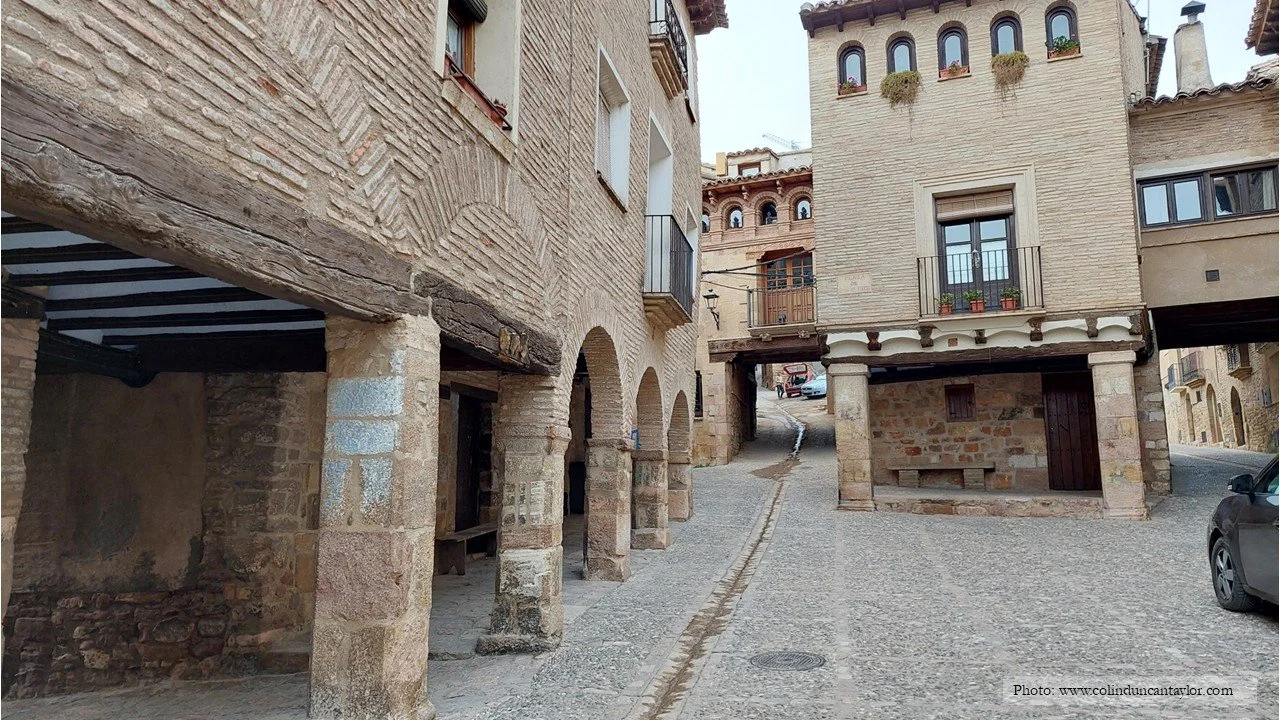
A stroll through Alquézar feels like taking a journey back in time. The Plaza Rafael Ayerbe is particularly pretty with its arcaded buildings.
As Alquézar’s military importance faded, so did the need for a fortress. Instead, Sancho Ramirez established a Romanesque collegiate church dedicated to Santa María la Mayor. Its cloisters are still decorated with frescoes, the only cloister in Aragon that remains entirely painted. On the floor above, a small museum displays 15th-century altarpieces and other religious paintings.
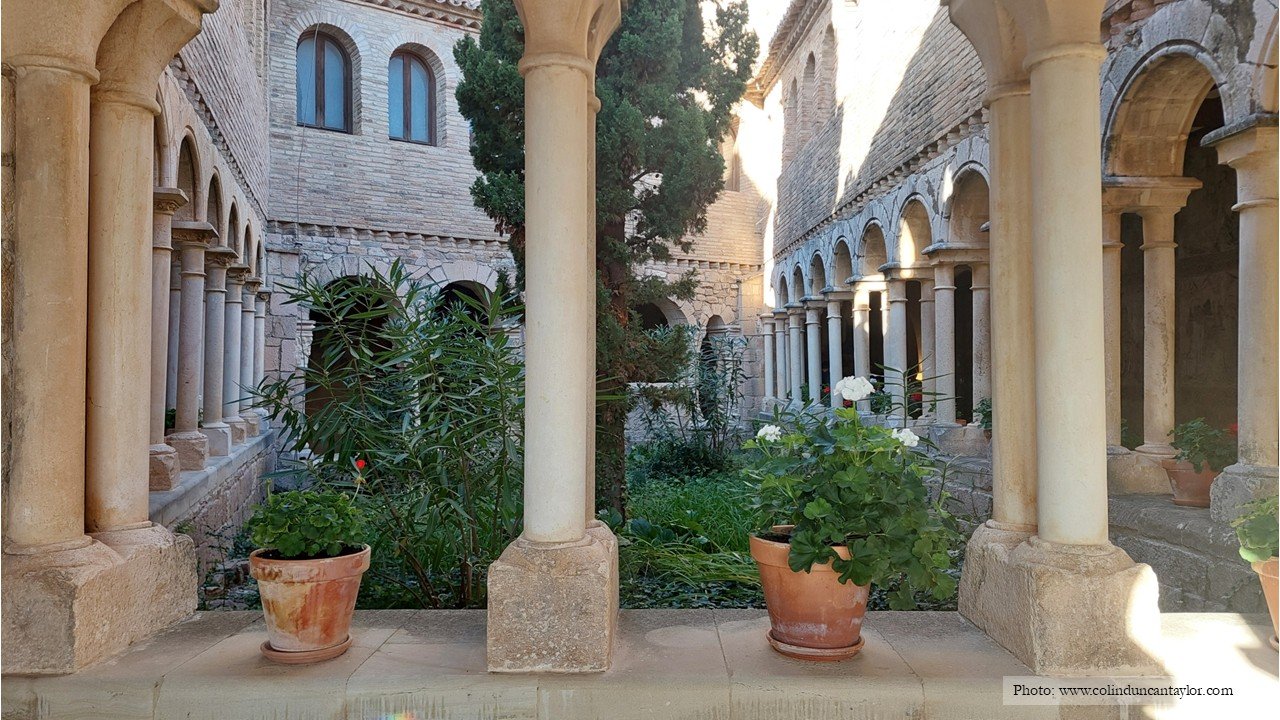
The cloisters of Santa María la Mayor.
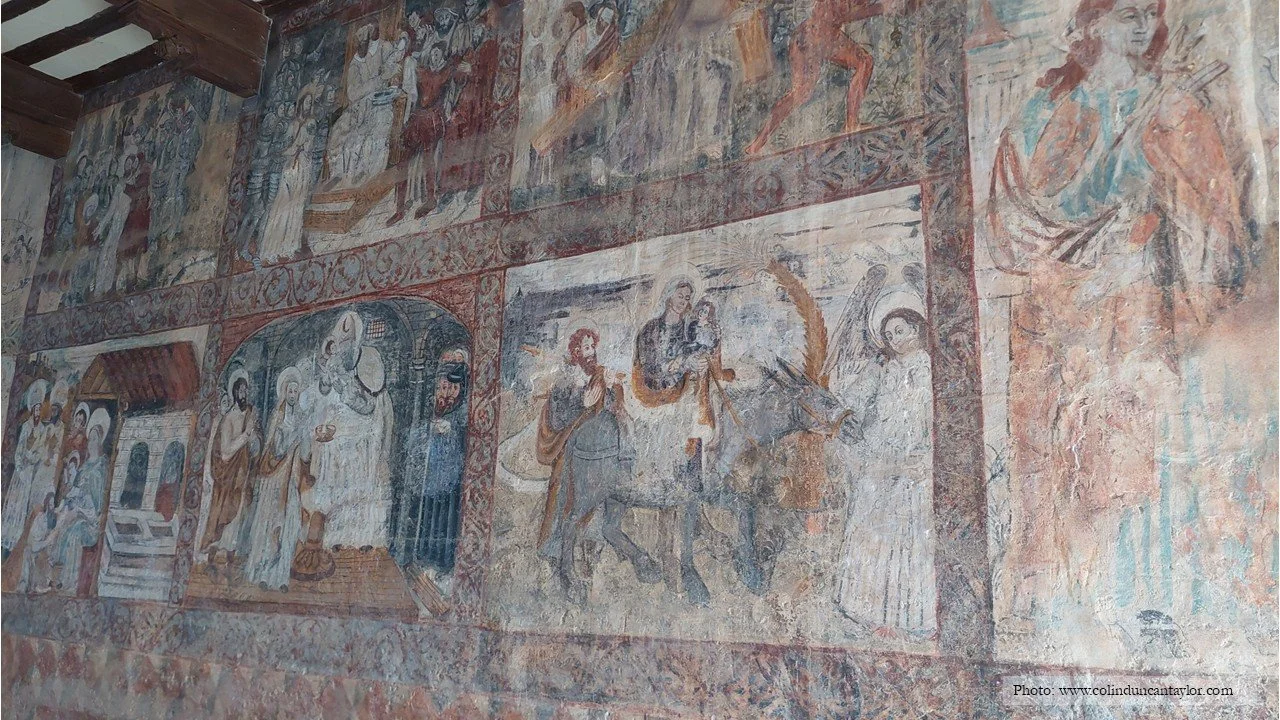
Santa María la Mayor has the only cloister in Aragon that remains entirely painted.
WHEN TO VISIT
I have stayed in Alquézar in February and October when even the permanent population of 300 kept itself well-hidden. But this sapphire in the sierras appears on numerous lists of the most beautiful villages in Spain, and in 2022 Alquézar was selected as one of the best 32 villages in the world for tourism. This, and the size of the visitor car parks, suggests that July and August brings a crowd, although this does have the advantage of encouraging all the bars and restaurants to open.
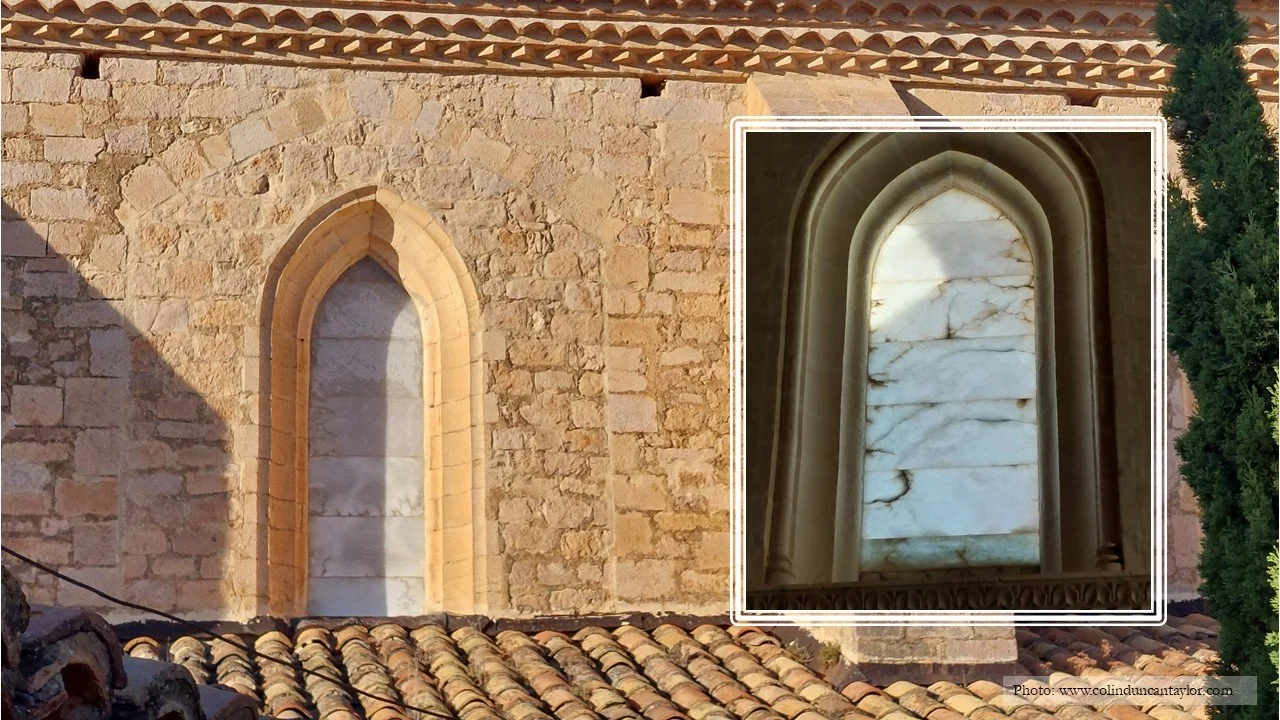
Some of the windows in the collegiate church are glazed with alabaster.
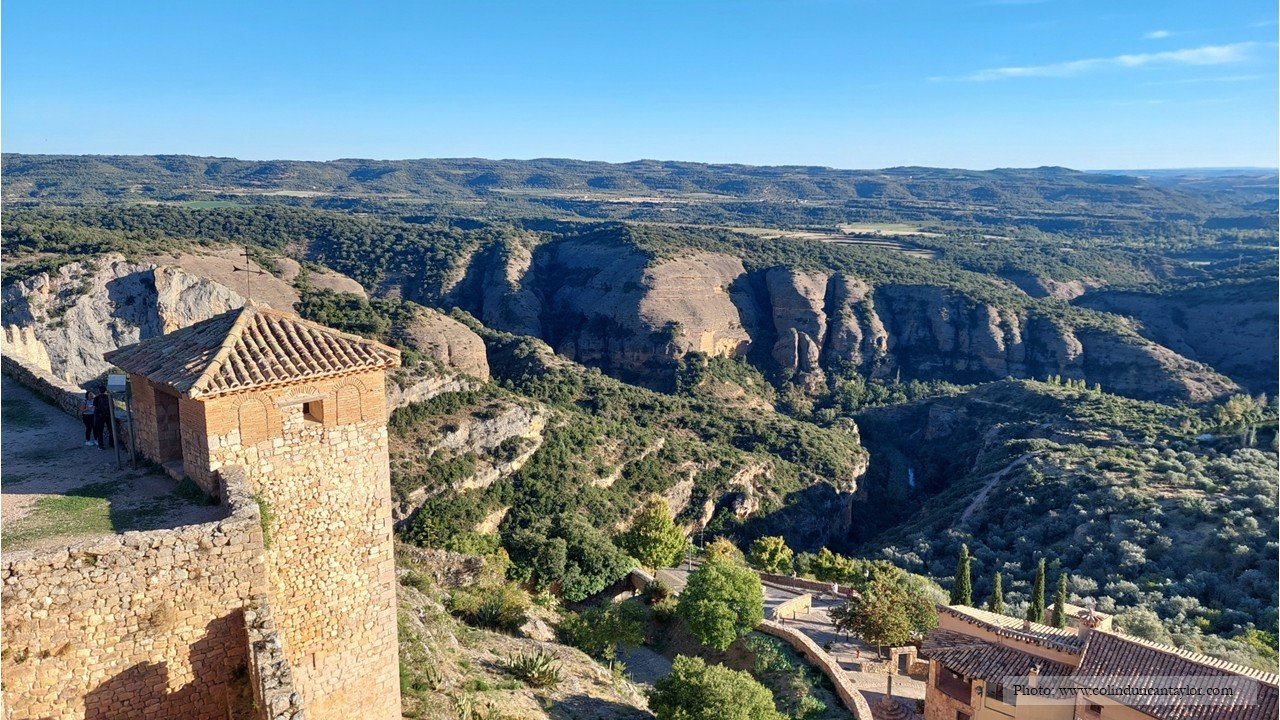
Looking down into the canyon of the Vero river and across the Sierra de Guara.
Alquézar lies in the Sierra de Guara. As well as being the best place to discover prehistoric cave art in the Spanish Pyrenees, this mountainous area offers some of the best canyoning, rock climbing, hiking and trail running. READ MORE
