…and where to find some of the best canyoning, rock climbing, hiking and trail running.
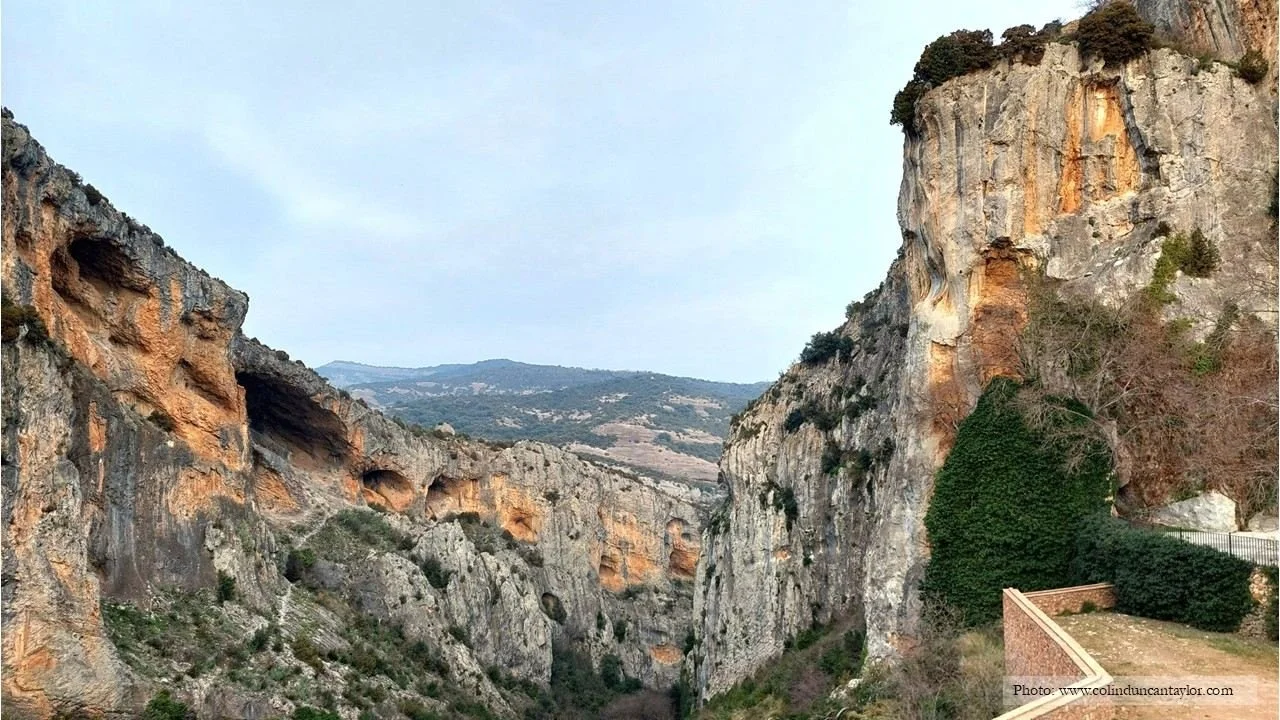
Looking down into the Vero canyon from Alquézar.
Just to the south of the central Pyrenees lies the Sierra de Guara. This barren Pre-Pyrenean landscape is cut through by canyons, and the steep sides of these canyons and their tributary ravines are riddled with more holes than a Swiss cheese. One day in 1966, a Frenchman from Pau decided to explore the four main canyons of the Vero river. By chance, Pierre Minvielle discovered what he recognised as prehistoric art in rock shelters near the village of Lecina. Three years later, researchers from the University of Zaragoza found more rock art in the same area. These discoveries inspired the Museum of Huesca to begin a systematic survey of the entire Vero valley in 1978. Over a period of around 20 years, this research identified more than 60 rock shelters or cavities containing prehistoric paintings, often invisible to the naked eye.

La Ciudadela (The Citadel) rock formation in the Mascún canyon.
THE OLDEST CAVE ART IN THE SPANISH PYRENEES
Nearly all these paintings are somewhere between 3,500 and 10,000 years old, making them considerably younger than the rock art found in the celebrated caves of the French Pyrenees. The most notable exception is the cave of Fuente del Trucho. If age is a measure of importance, this contains the most significant prehistoric art in the Spanish Pyrenees. At first, the red and black handprints and the paintings and engravings of horses and other animals were thought to be around 20,000 years old, but research by an international team in 2014 concluded that some of them were painted 31,000 years ago.
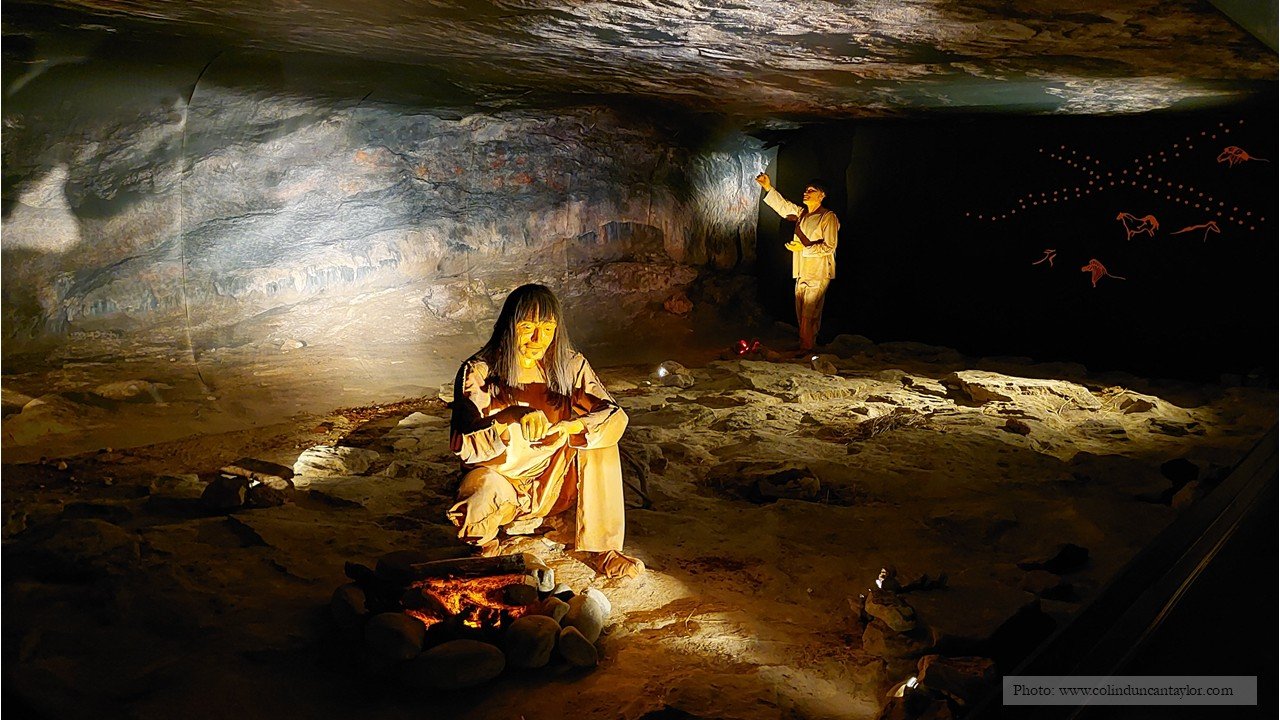
The Colungo Cave Art Centre includes this reconstruction of Fuente del Trucho.
No other art of a comparable age has been discovered on the southern slopes of the Pyrenees, and that is why Fuente del Trucho is closed to the general public, although some of the paintings are represented nearby in the Colungo Cave Art Centre. This is an interpretation centre rather than a museum, so nearly all the exhibits are copies or reconstructions. But it is well worth taking a look because it provides an excellent overview of pre-history in general, as well as in the Pyrenees. This is also where you can arrange to take a guided visit into the River Vero Culture Park and see some of the rock art in its original setting.
A PARADISE FOR ADVENTUROUS (AND STRENUOUS) OUTDOOR ACTIVITIES
Back in 1966, Pierre Minvielle was expecting to explore the canyons of the Rio Vera rather than discover ancient rock art. Since then, canyoning and rock climbing have grown in popularity to become two of the main pillars of tourism in the Sierra de Guara, attracting enthusiasts from all over the world. Many others come to hike or, like me on my most recent visit, to participate in the gruelling Ultra Trail Guara Somontano running race.
As well as wild landscapes and abandoned villages, Sierra de Guara’s other outstanding feature is the fairytale town of Alquézar.
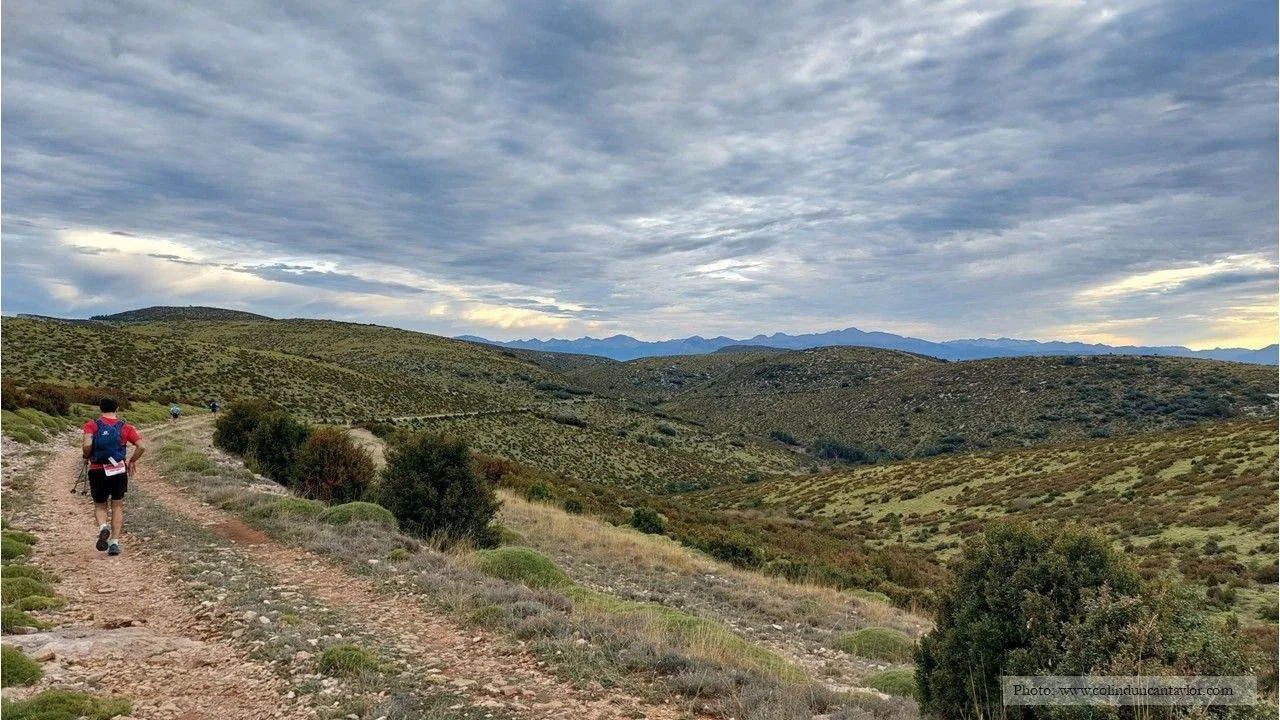
Running through desolate landscapes during the 2025 Ultra Trail Guara Somontano.
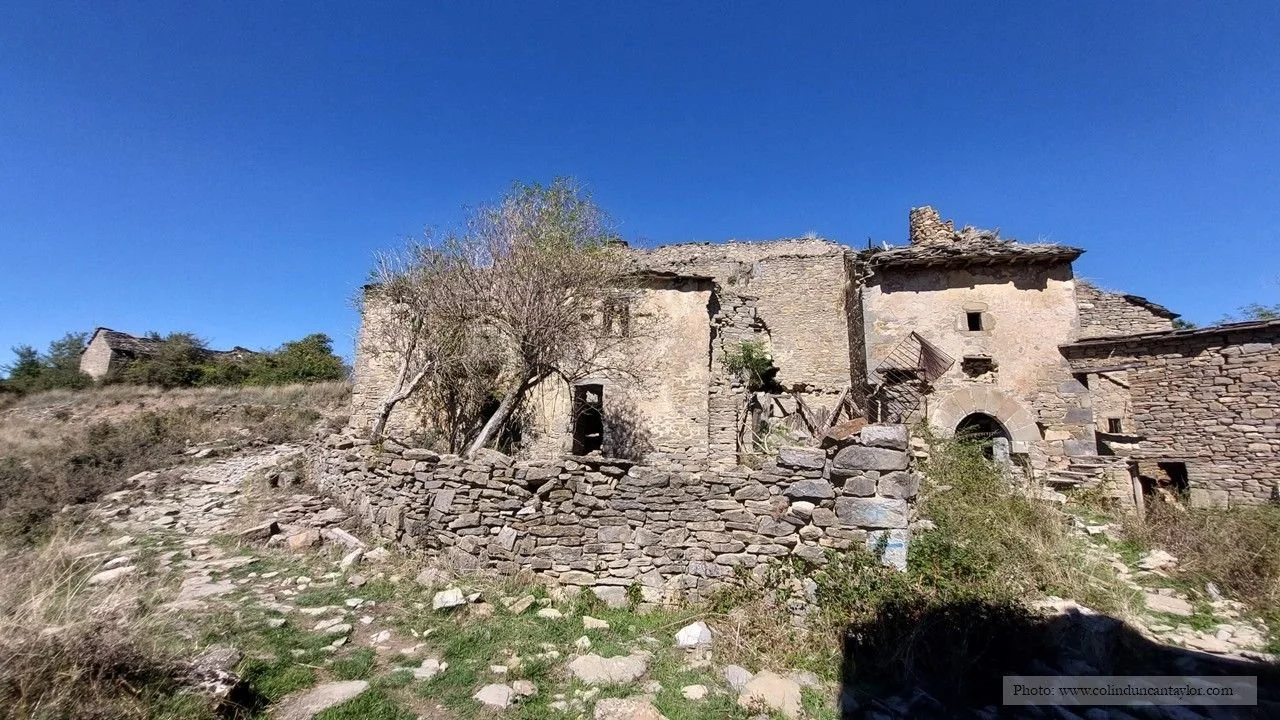
An abandoned farm near the village of Otin.
