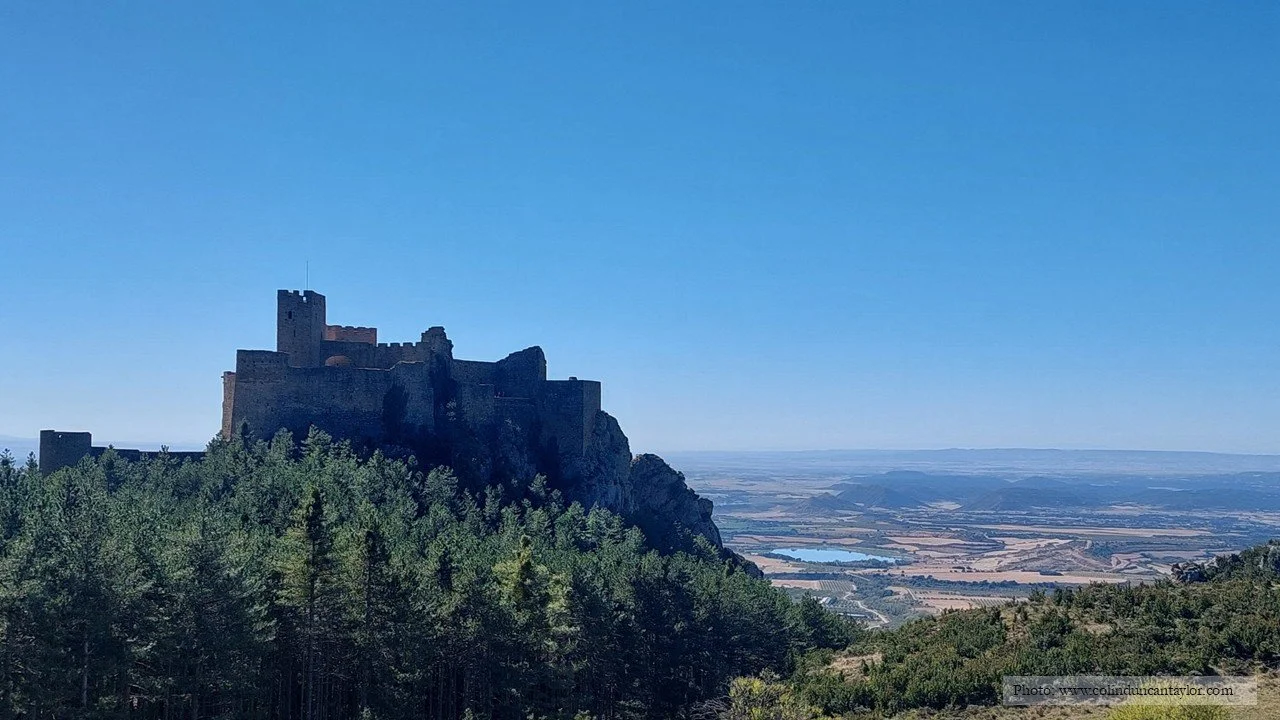
Castillo de Loarre: the oldest and best-preserved fortress in Spain.
Even at the height of their powers, the Moors did not control the entire Iberian Peninsula. Soon after their conquest in the 8th century, they established what they called the Upper March to the north of Zaragoza. This was a militarised buffer zone that separated their own population from the Christian communities in the foothills of the Pyrenees.
FORTIFYING THE UPPER MARCH
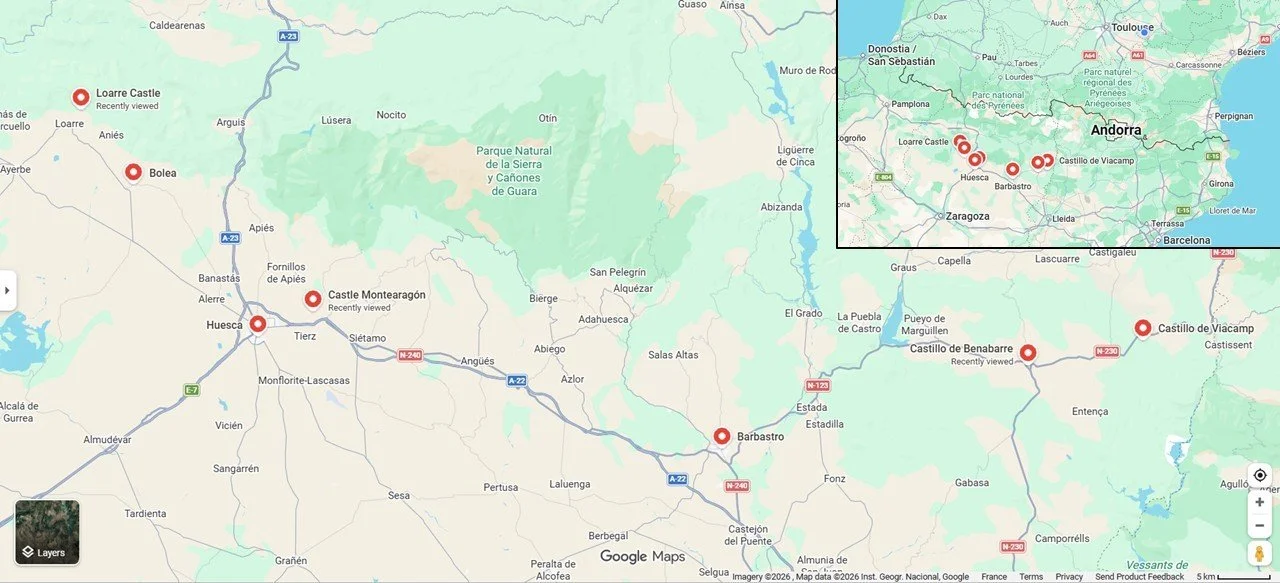
The Moors strengthened the main towns in Upper March with walls and gates, Barbastro and Huesca being notable examples. They also constructed a ring of fortresses on the high ground around these centres of power, but today, little remains to be seen. Nearly all the fortifications built by the Moors either fell into ruin or were incorporated into defences built by the Christians as they gradually pushed the limits of the Upper March southwards.
During the course of the 11th century, Christian rulers built their own defences in the same area, either to provide secure bases from which to launch their attacks on the Moors, or to defend territory once they had captured it. Take a drive through the northern part of Aragon today, and you can spot many of these fortifications perched on hilltops and rocky mounts. Particularly noteworthy are the network of watchtowers around Viacamp, and the castles of Benabarre and Montearagón. I will write about these another day. Here, I shall concentrate on what claims to be the oldest and best-preserved fortress in Spain. It is also an outstanding example of Romanesque architecture.
THE CASTILLO DE LOARRE
Twenty-five kilometres north-west of Huesca, the Castillo de Loarre rises from a lump of limestone in the foothills of the Pyrenees. Roughly midway between Loarre and Huesca lies the village of Bolea. This was the site of a Moorish stronghold. Loarre was built to prevent or deter the Moors from launching attacks into Christian territory.
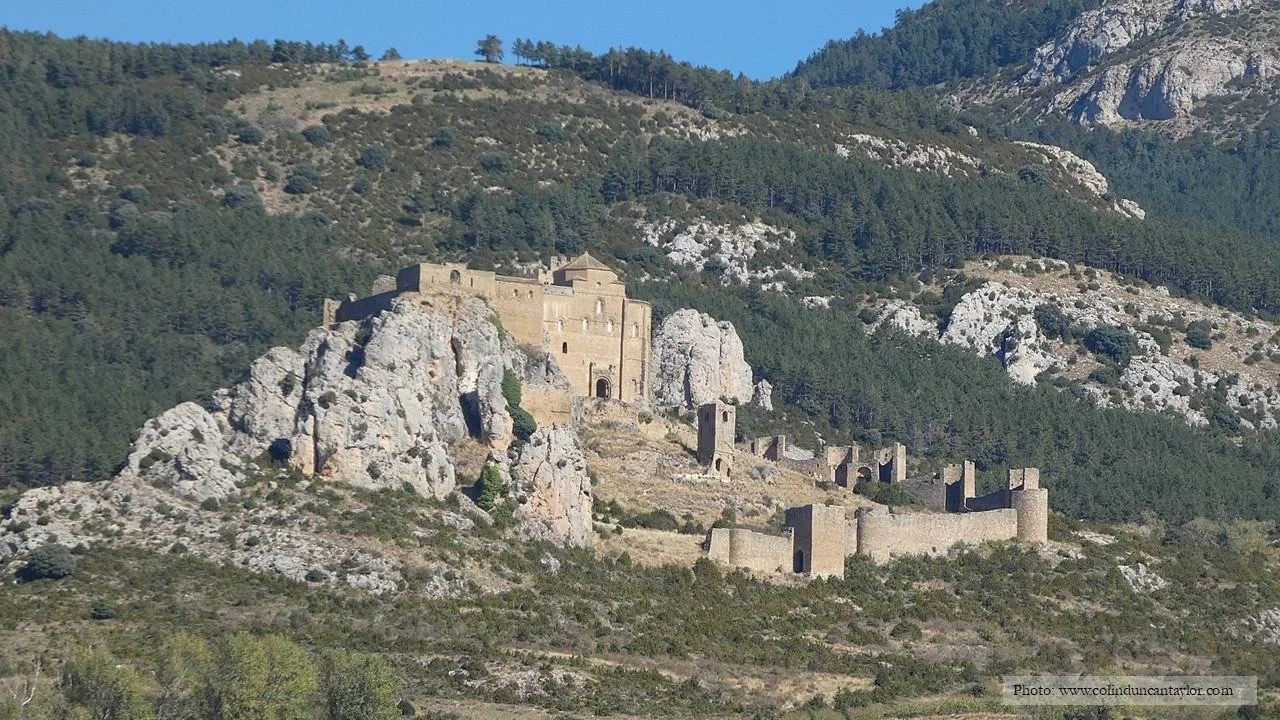
The Castillo de Loarre rises from a lump of limestone in the foothills of the Pyrenees.
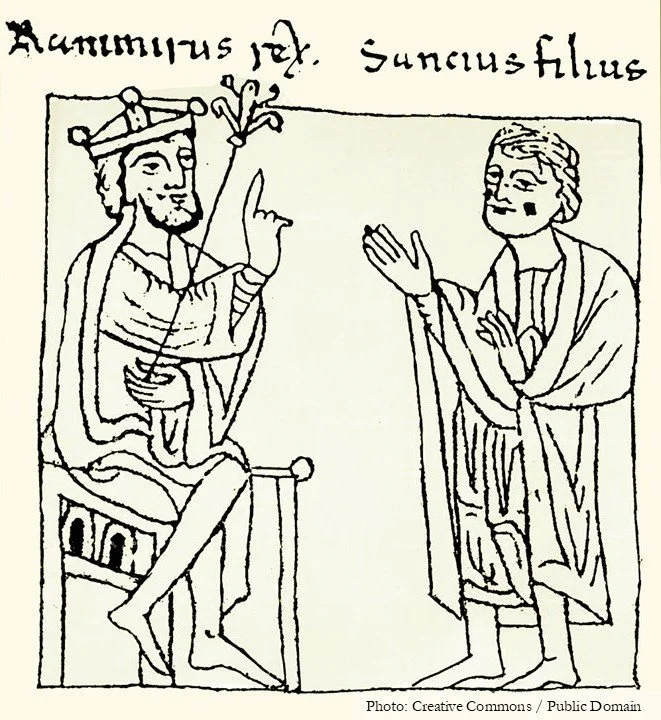
A 13th-century illustration of Ramiro (left) and his son, Sancho Ramirez (left).
Sancho III, King of Pamplona, began building Loarre in 1033. When he died two years later, his kingdom was divided between his three sons and Loarre fell into the domains of Ramiro. At first, Ramiro was the Count of Aragon, but he soon established his independence from his half-brother in Pamplona, and he is generally regarded as Aragon’s first king. In 1063, he died fighting the Moors further east in his kingdom. It was his son, Sancho Ramirez, who began strengthening Loarre in 1071 and gave it the shape we see today. He also founded a monastery on the same site, and the result is a harmonious combination of military and religious Romanesque architecture.
A CASTLE WITHOUT AN ENEMY
Thirty years later, the Moors had been driven out of this part of Aragon, and Sancho Ramirez’s heir moved the monks to another castle. Loarre lost its main purpose and declined in importance, although it played a role in various rebellions between the 13th and 15th centuries. After that, the villagers who lived at the foot of the castle moved down the hill to the current site of Loarre village and stole many of the castle’s stones to help them build their new houses. The ruins were declared a National Monument in 1906.
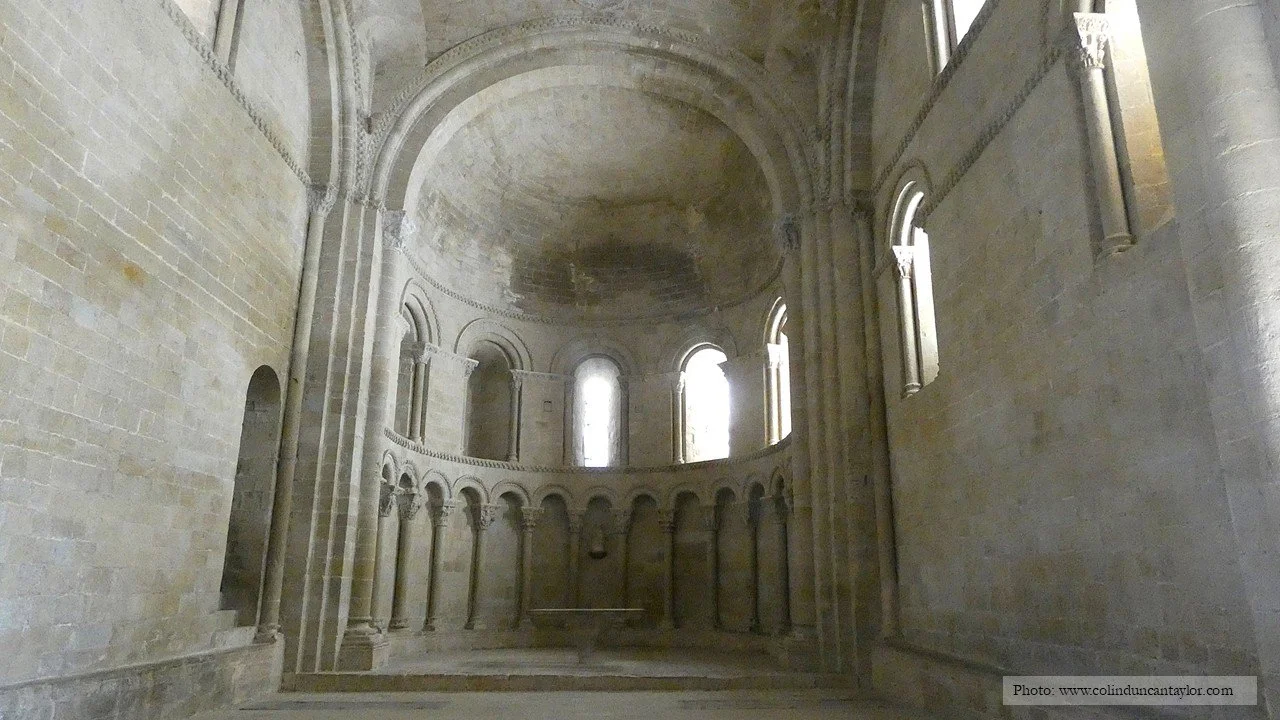
Inside the church of San Pedro (Saint Peter).
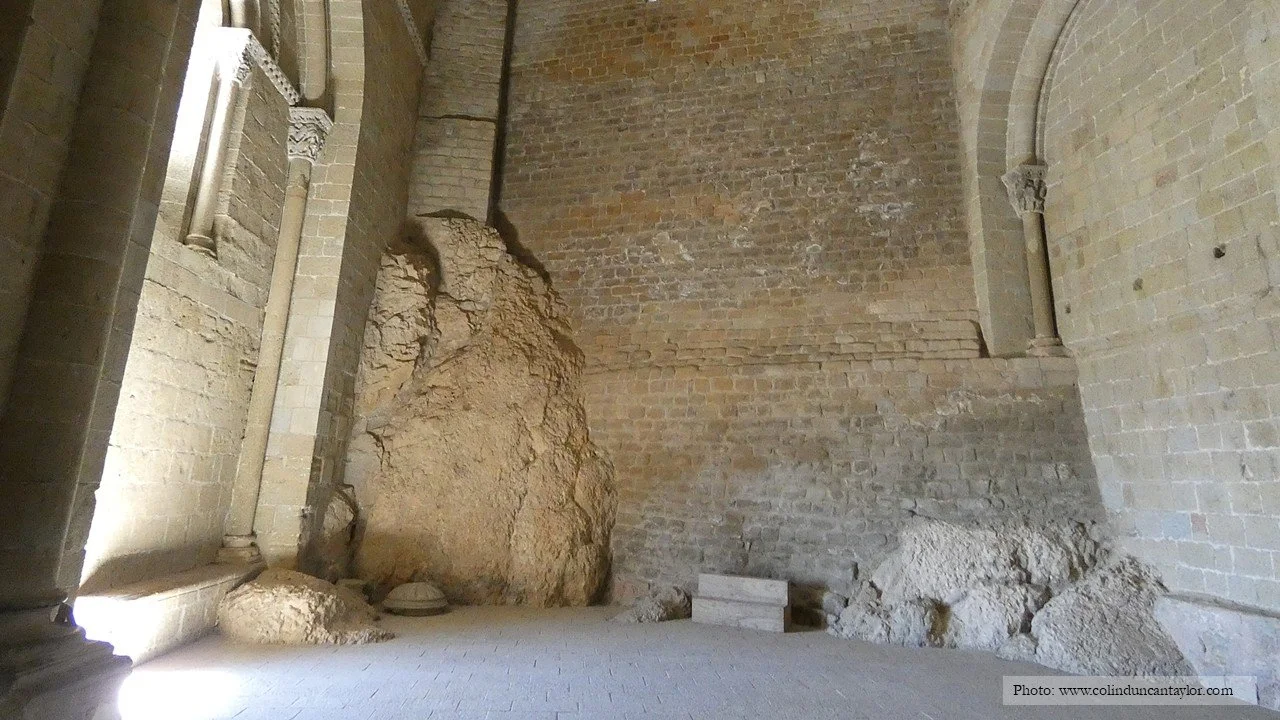
Both the church of Saint Peter and the castle incorporate the natural rock into their construction.
HISTORICAL FILM SET
Loarre’s comparatively well-preserved fortifications and spectacular setting have attracted makers of films for both cinema and television. Most have been Spanish productions, and the most notable exception is Ridley Scott’s 2005 movie, ‘Kingdom of Heaven’, starring Orlando Bloom, Eva Green, Liam Neeson, and Jeremy Irons.
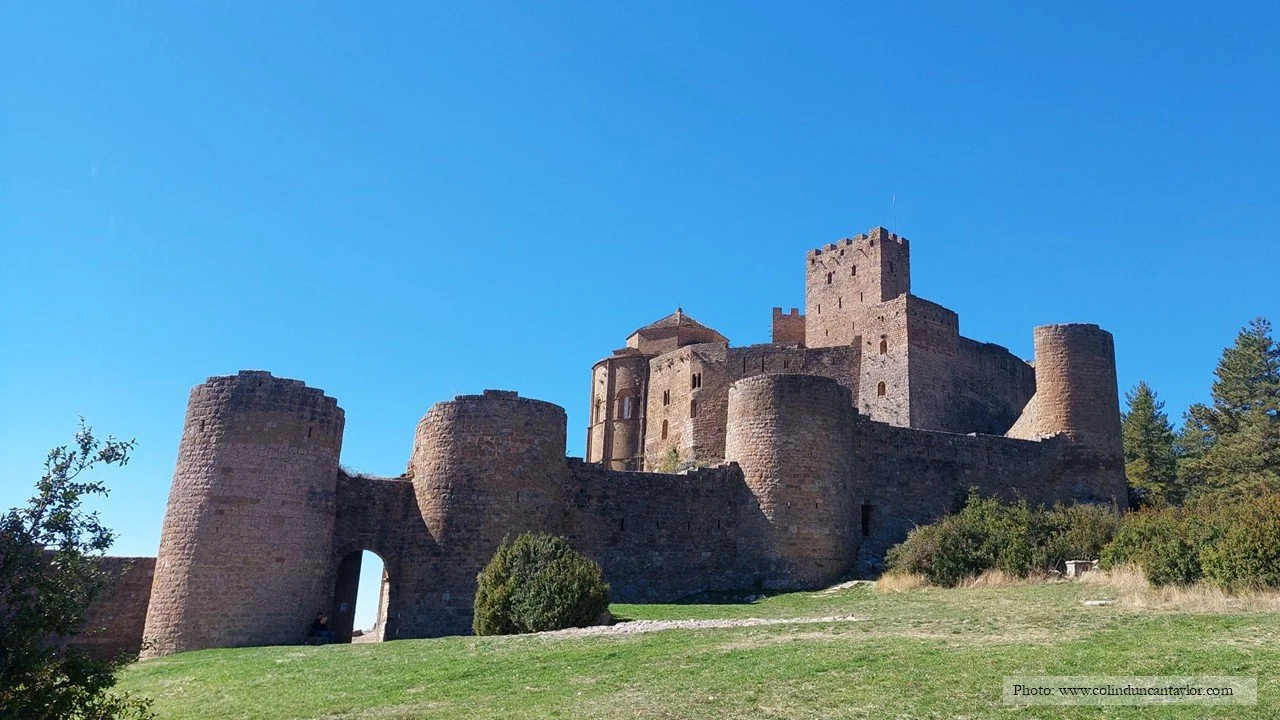
The entrance to the castle is through the gateway on the left of the picture.
