The pig farmer, the Roman tilemaker and Napoleon’s companion in exile
Most people visiting Las Cases barely glance at the château. Instead, they dive straight inside the farm shop to buy dried hams, sausages or fresh pork.
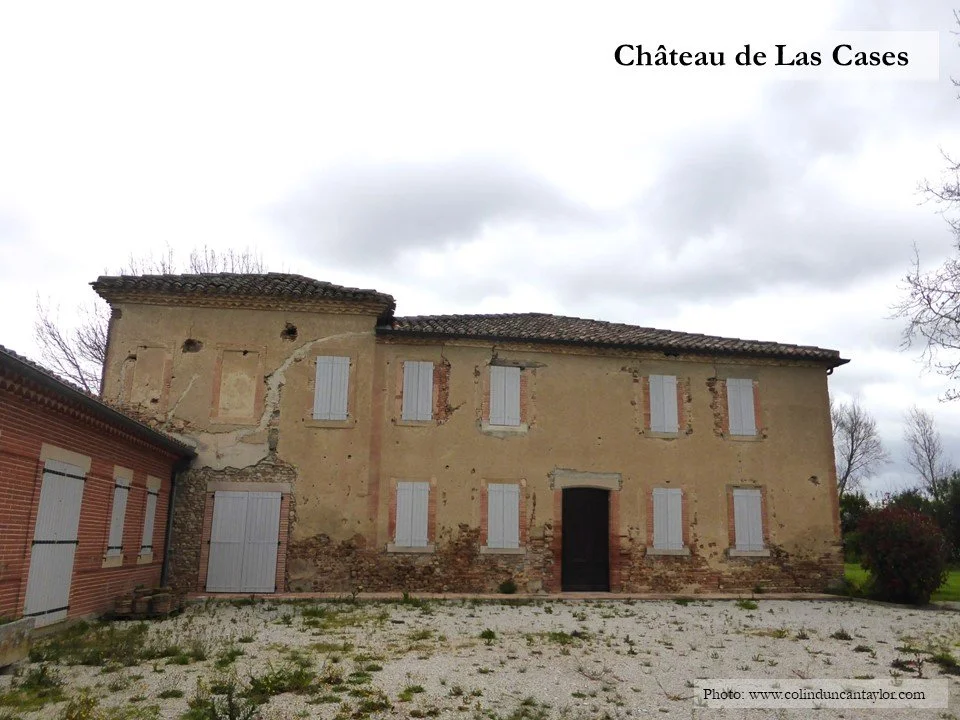
The farm and château sit beside the main road from Revel to Castres, and before the Malinge family started making charcuterie, Las Cases had enjoyed a curious succession of occupants.

From Stone Age to Romanisation
The oldest objects discovered at Las Cases include flint arrow heads and polished stone axes from Neolithic times when humans were domesticating their first pigs. One day, Jean-Luc Malinge also discovered Roman relics while he was ploughing a field. He called in the archaeologists from Puylaurens, and more careful excavations unearthed a tilemaker’s workshop from the 1st century BCE. They also found pits where clay had been extracted and a building where the tiles were dried before being fired.
The next year, Jean-Luc went looking for more remains and found an oven. Although it had been used by a tilemaker, he wasn’t a Gallo-Roman. Instead, the oven dated from the 13th century CE. People were making tiles at Las Cases for at least 1,400 years!
The pitcher in the well
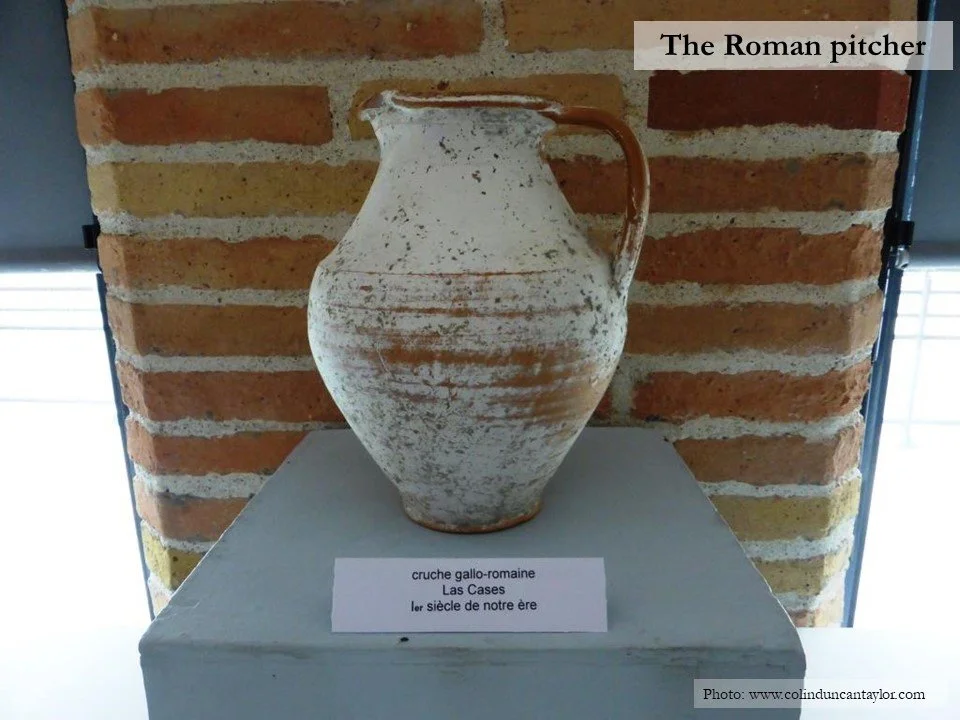
Discoveries like these naturally encouraged Jean-Luc to keep searching. Next, he found a well that had been used as a rubbish dump. When it was dug out, the archaeologists found fragments of clay tiles and amphorae, mussel and oyster shells and a few old nails. Right at the bottom in a layer of sediment they discovered something more remarkable: an ancient water jug.
This pitcher had been made at a village on the edge of Gaillac in the 1st century CE. At that time, Montans was renowned for its ceramics which were exported to many parts of the Roman Empire including England and Spain (Montans has a museum if you wish to know more about this industry). Unusually, the water jug discovered at Las Cases was intact and in almost perfect condition, leading the archaeologists to speculate that a careless servant had dropped the jug into the well where its fall had been gently brought to a halt by the soft sediment at the bottom.
Remembering Napoleon
We don’t know the names of the tilemakers, Roman or medieval. But in 1765, a young man was born in the Château de Las Cases whose name would be immortalised thanks to Napoleon.
Emmanuel de Las Cases started his education in Soréze, and at the age of 14 he became a cadet at the Royal Military School in Paris. His subsequent career as a naval officer was brought to a halt by the Revolution, and the young Marquis de Las Cases was among the first noblemen to flee, first to Germany and then to England.
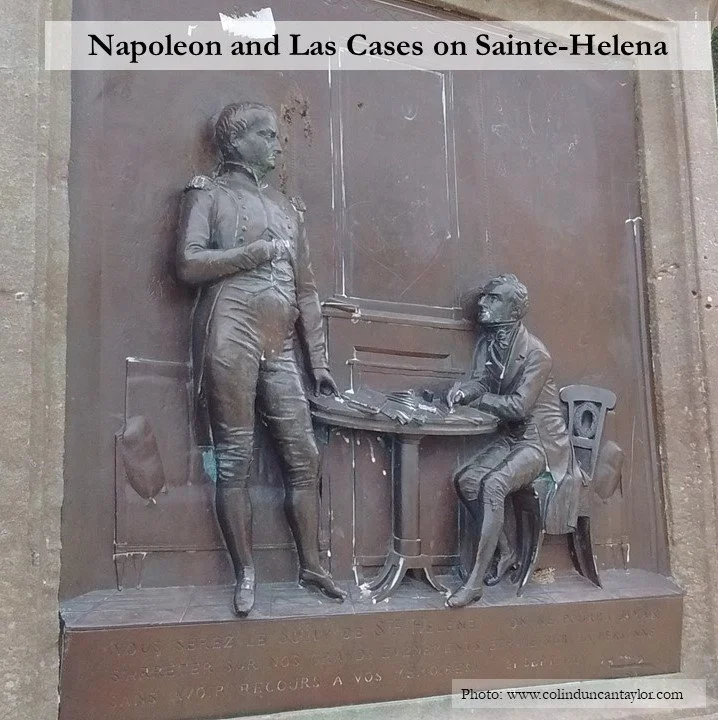
Emmanuel returned to France in 1802 and held a number of positions under Napoleon, being elevated to the rank of count in 1810. After Waterloo, he was among the intimate circle of people who accompanied Napoleon into exile on Saint-Helena. During the long voyage to the South Atlantic, Napoleon began dictating his memoirs to Las Cases. This routine continued on Saint-Helena until the end of 1816 when Las Cases was expelled from the island for trying to smuggle letters to Napoleon’s younger brother Lucien. Refused entry to France, he spent the next few years in Belgium and Germany, but after Napoleon’s death in 1821, Las Cases was allowed to return to his homeland.
The Memorial of Saint Helena
In 1823, Las Cases published an eight-volume work in both French and English, drawing on his conversations with Napoleon. With Bonaparte dead, fear of the Corsican Ogre had already begun to turn to fascination, and thanks to its timely appearance, ‘Mémorial de Saint-Hélène’ became an international best-seller and remained popular into the 20th century. It also made Las Cases a very rich man.
How much of ‘Mémorial de Saint-Hélène’ is truly based on Napoleon’s own words, and how much was imagined or embellished by the author, remains a matter of debate. Several people featured in the book were less than delighted with their portrayal, and Las Cases, fearing prosecution, made amendments or added further justifications in subsequent editions.
Hero or villain?
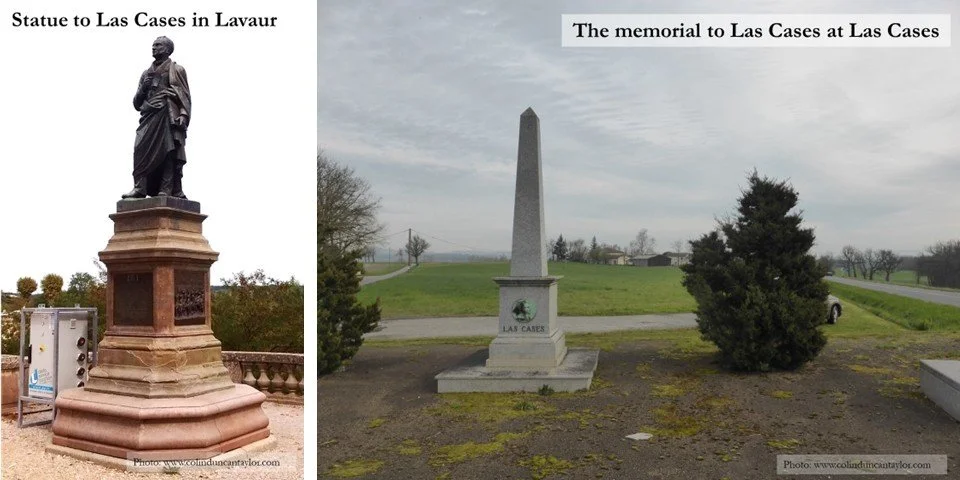
After his fall, Napoleon was widely perceived as a bloodthirsty tyrant who had betrayed the Revolution, robbed France of its youth and spread war and destruction throughout much of Europe. With his book, Las Cases laid the foundations of the legend of Napoleon as a lawmaker, statesman and creator of the modern French state.
In modern France, Napoleon continues to divide opinion. As the editor of a review dedicated to the former emperor puts it, ‘There is both fascination and revulsion for Napoleon in almost equal measure.’
