Book review: ‘Looted!’ by Peter Elliott
Peter Elliott and I share a love of history in general, and the French kind in particular. He also happens to live in a neighbouring department, the Aude. I was intrigued by his latest book, published by Pen & Sword at the end of last year, and I thought I would share a review.
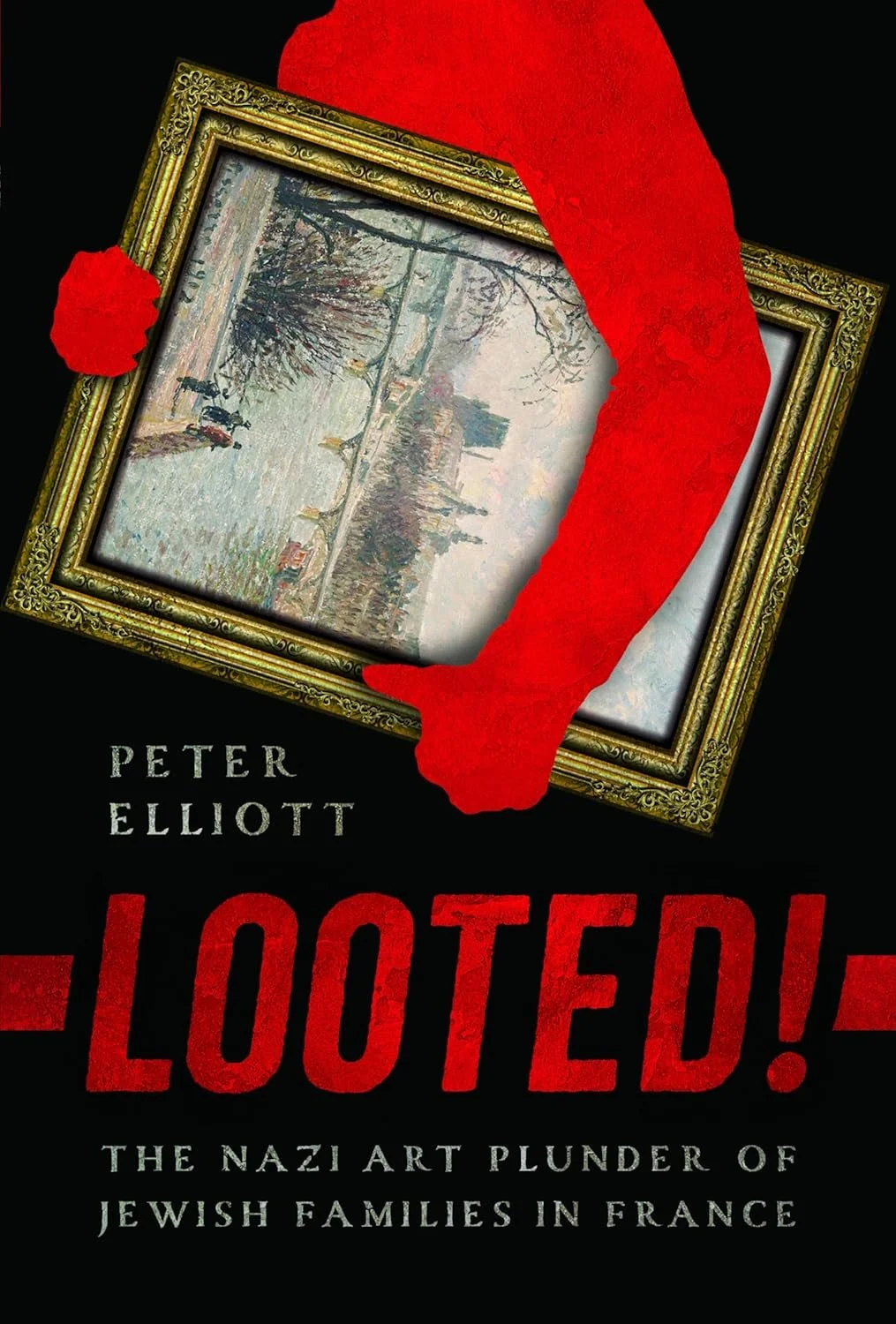
My review of ‘Looted! The Nazi Art Plunder of Jewish Families in France’ by Peter Elliott
During the Second World War, around 100,000 works of art were looted from France by the Nazis. Of these, around 20,000 were stolen from Jewish art dealers or private collectors.
In ‘Looted!’, Peter Elliott gives these shameful statistics a human face by following the life stories of four Jewish families who shared humble beginnings in Alsace-Lorraine and then prospered in the heartland of France during the first half of the 20th century. The names of some of their businesses are instantly recognisable even today: Galeries-Lafayette, Monoprix, Bourjois, Chanel, Devanlay-Lacoste. Others, such as banks and aircraft manufacturers, have disappeared, but together they all helped to make these families exceptionally rich. They used some of this wealth to build art collections including works by, among many others, Degas, Gauguin, Matisse, Monet, Pissarro, Renoir, Rousseau, Sisley, Soutine and Toulouse-Lautrec.
‘Looted!’ traces the rags-to-riches story of each family and recounts the development of their interest in art collecting. It then explores how they fared during the Occupation, and how some of their artworks were looted by the Nazis while others were successfully hidden.
After the war, these families successfully recovered some of their lost paintings but failed in the courts to obtain the restitution of others. There were also a number of works which disappeared without trace, either destroyed during the war or perhaps hidden in some private collection.
The quality of these family collections can be gauged from the post-war destiny of two of them. In 1976, Pierre and Denise Lévy donated a large part of their collection to the city of Troyes, a gift of such magnitude that it led to the creation of the Musée d'Art Moderne de Troyes where the works are still exhibited today.
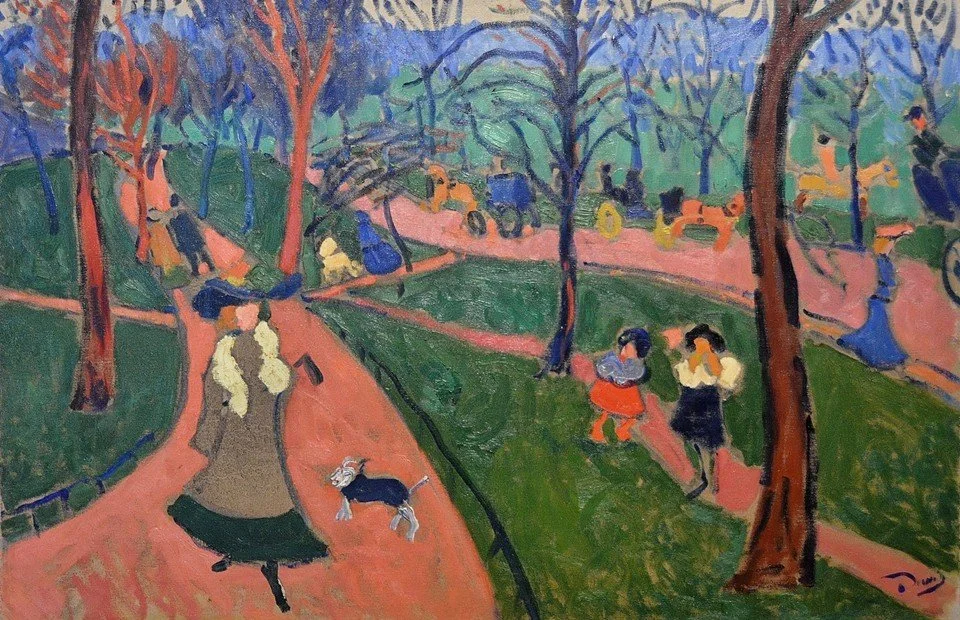
André Derain, ‘Hyde Park’, 1906. Photograph by Patrick Monchicourt / CC BY-SA 2.0. Part of the Pierre and Denise Lévy collection, Musée d'Art Moderne, Troyes.
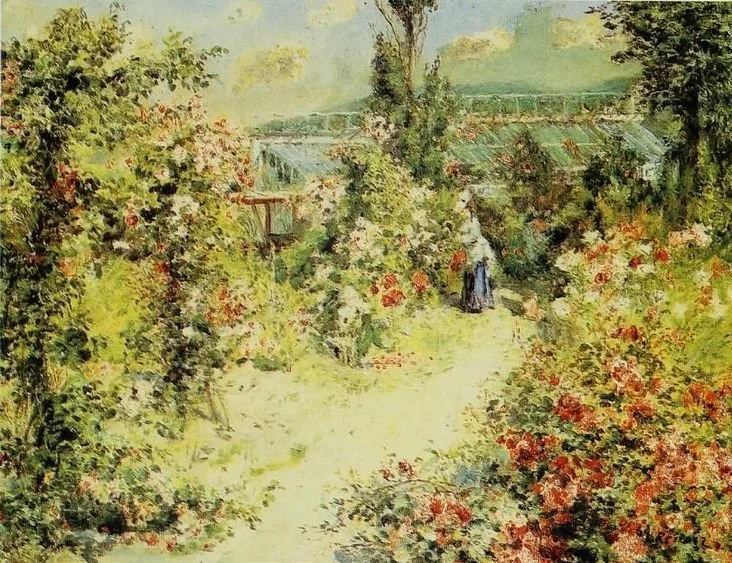
Pierre-Auguste Renoir, ‘La Serre’, 1876. Creative Commons / Public Domain.
Georges Lévy (no relation to Pierre and Denise), escaped from France in 1940, settled in the United States, changed his name to Lurcy and carried on collecting. He also managed to smuggle 38 paintings from his French collection to the United States via Portugal in 1942. In 1957, most of his collection was auctioned in New York. Time magazine reported that the total receipts for this three-day auction were $2,221,355, ‘a sum that blew the roof right off the rising art market’.
One of the paintings auctioned in New York was Renoir’s ‘La Serre’, or ‘The Greenhouse’. Lévy/Lurcy reportedly used to cradle it in his arms, afraid to wake it and wondering how he should sing it a lullaby. There can be no doubt that he loved his art collection. As for the other wealthy collectors covered in this book, it is difficult to evaluate where paintings ranked in their affections compared with their chic Parisian homes, country châteaux, seaside villas, luxury yachts, racehorses and, of course, the business empires that enabled them to acquire all these trappings of the super-rich in the first place. As Elliott observes in his epilogue, for these Jewish families, the loss of some of their paintings was relatively unimportant compared with the loss of their relatives who were murdered during the Holocaust.
‘Looted!’ is a thought-provoking read which encourages us to reflect on the role of art in our own lives, and in the lives of the super-rich. It also helps keep alive a story which is still relevant today. Between 1945 and 1949, a total of 61,233 art objects looted by the Nazis were returned to France. Of these, 45,000 were subsequently returned to their owners (or the heirs of their owners), including the families covered in this book. The remainder were sold by the French government in the early 1950s, with the exception of 2,200 works which were judged to be of outstanding artistic importance. Today, you will find them displayed in national museums all across France catalogued as MNR (Musées Nationaux Récupération). Between 1950 and 2025, only 197 of them have been reclaimed. The remaining 2,000 remain in the care of the French state until or unless a rightful owner appears.
‘Looted! The Nazi Art Plunder of Jewish Families in France’ by Peter Elliott was published by Pen & Sword Books in the UK and US on 15 October 2025.
