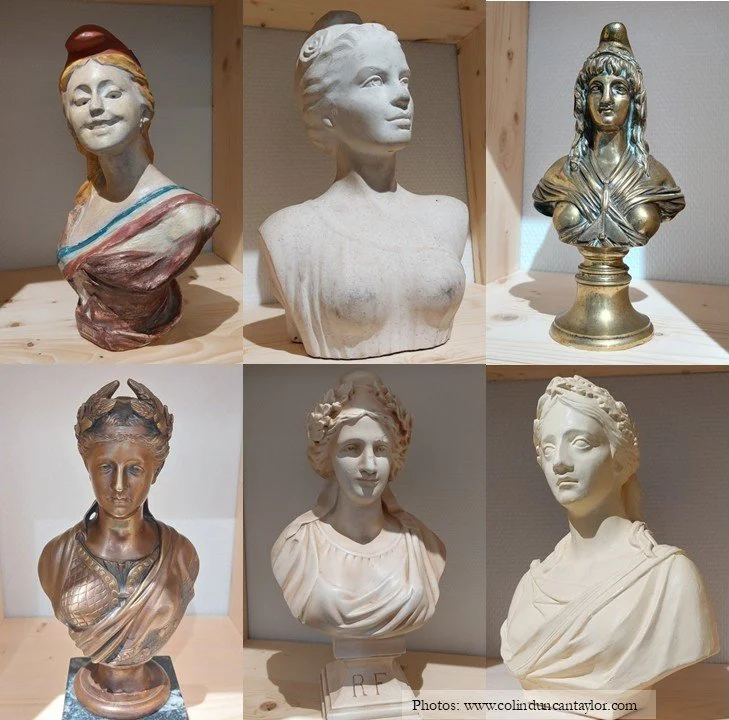
Marianne, symbol of the French republic
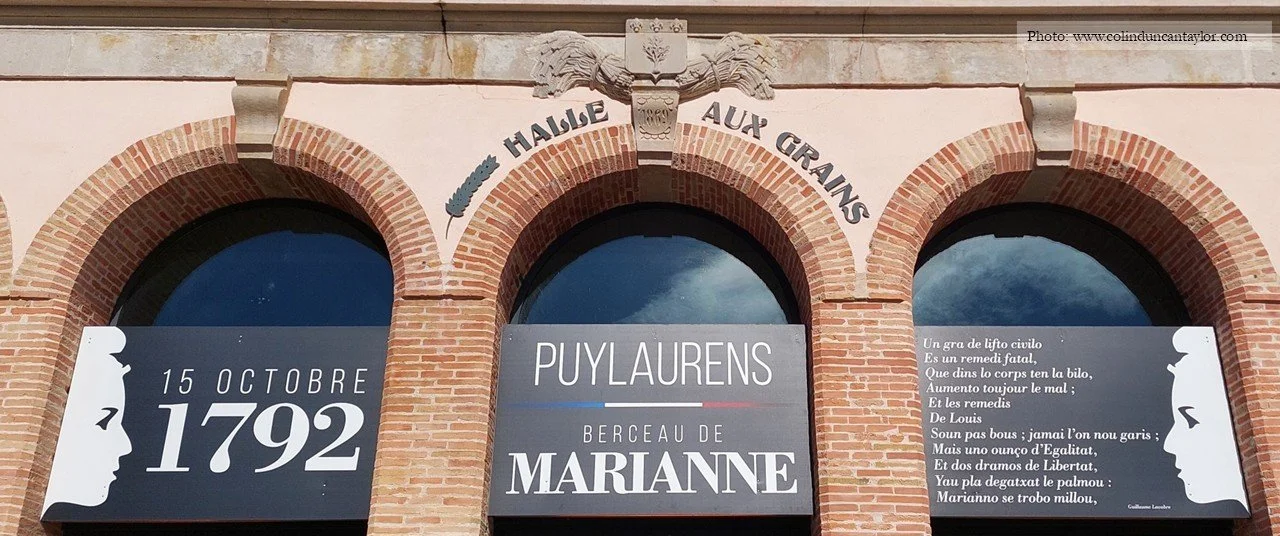
A few weeks ago, my local town opened a museum dedicated to the symbol of the French Republic. This reminded me that Marianne was born here in Puylaurens, a hilltop town in Occitanie.
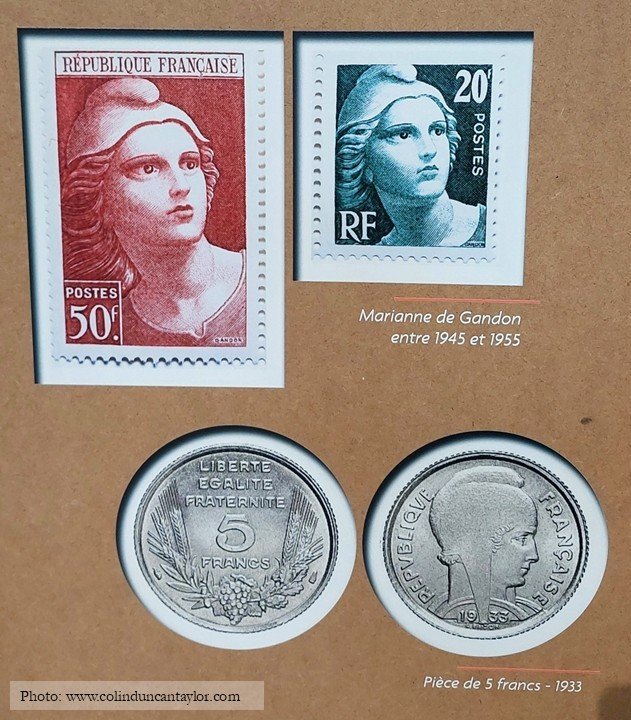
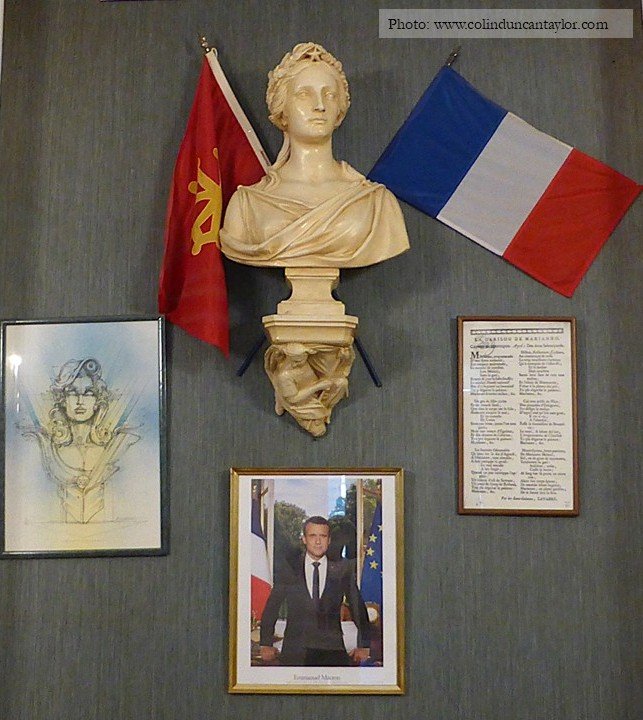
Today in France, her image appears on the coins in your pocket, the postage stamps on your letters, and almost every official government document. You will find her bust in most official buildings including the law courts and all 36,000 mairies. Marianne is the symbol of the French Republic, an allegory for liberty, a young woman who often wears the red Phrygian cap once worn by the freed slaves of Rome.
MARIANNE: A MUSICAL INVENTION
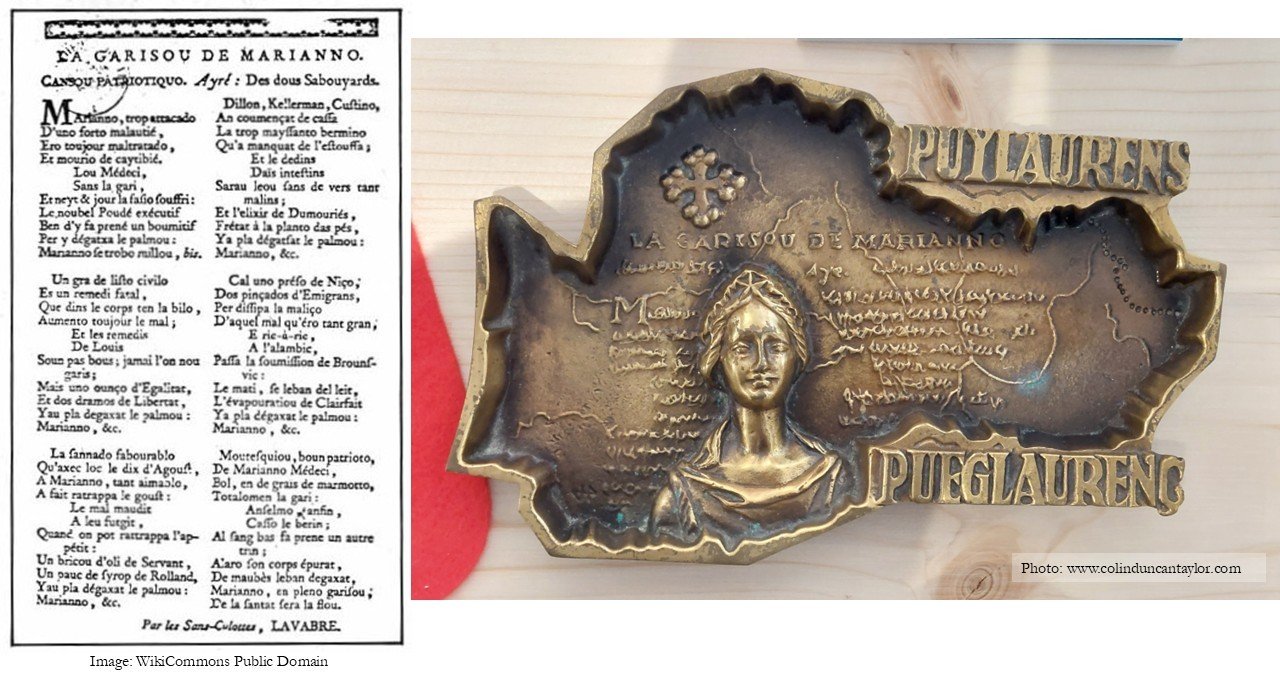
Marianne was not a real person. Like Eleanor Rigby or Maggie May, she was dreamt up for a song. Her creator, Guillaume Lavabre, was born in the centre of Puylaurens, He became a cobbler and plied his trade in the Rue Foulimou which runs through the centre of town. In 1792, the Revolution inspired him to write a political song in Occitan, a language which at that time was spoken by most people in the south of France.
‘La garisou de Marianno’ or ‘The cure of Marianne’ tells the story of a poor girl. Like most peasants at the time, she was constantly mistreated and was even on the verge of dying from poverty. More precisely, Lavabre tells us that she the had a blockage in one of her lungs. An ounce of égalité alleviated her suffering, and so did two drachmas of liberté, but it was the arrest of Louis XVI on 10 August 1792 that led to her full recovery.
A WANDERING MINSTREL
Thanks to the success of his song, Guillaume Lavabre was able to abandon the daily grind of banging nails into the soles of other people’s shoes. Instead, he took to the road, singing his revolutionary songs and spreading the fame of Marianne throughout the land. In 1814, poverty and politics forced him to switch sides. He began writing pieces that celebrated the restoration of the monarchy, but none of them were money-spinners. The rock‘n’roll lifestyle took its toll, and in 1820 the mayor of Puylaurens had this to say about Lavabre: ‘One would be led to believe that he is suffering from mental illness and that he is not in possession of all his senses. Added to that, he is very fond of wine’.
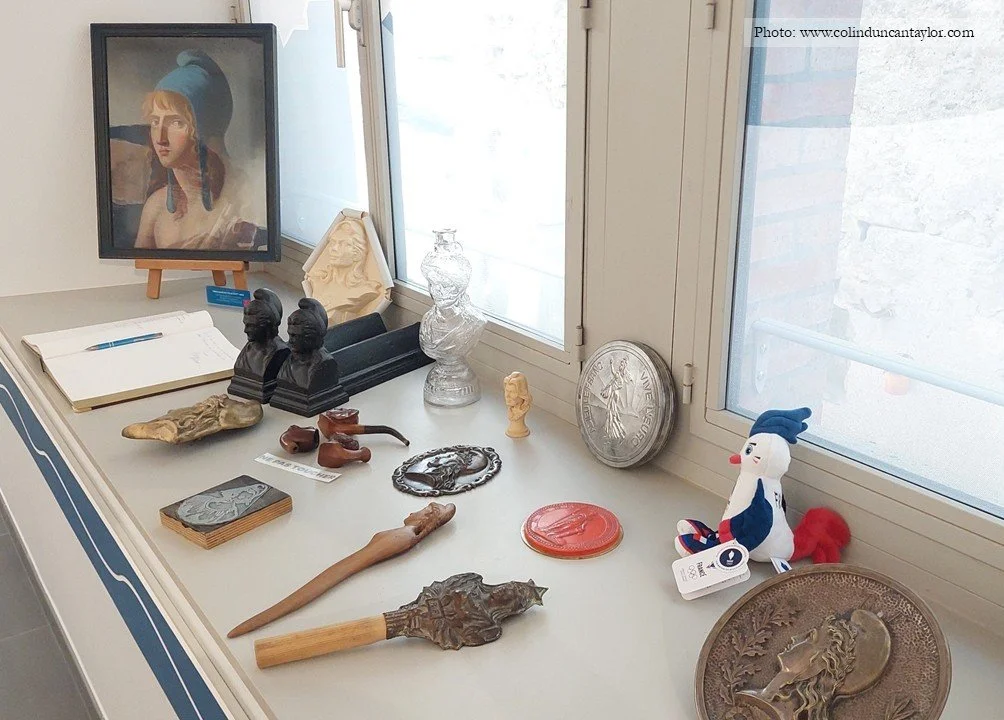
Today, visitors can follow a self-guided walk through the medieval streets where Lavabre grew up. The museum is underneath the mairie, and it tells the story of Marianne in greater detail, as well as displaying a collection of items of varying degrees of taste, all inspired by the symbol of the French Republic. In more recent times, she has been modelled on French actresses including Brigitte Bardot, Catherine Deneuve and Sophie Marceau. Should you visit the museum, you can try to work out who is who while listening to Lavabre’s song on a pair of headphones.