Some of the first farmers to reach the Pyrenees 7,000 years ago set up home in the cave of Coro Trasito, five kilometres south-west of Bielsa.
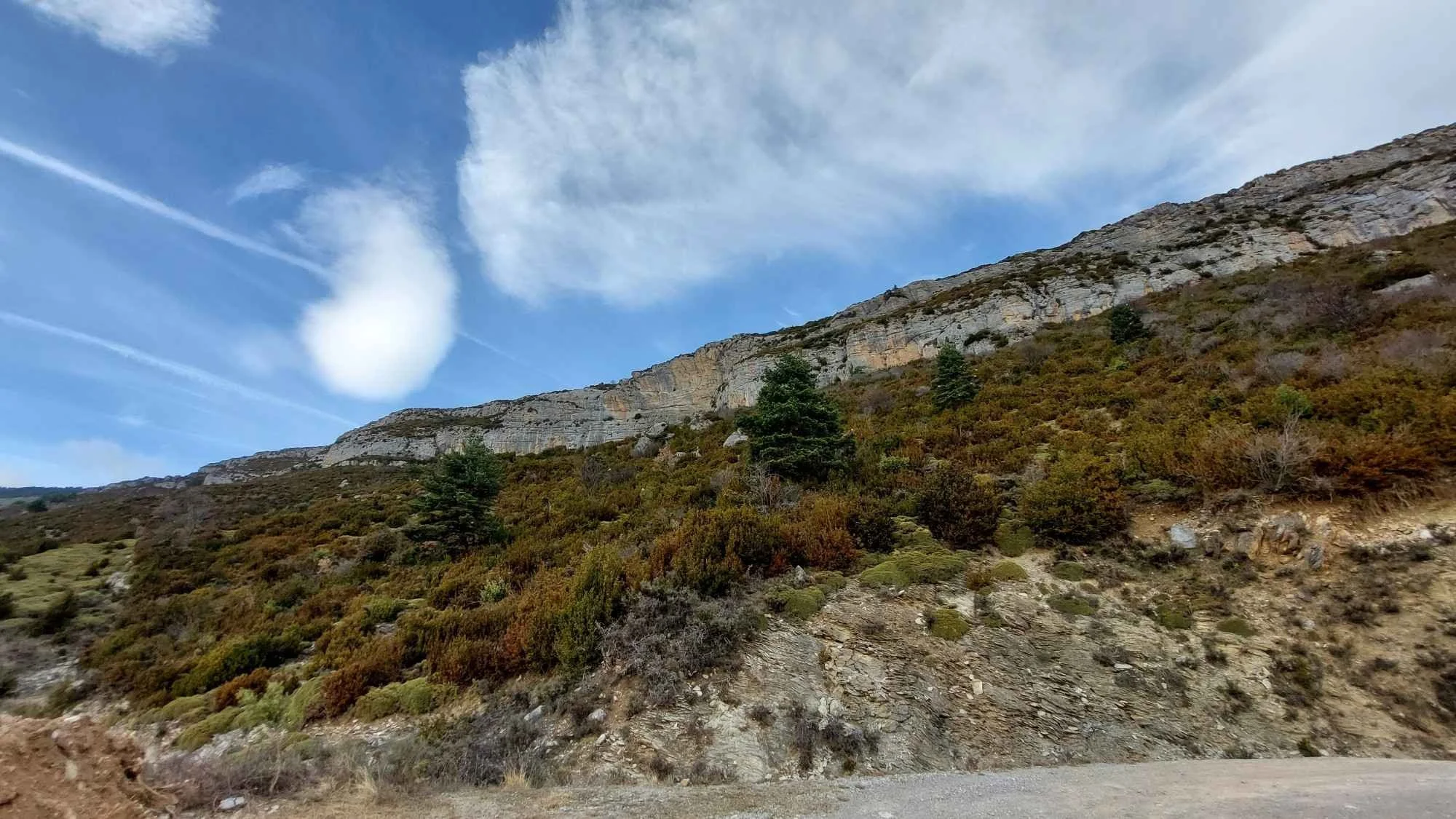
Coro Trasito is roughly in the centre of this picture at the base of the line of cliffs
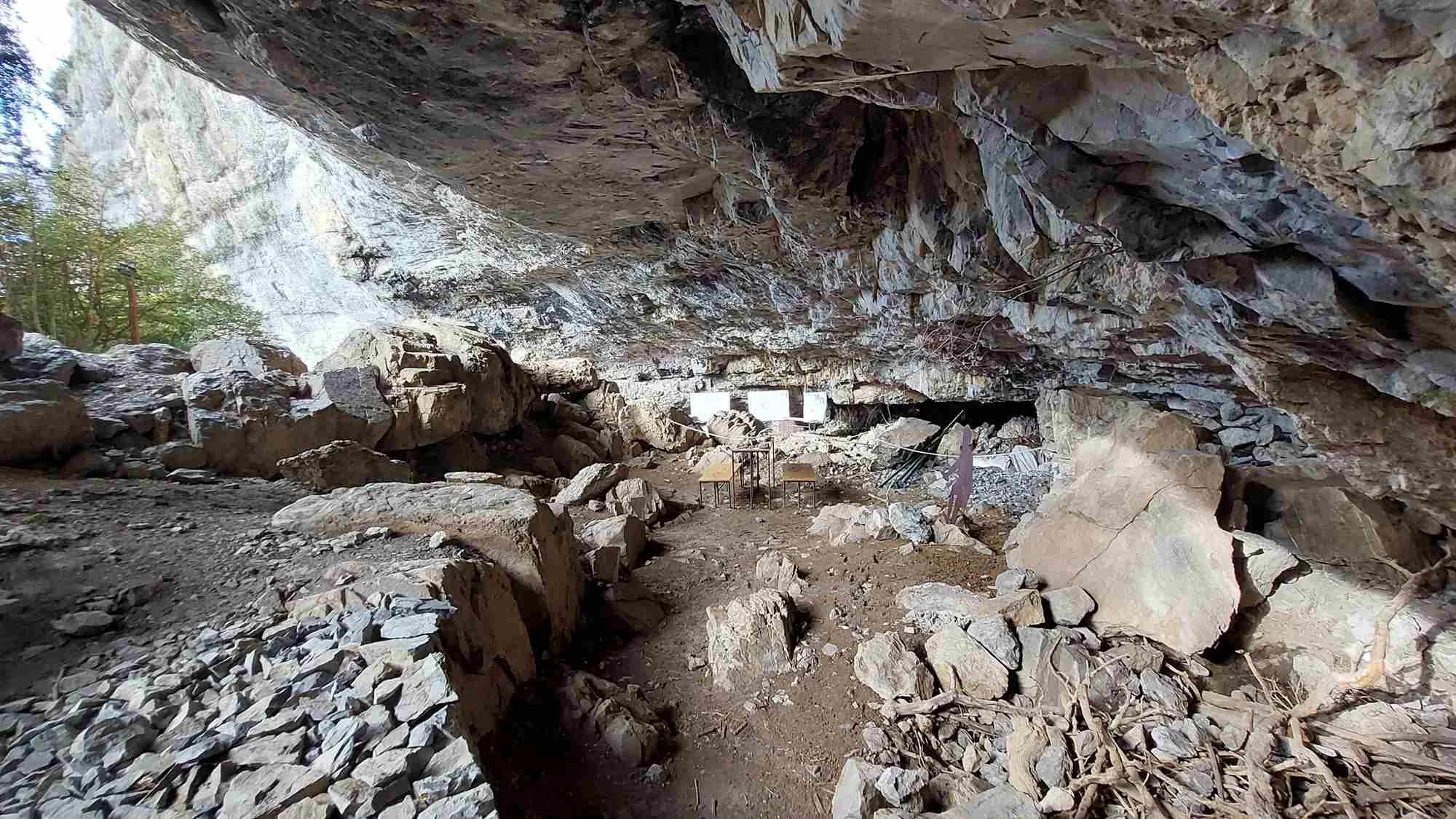
Coro Trasito is more like a rock porch than a cave
Although Spanish maps and most archaeological reports call Coro Trasito a cave, when seen in real life, it is a medium-sized rock porch at the base of an overhanging, south-facing cliff. The floor area is almost level and slightly larger than a doubles tennis court, and even in the depths of winter, natural light reaches the back of the cavity.
A PARTICULARLY WELL-APPOINTED CAVE
Even better for the residents, a spring inside the porch provides running water, arable land is only 600 metres away, and there are mountain pastures above the cliff. No wonder early migrants chose to settle here. And bears. A few metres along the same cliff is a smaller cavity, the Cueva del Oso. Bear Cave claims to be the highest site in Western Europe that was occupied by the cave bear, an animal that became extinct a few thousand years before the first humans moved in next door.
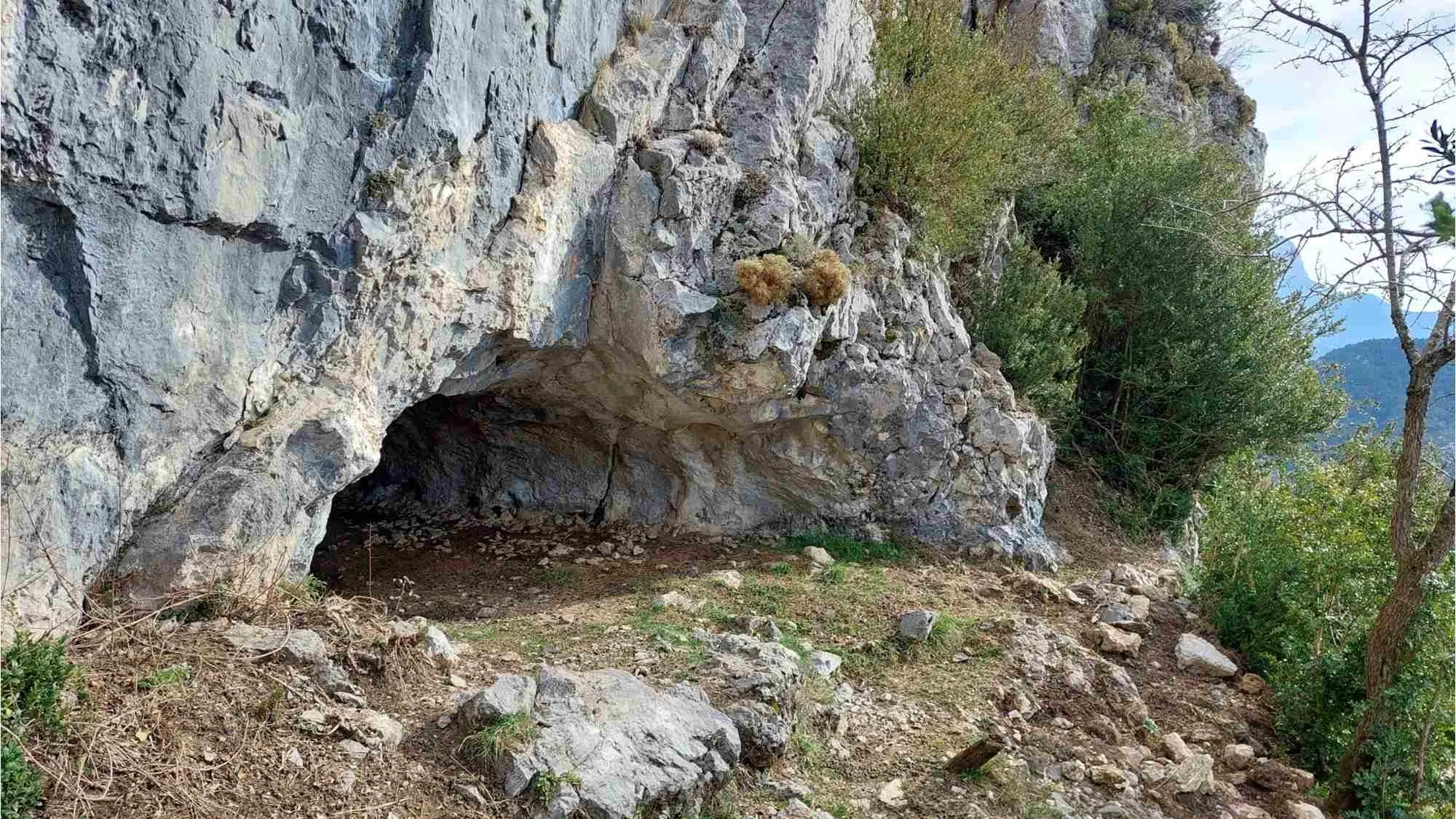
Bear Cave claims to be the highest site in Western Europe that was occupied by the cave bear
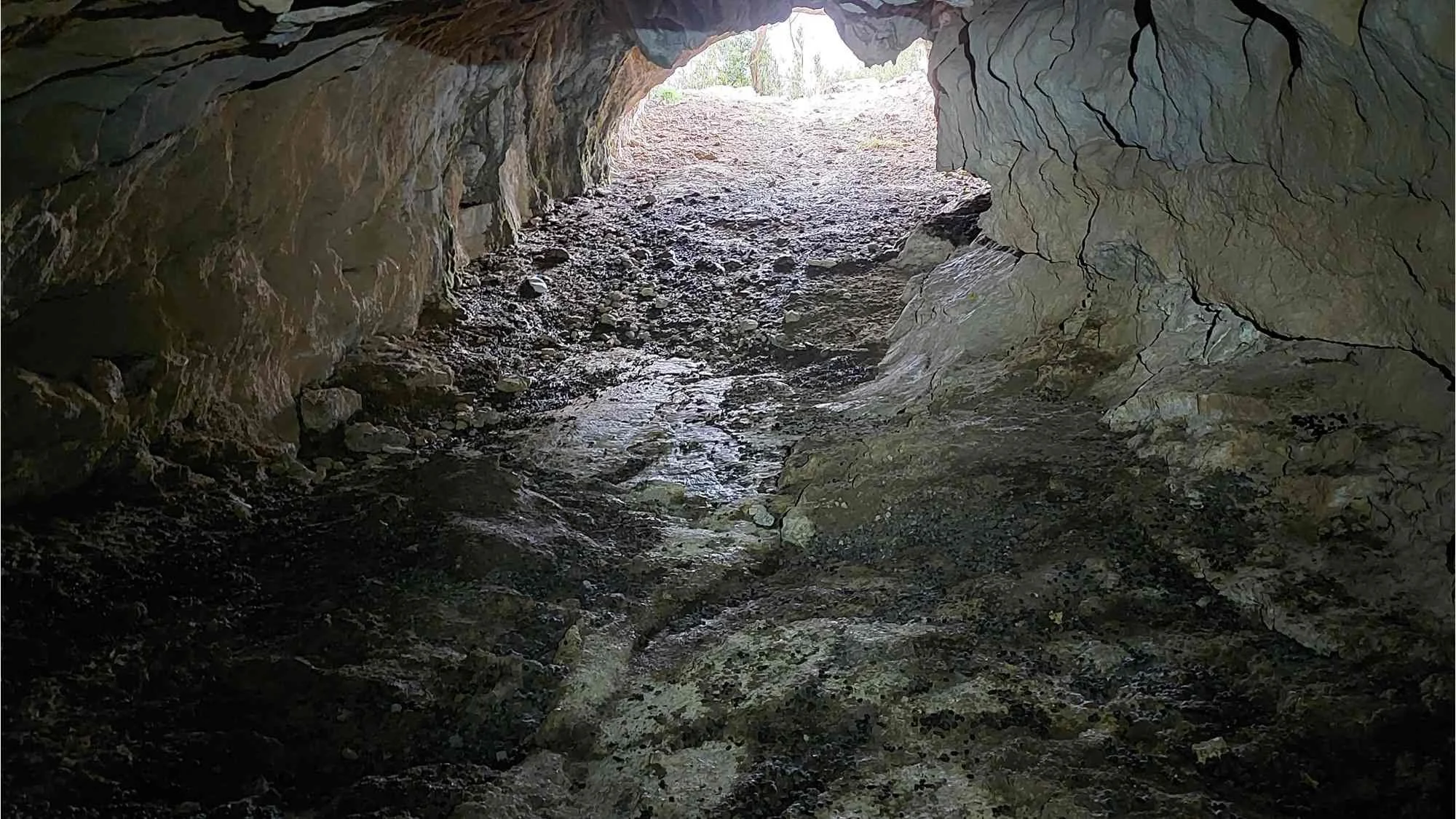
Interior view of Bear Cave
MEAT, GRAINS AND POTTERY
Excavations carried out at Coro Trasito between 2011 and 2013 revealed a layer of manure inside the cave, suggesting it was used as a livestock pen from around 5300 BCE. Several hearths inside the cave have been dated to around 4800 BCE, and their contents show that the farmers raised goats, sheep, cows and pigs, and cooked and ate their meat in the shelter of the porch. Crop residues, pollen, cutting tools for harvesting, grinding stones and storage silos suggest that crops such as barley and wheat may have been grown in fields nearby and stored in the cave. As well as pieces of pottery, the presence of pottery-making tools indicates that at least one craft was practised in the shelter of the porch.
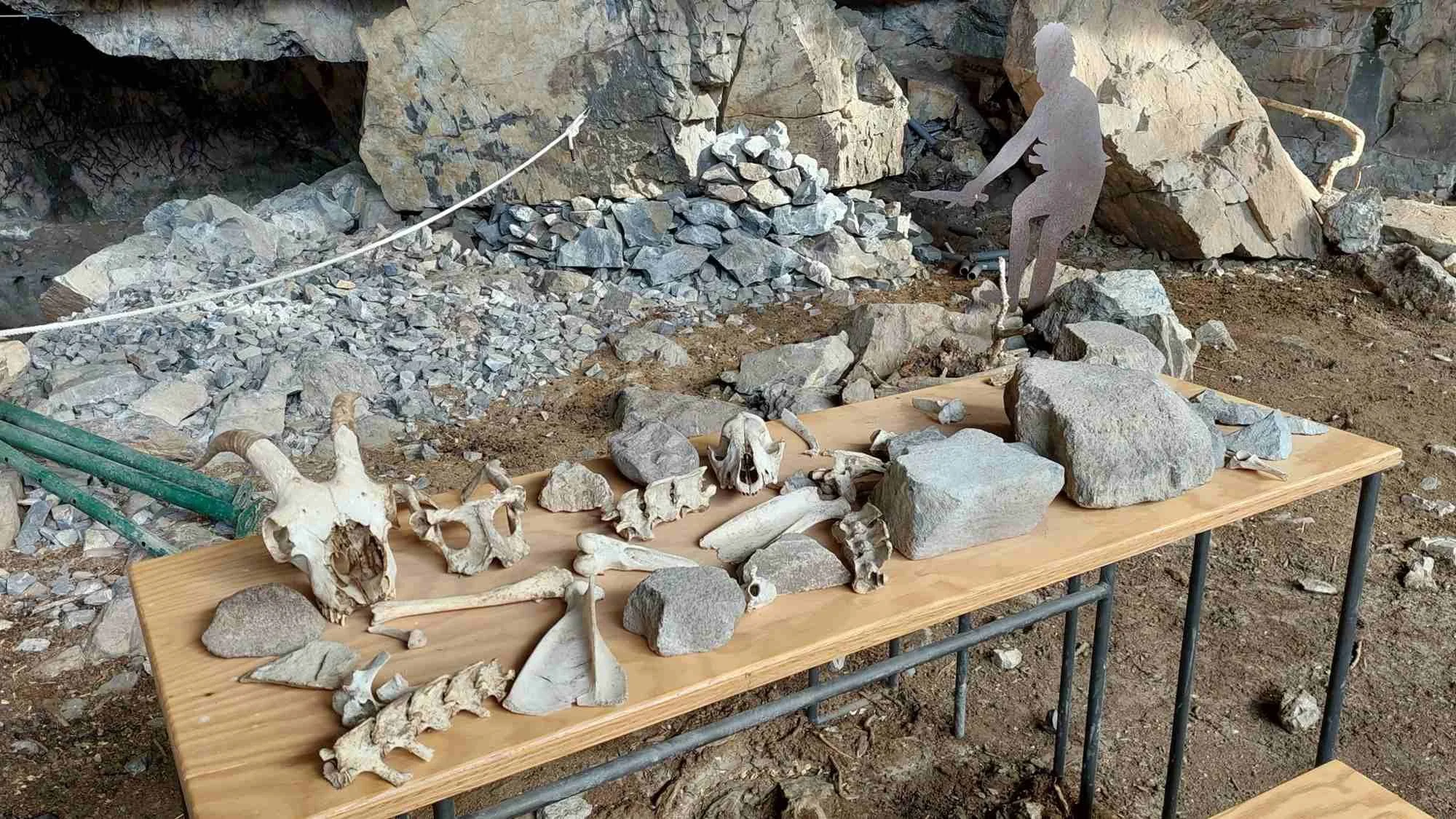
Various bone and stone objects are displayed inside the cave
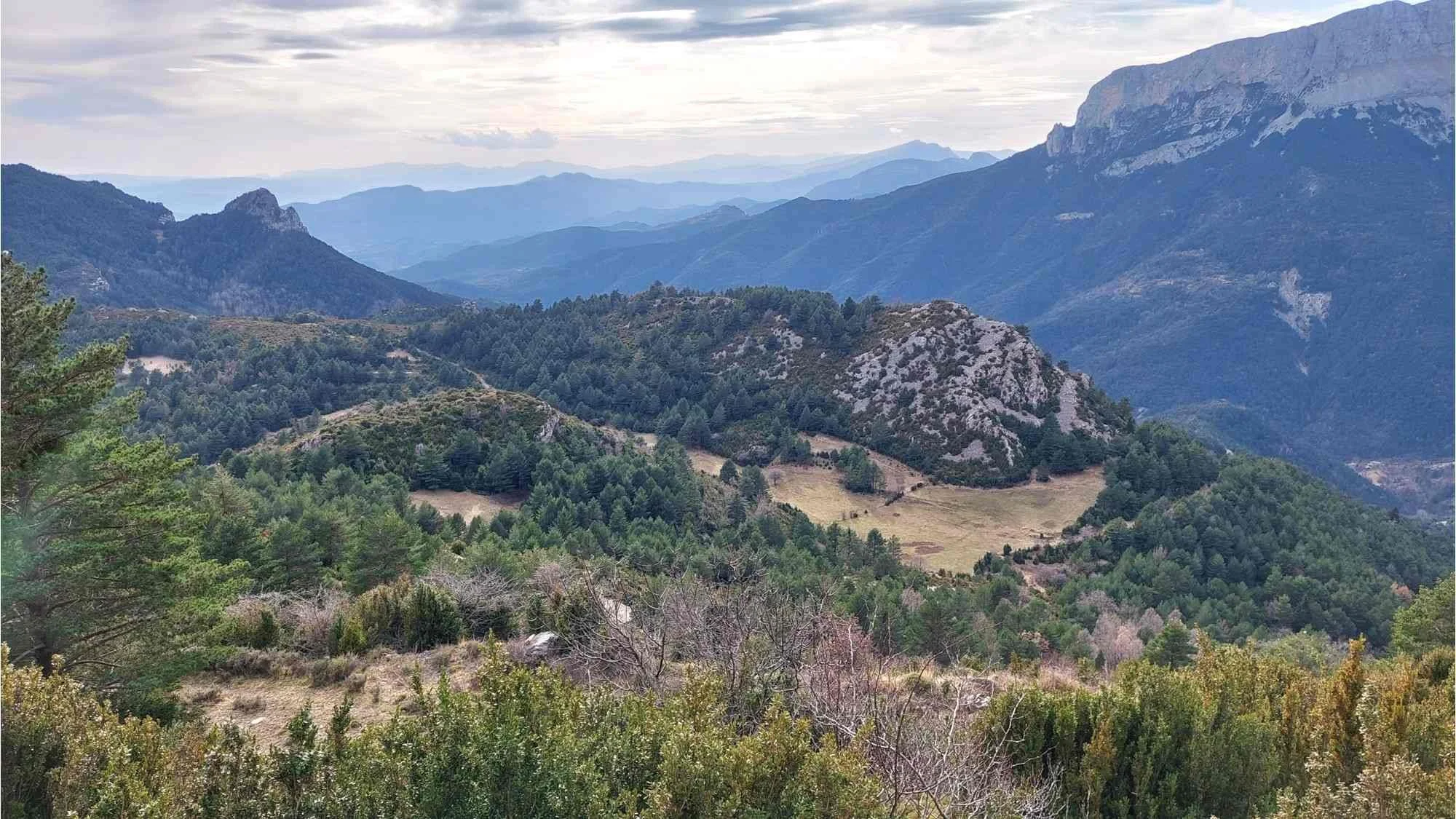
Looking south from the cave, the landscape is magnifently mountainous
The establishment of this type of sedentary farming community marks the point in time when human activity became the principal factor modifying the Pyrenean environment. Some researchers have described this settling-down period as the human conquest of the Pyrenees.
Today, Coro Trasito is protected by metal fencing and a gate, but you can book a guided tour in Spanish here: VISITAR LA CUEVA
Don’t miss this fine dolmen between the village of Tella and the cave. MORE ABOUT MEGALITHS
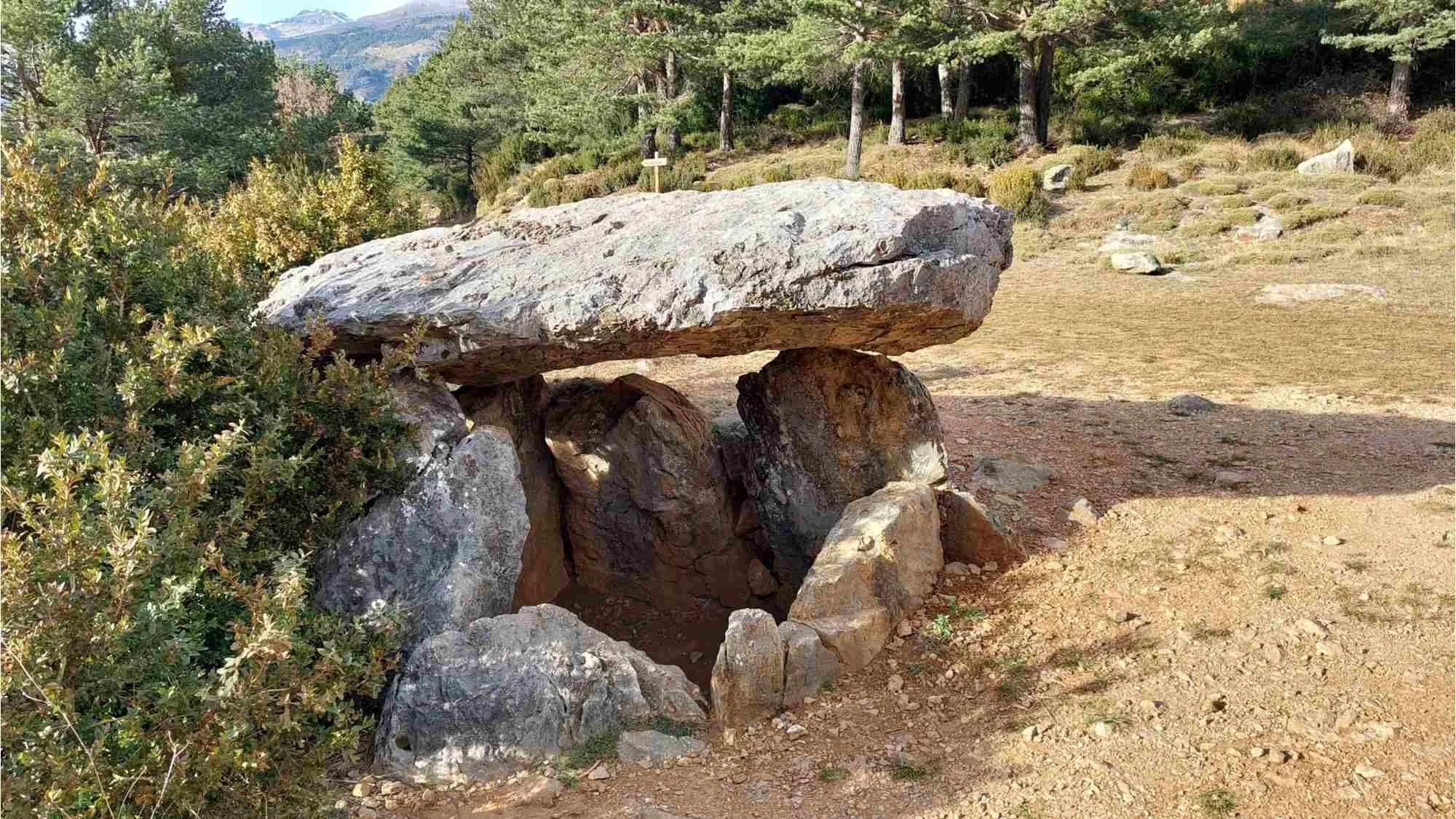
Dolmen of Tella
