Video presentation of the 2026 Tribute of the Three Cows ceremony
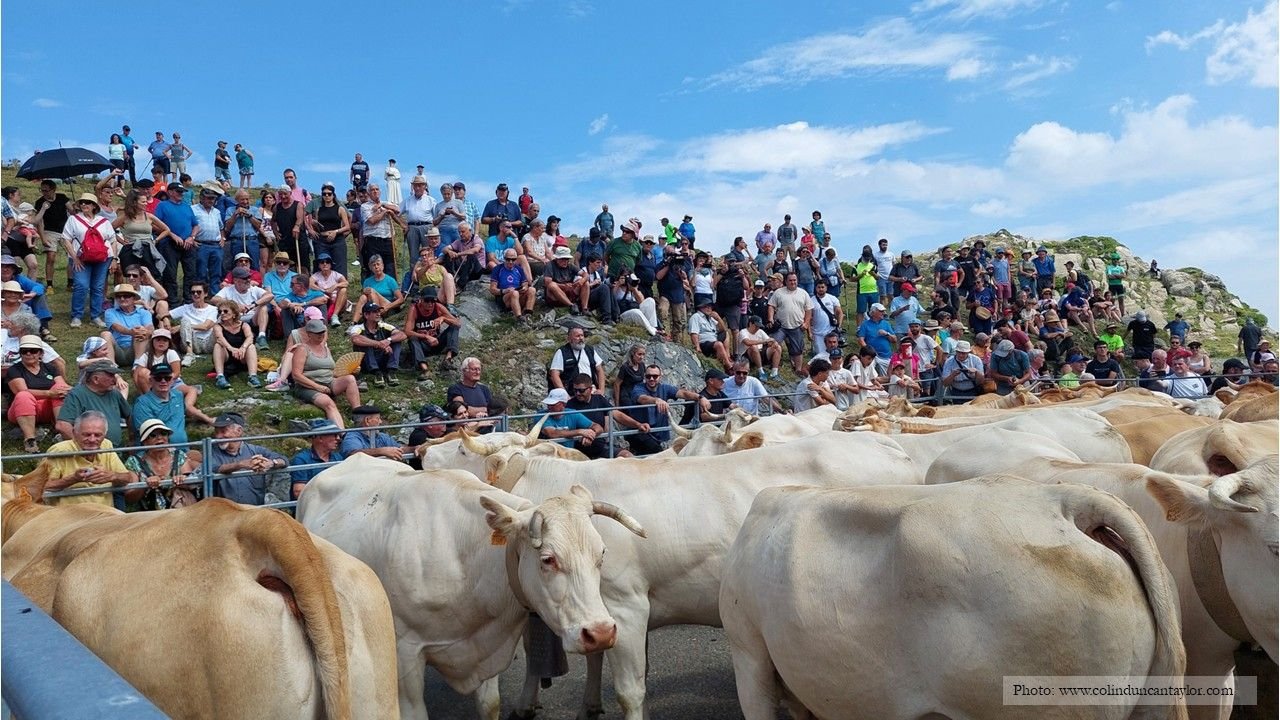
The Spanish will choose three cows from this herd as their annual tribute.
The Tribute of the Three Cows claims to be the oldest treaty still in force in Europe today. On 13 July every year since 1375, representatives from two Pyrenean valleys – one French, one Spanish – join hands at the border and repeat the ancient chant: ‘Pax avant! Pax avant! Pax avant!’ Let there be peace! Last week, I attended the 650th edition.
PERFECT PASTURES
The ceremony takes place towards the western end of the Pyrenees at the pass of Saint Martin’s Stone. This is a zone of transition. To the east lies a moonscape of lifeless grey rock where the peaks soon reach an inhospitable 3,000 metres above sea level. But around the pass and all the way west to the ocean, the landscape is gentler and ideal for grazing livestock.

The Pic d’Anie rises above a barren landscape to the east of the pass.
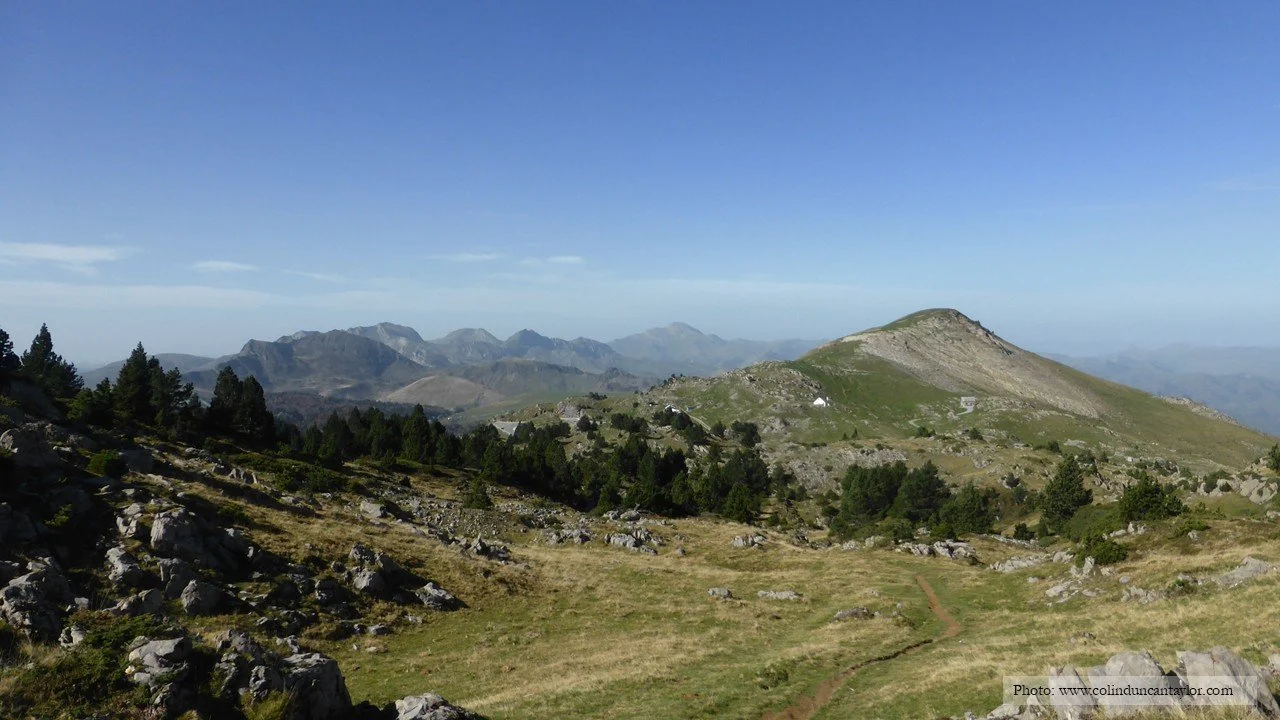
The pass is just below the white building visible right of centre in the picture.
WARRING SHEPHERDS
When this ancient treaty was agreed in 1375, it brought an end to two years of bloodshed that had been unleashed by a disagreement between two shepherds over whose sheep should take the first drink from a mountain spring. But the people of the Pyrenees have exceptionally long memories, and the origins of this vendetta go all the way back to the year 2192 after The Great Flood.
This Biblical date corresponds to 125 BCE, meaning that the feud between these two Pyrenean valleys had already been simmering away and occasionally boiling over for exactly 1,500 years when the Treaty of the Three Cows was agreed.

The Spring of Contention is the only water source in this part of the mountains.
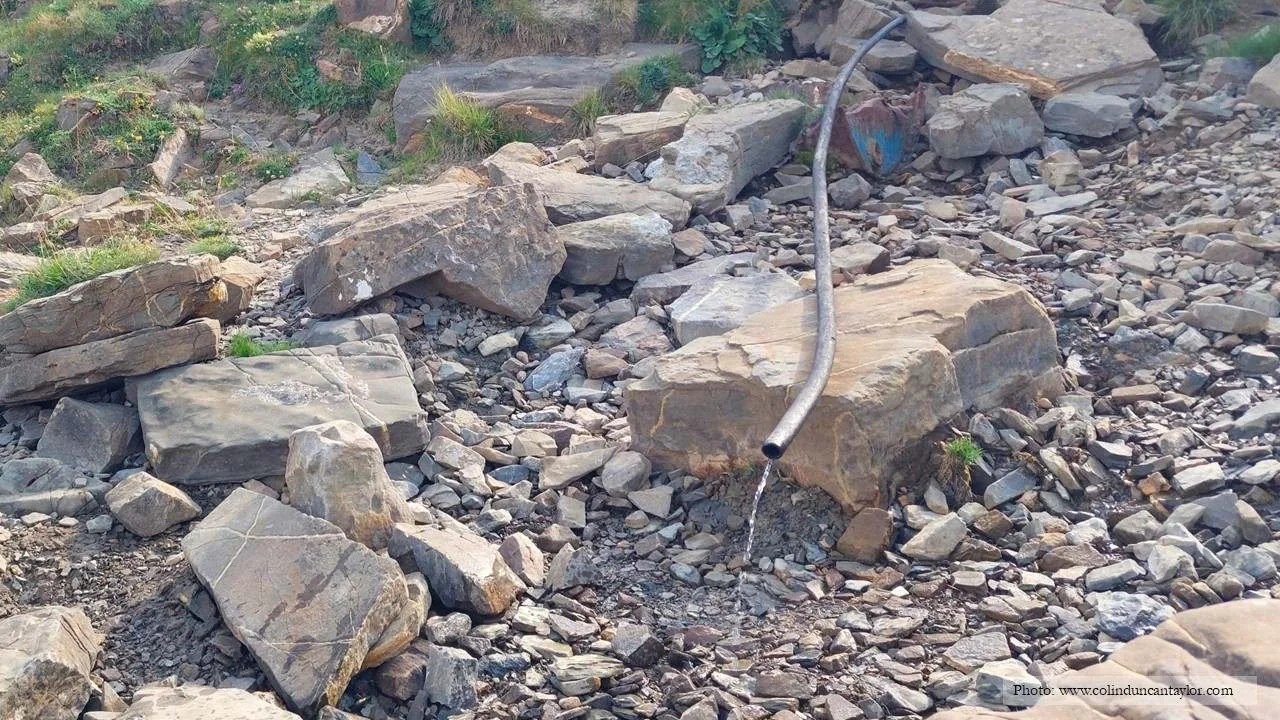
Today, the Spring of Contention trickles rather than gushes.
BITTER ENMITY FROM 2150 YEARS AGO!
During the negotiations in 1375, the Spanish valley alleged that, 15 centuries earlier, their French neighbours had guided a barbarian tribe over the pass of Saint Martin’s Stone and helped these savages lay waste to all the lands on the southern side of the mountains. This had created a bitter enmity and a relentless cycle of violence which had been brought to an end at an unknown time when the Spanish managed to impose a treaty on their treacherous neighbours.
Under that earlier treaty, the guilty party had to pay an annual tribute tribute of three horses, and each animal was required to have four white legs and a white spot on its forehead. Eventually, it became so difficult to find suitable steeds that the two sides agreed to replace the horses with cows.
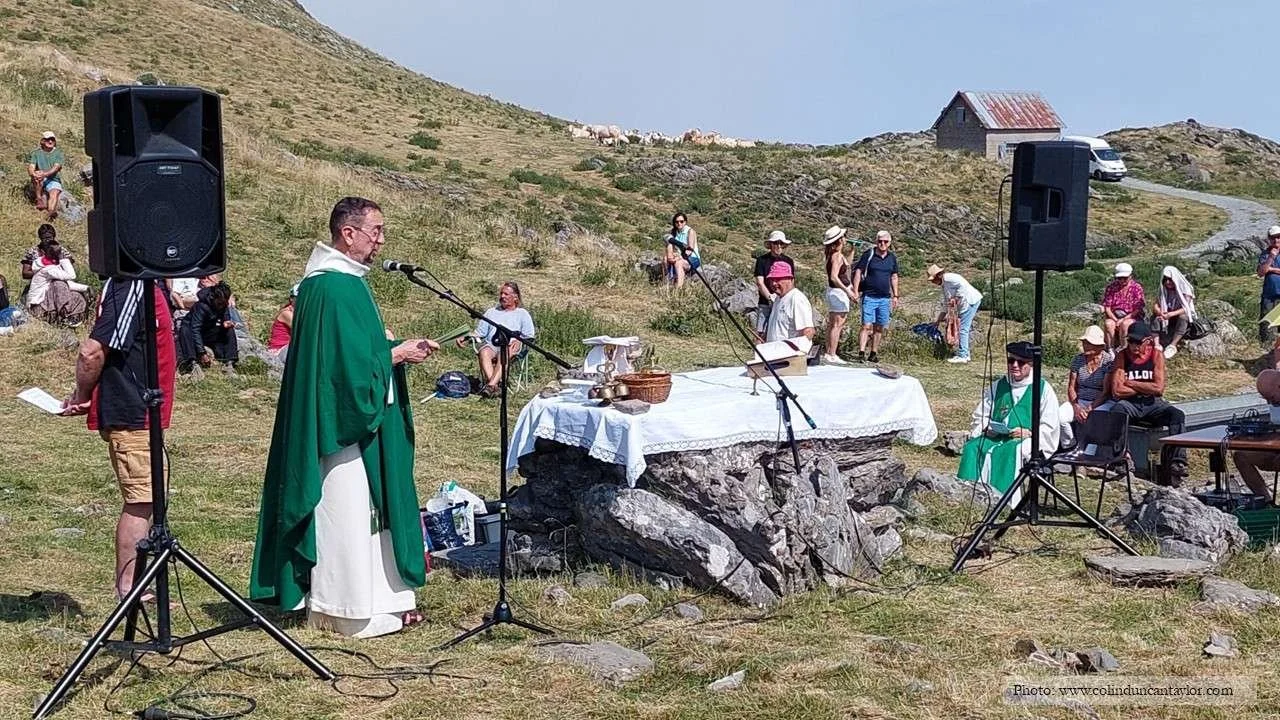
Before the ceremony begins, two priests celebrate mass.
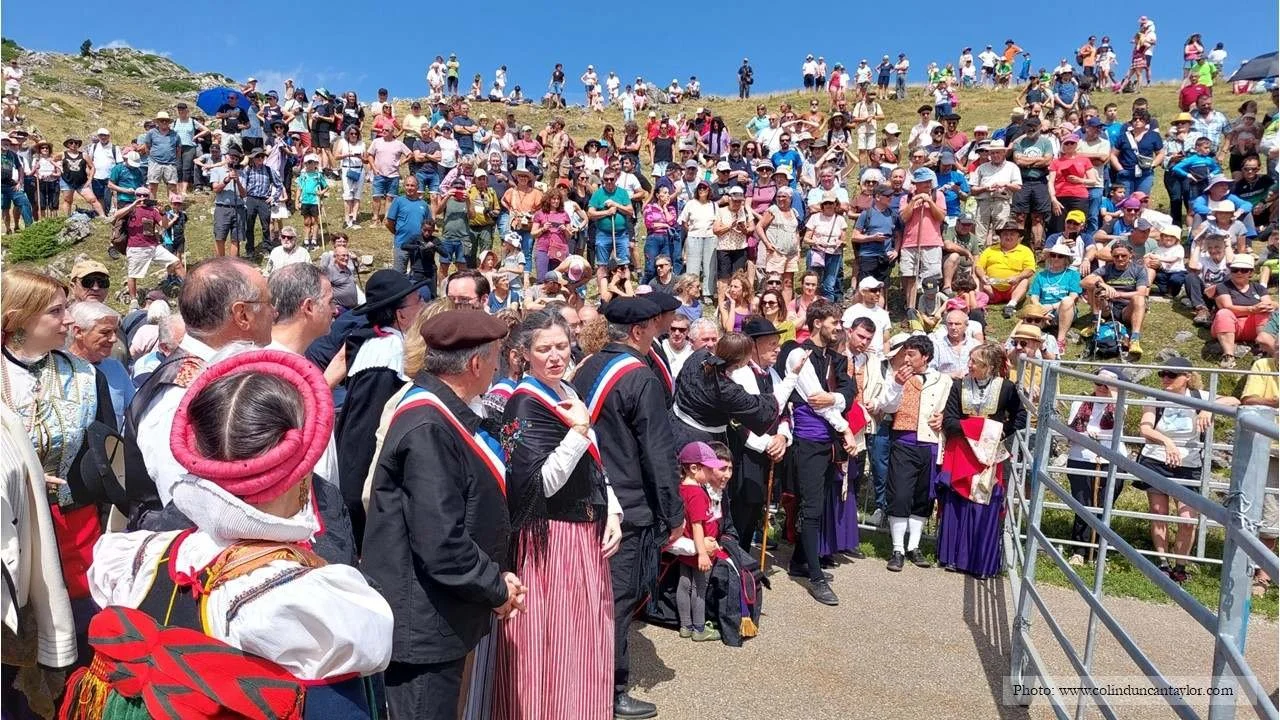
French mayors in their tricolour sashes and their colourfully-dressed Spanish counterparts watch on while a vet selects three cows from the herd.
INTERVENTION BY THE KING AND THE COUNT
By the 14th century, the French had stopped paying the tribute. This gave the Spanish an extra cause of extra grievance at the negotiations in 1375. These were instigated by the respective feudal lords of the two valleys – the King of Navarre and the Count of Foix. They had become increasingly concerned by a death toll which had reached 250, and by the fact that flocks of sheep from both sides had been abandoned in the mountains with no shepherd to guard them, and many had been taken by bears or wolves.
As you might expect after such a long period of strained relations between neighbours, this story is more complex than I have been able to describe in this short article. For a more detailed account, you may like to read my book The Pyrenees: A Human History. You may also wish to visit this historic event for yourself. Mark the 13 July in your diary for next year, or the year after that, or at any time in the future because the Tribute of the Three Cows was agreed in perpetuity.
