These windows tell a story from 778 CE
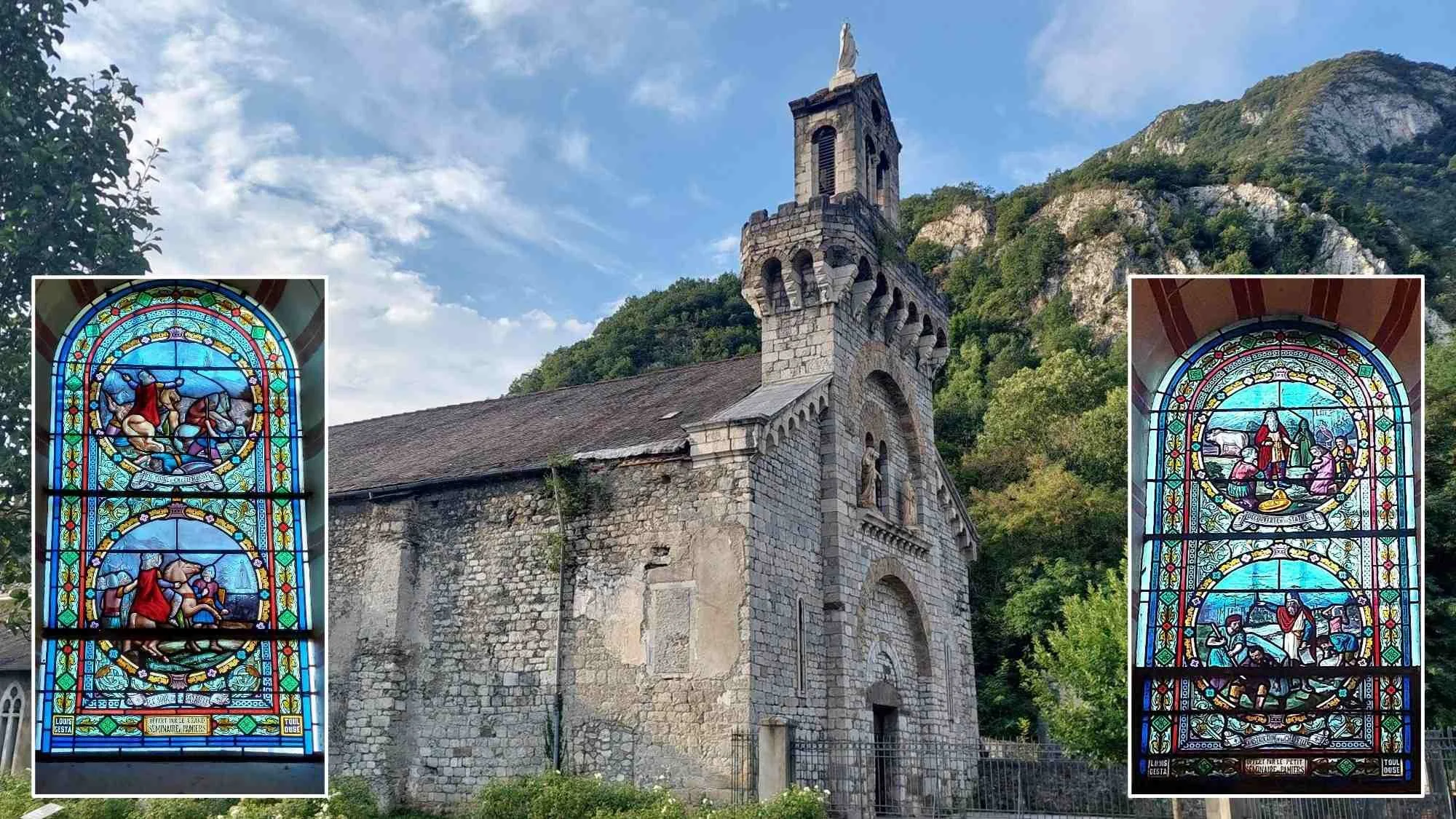
The church of Notre Dame de la Victoire du Sabart, and its stained glass windows.
The church of Notre Dame de la Victoire du Sabart lies in the French Pyrenees on the outskirts of Tarascon-sur-Ariège. It was founded in 778 to celebrate a victory by Charlemagne over the Moors. The story of this battle is told in four stained glass panels inside the church. Before we examine them, let’s review why the King of the Franks came to this part of the Pyrenees.
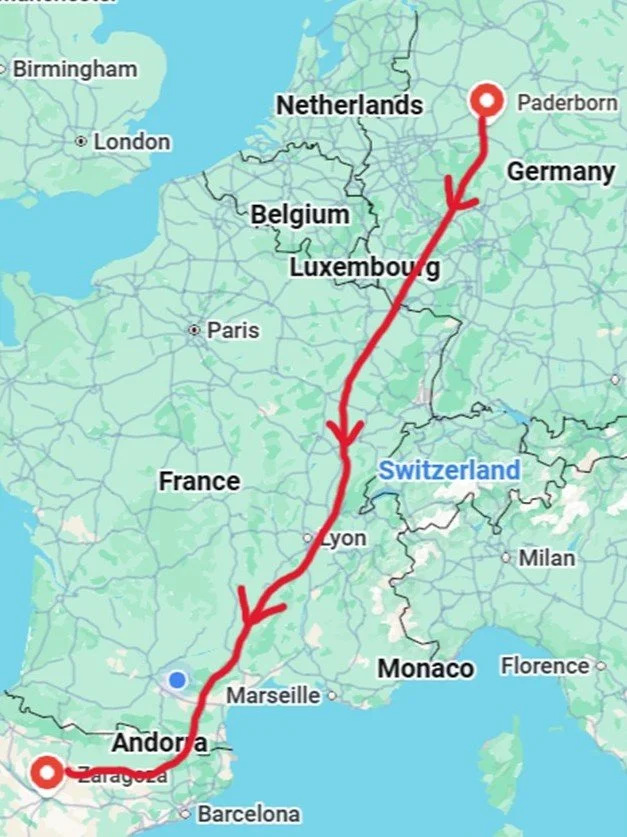
FROM GERMANY TO ZARAGOZA VIA THE PYRENEES
Earlier in 778, the governor of Zaragoza asked Charlemagne to help him resist attempts by a new emir in Córdoba to reassert his authority over northern parts of Al-Andalus. To deliver this request, the governor sent his envoys all the way to what is now Germany. From there, the Franks marched down through France and across the Pyrenees, but when they reached Zaragoza, the governor changed his mind so Charlemagne laid siege to the city.
After a month, the defenders offered hostages and payment in gold if the Franks would agree to go home. Concern about unrest elsewhere in his kingdom and the risk of famine among his troops persuaded Charlemagne to accept.
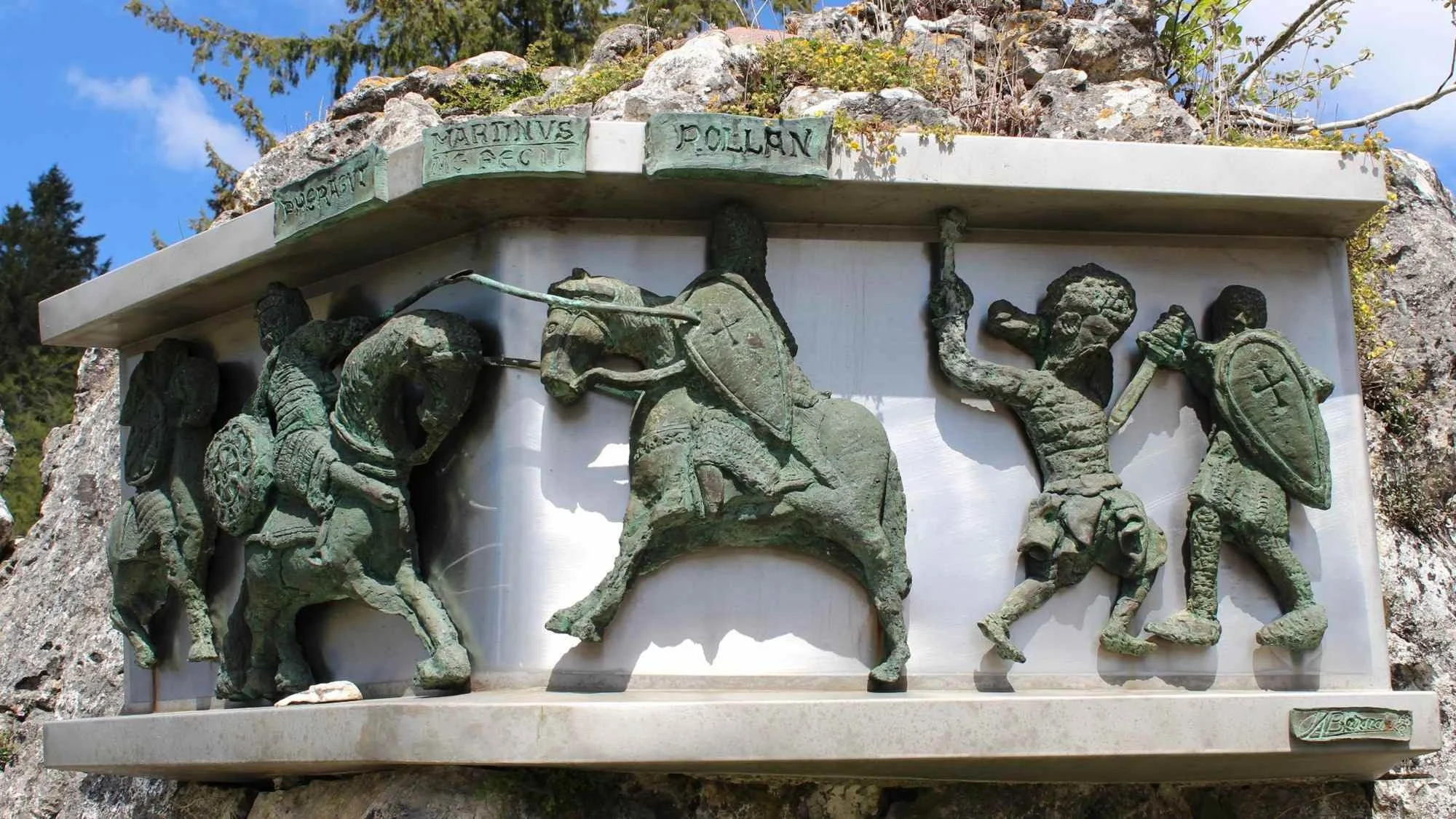
Part of a freeze at Roncesvalles depicting the battle in 778 CE
DISASTER AT RONCESVALLES
On his way north, Charlemagne ordered his army to demolish the walls of Pamplona. This naturally enraged the local population, and although Charlemagne himself safely crossed the mountains by the pass of Roncesvalles, the Basques slaughtered his rearguard.
Charlemagne and the bulk of his army carried on marching east with the Moors in hot pursuit until they reached Tarascon-sur-Ariege. This is where the stained-glass story begins.
THE BATTLE OF TARASCON
The first panel shows the eve of the battle. The Virgin Mary made a miraculous appearance in the heavens, and Charlemagne interpreted this as a sign that he was about to overcome the infidels.
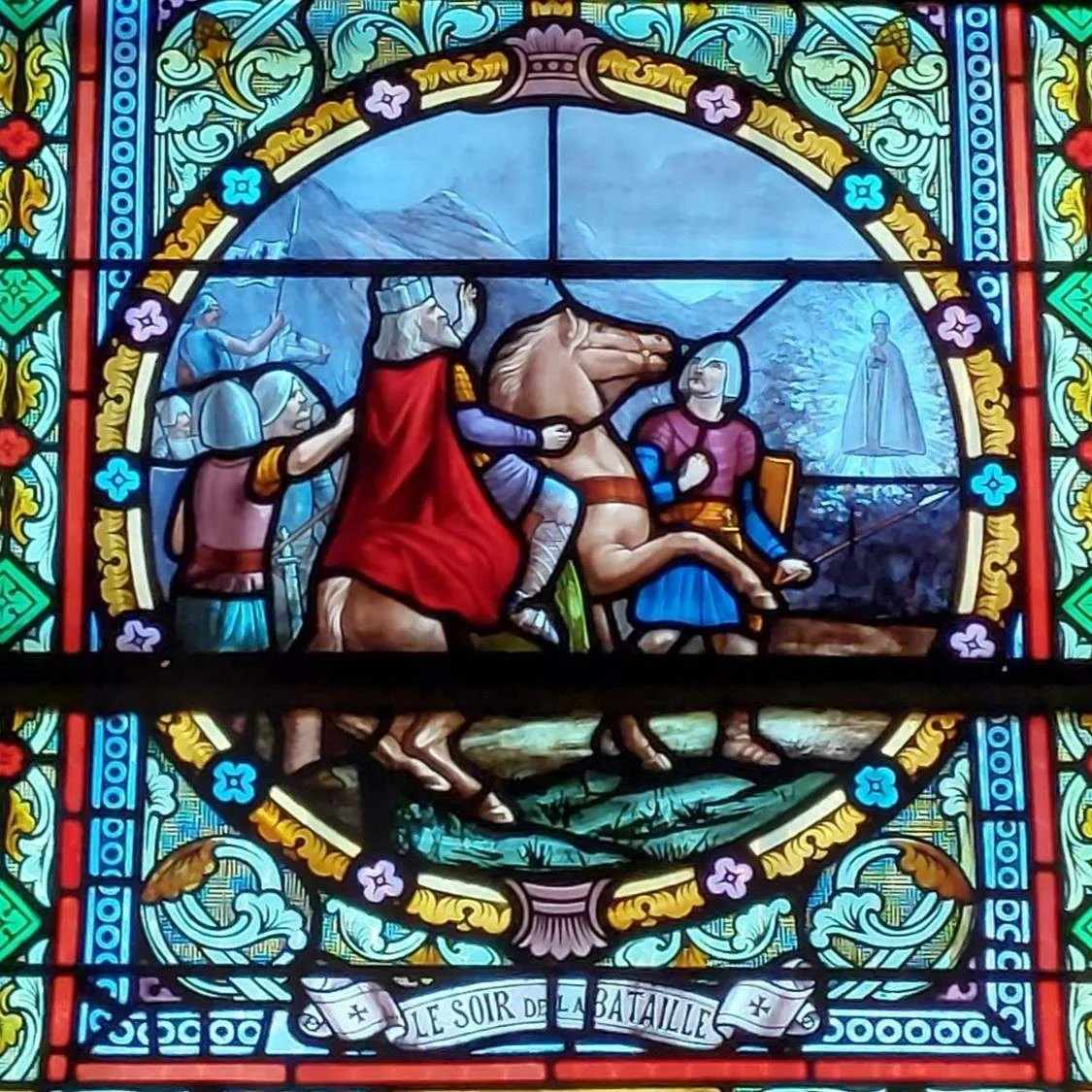
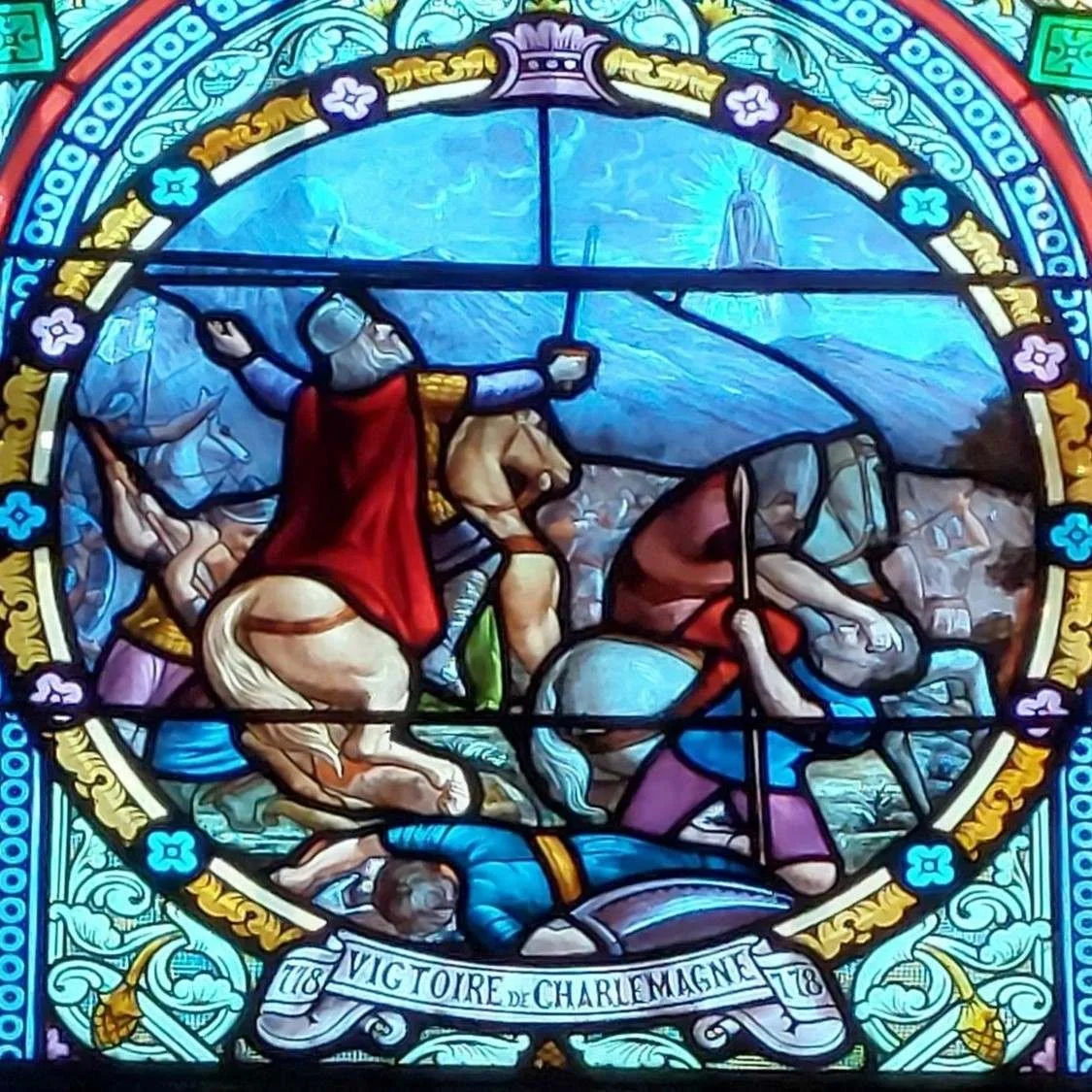
The second panel shows the Virgin Mary making a second appearance during the battle. Charlemagne and his soldiers saw this is a yet more favourable sign and they did indeed carry the day.
THE FOUNDING OF THE CHURCH
While all this violence was going on, a peasant was ploughing a nearby field. He is depicted with his oxen in the third panel which can be found on the north side of the church. His plough unearthed a statue of the Virgin Mary which, as we can see in the stained glass, was identical in appearance to the Virgin Mary who had appeared in the sky before and during the battle.
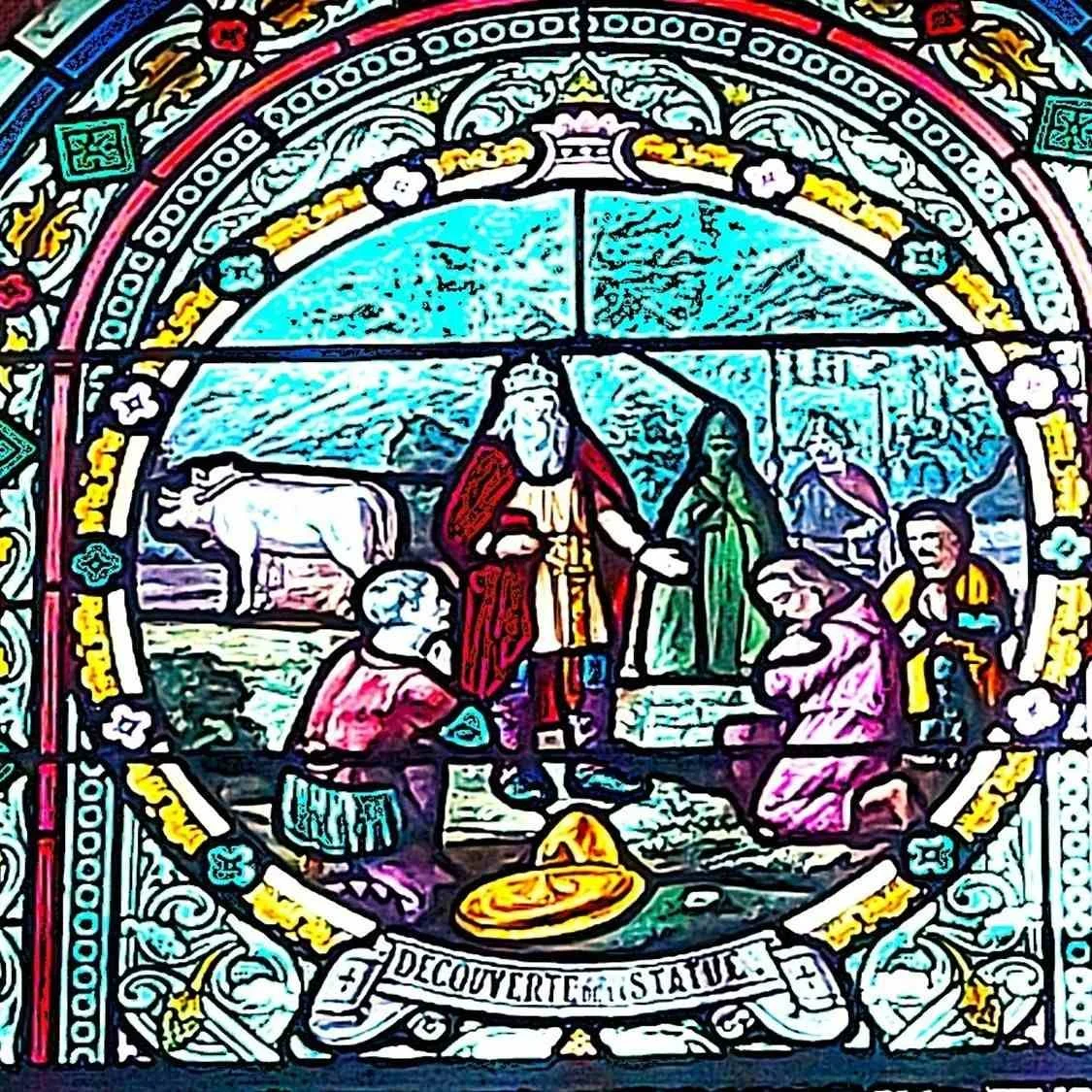
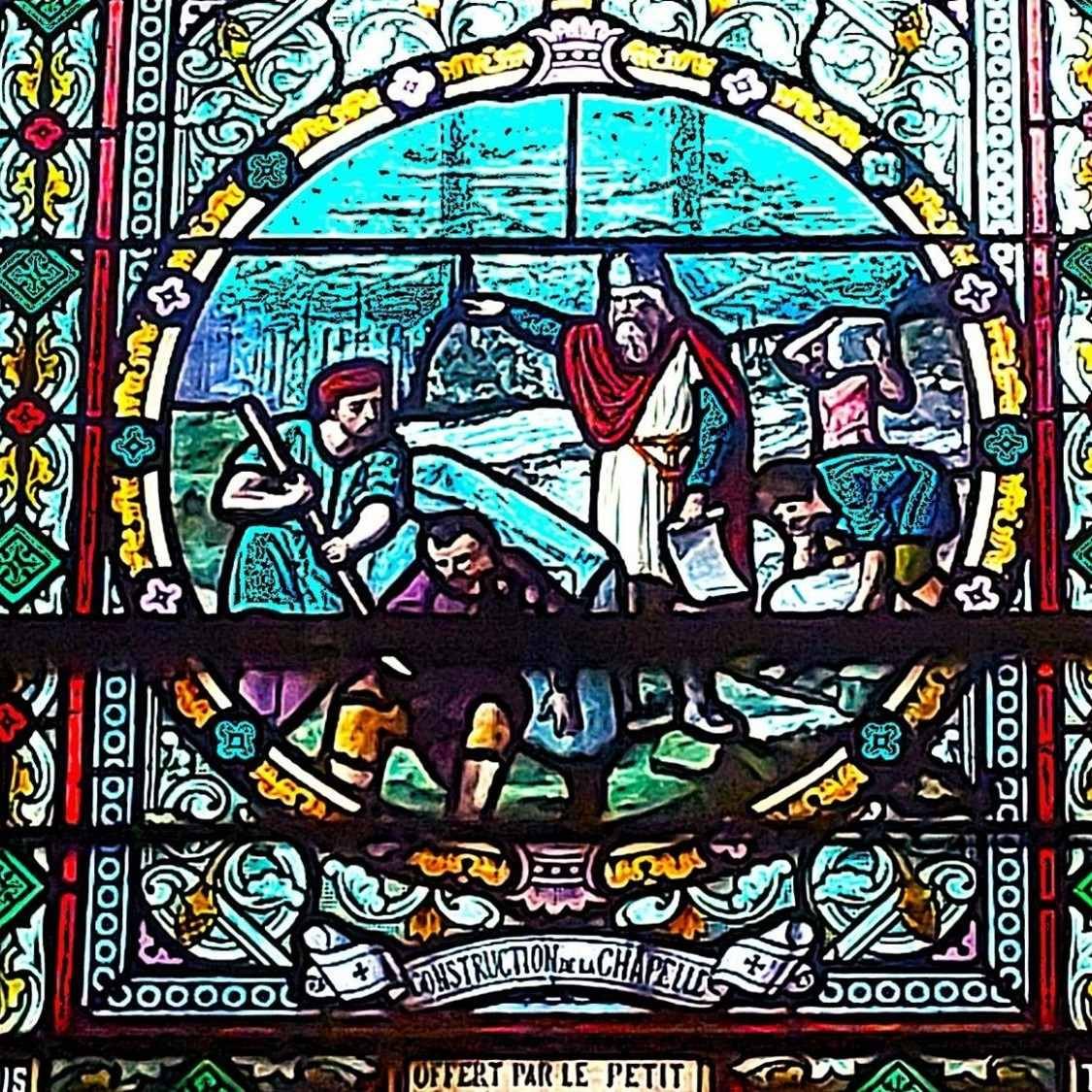
Visions in the sky were one thing, but a physical statue needed a suitable home. Charlemagne duly ordered the construction of a church on the battlefield which is, of course, Notre-Dame de la Victoire du Sabart.
ARCHAEOLOGICAL EVIDENCE
That's not quite the end of the story, because now it was Charlemagne's turn to chase the Moors southwards into the high Pyrenees. The two armies are believed to have had their final clash up on the Unarde plateau at an altitude of about 2,200 metres. Near a couple of pretty tarns, modern maps show a place called the Cemetery of the Franks, and older maps show an adjacent cemetery for the Moors. This may sound as fanciful as the stories of the Virgin Mary, but in the late 19th century, a local archaeologist unearthed several weapons of a Frankish design which makes this part of the story more credible than some of the scenes depicted in stained glass.
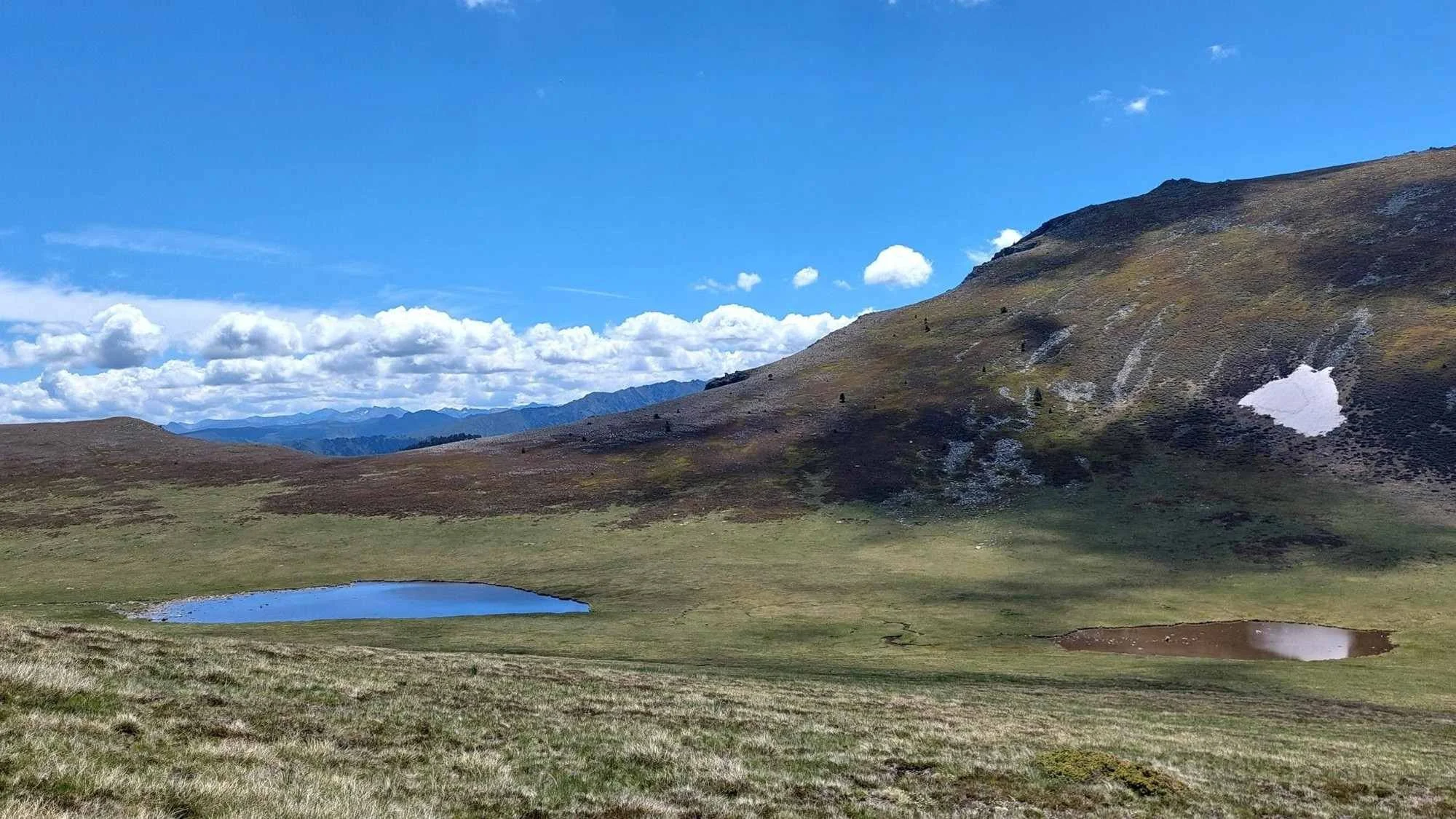
Several weapons of a Frankish design have been discovered on the Unarde plateau.
