The main source of Europe’s talcum powder
Many visitors to the Pyrenees will be dazzled by their natural beauty. Look more closely, and you will find astonishing signs of human activity. This is the third of three parts of an article that explores three exceptional locations.
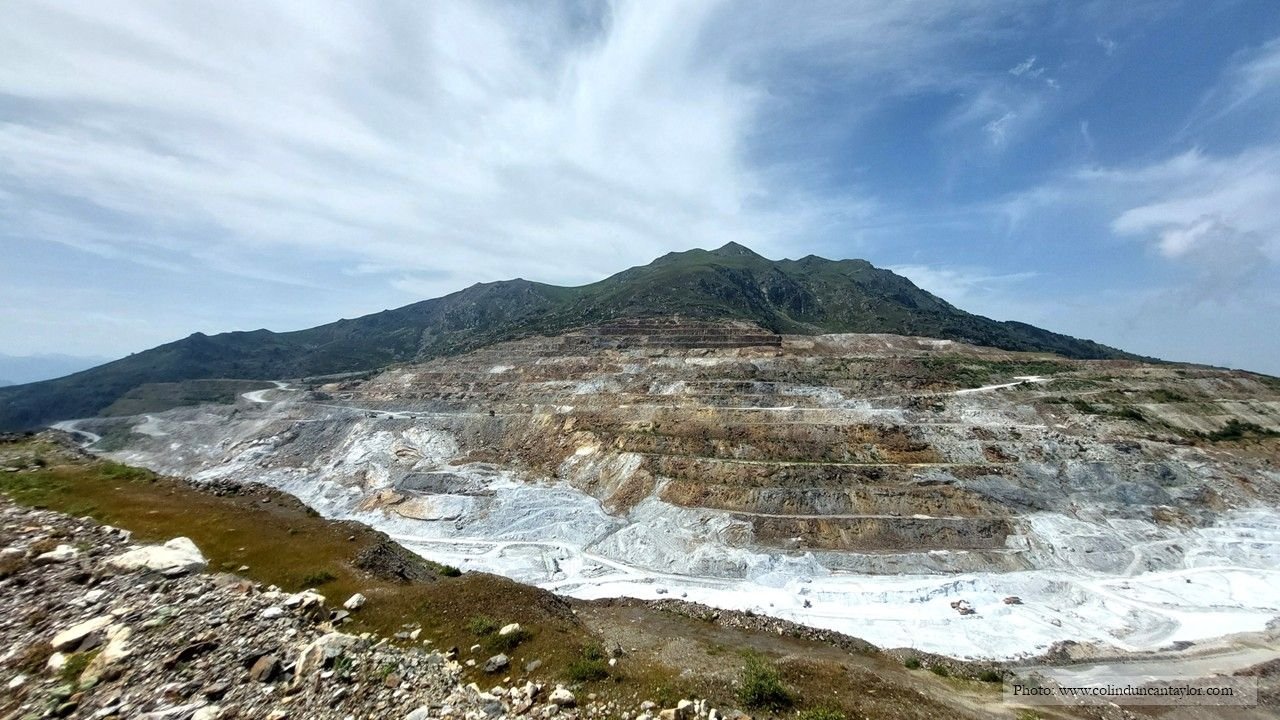
The talc quarry at Trimouns scars 11 square kilometres of the Pyrenees. It is the largest opencast talc mine in the world.
Although it scars 11 square kilometres of the Pyrenees, you are only likely to spot the Trimouns quarry if you climb a mountain on the north side of the Ariège valley. The site is too high to work in winter. In summer, these gigantic workings might be mistaken for a shrinking Pyrenean glacier, but in fact Trimouns supplies 40% of Europe’s talcum powder.
Talc might be the softest mineral of all, but it would be hard to do without it. We use it in our paints, cosmetics, ceramics, asphalt roofing, paper and medicinal pills. The average car contains 12 kilograms of the stuff because talc makes plastic components stronger and more resistant to fire, and it keeps the tyre compounds airtight. Food grade talc is used in olive oil production, the paper wrapped around our burgers and as an additive in a wide range of foodstuffs including charcuterie, cheese, chewing gum and chocolate.
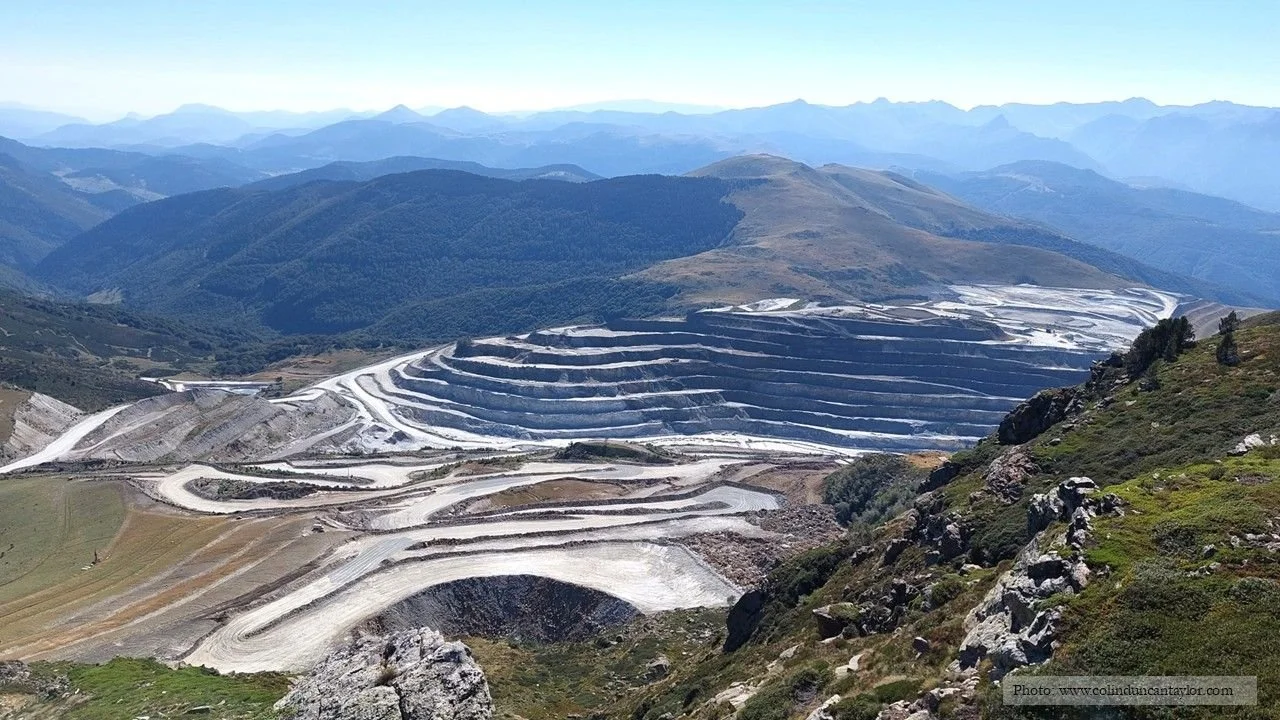
Trimouns supplies 40% of Europe’s talc.
Two examples of much older use have been found in the mountains nearby. Excavations at the Cathar castle of Montségur have unearthed various medieval objects including spindle whorls and a palm-sized carving of a human figure, all made from a form of talc called soapstone. And 15,000 years ago in the Grotte de Niaux, prehistoric artists mixed talc with manganese dioxide to produce the blacks used in their cave paintings.
READ PART I (A FIVE-STAR INTERNATIONAL RAILWAY STATION)
READ PART II (THE OLDEST ROMAN TROPHY)
